The contrast between the IMF diagnosis and the reality of SMEs
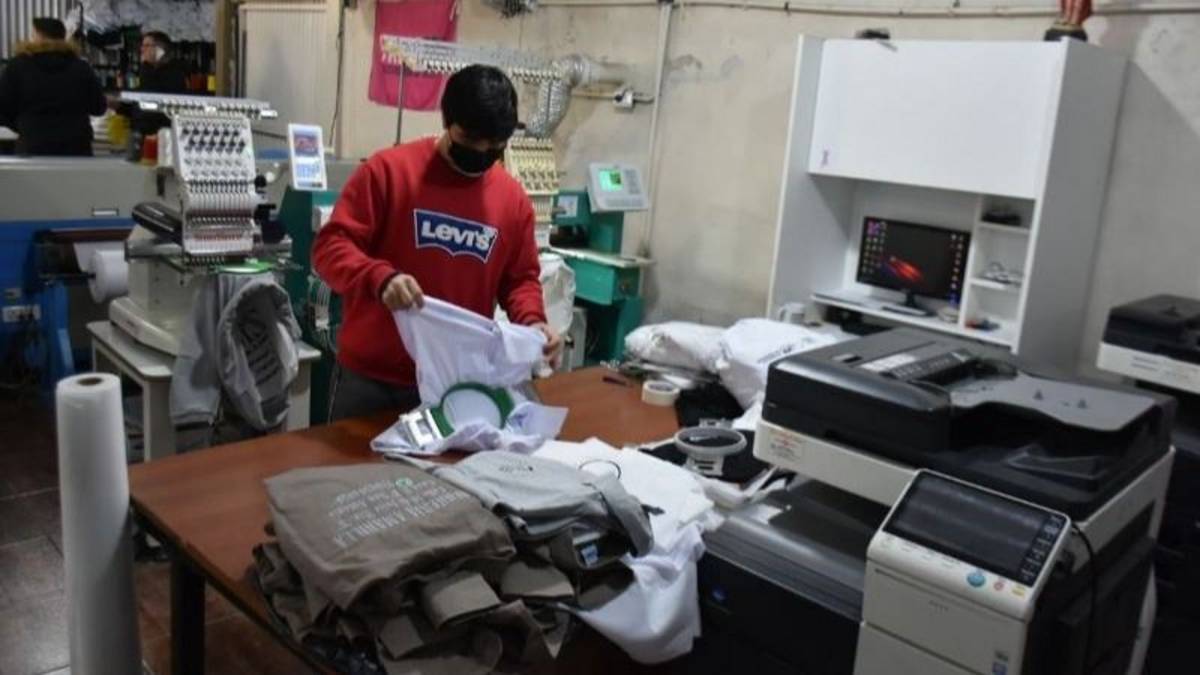
During her visit to Buenos Aires on Monday, the Managing Director of the International Monetary Fund, Kristalina Georgieva, acknowledged that macroeconomic stability is not enough if it does not translate into better conditions for small and medium-sized enterprises. At the press conference alongside Economy Minister Luis Caputo, she pointed out that the challenge is to transfer that stability to the productive economy. However, a report by the Assembly of Small and Medium Entrepreneurs (APYME) and the National University of José C. Paz (UNPAZ), released the same day, describes a scenario of widespread deterioration for the sector.
The survey, covering the first half of 2026, indicates that 62.5% of companies said their overall situation worsened compared to the previous period. 57.9% recorded a drop in sales, and 60.5% reported negative economic results. Additionally, 53.9% reduced their capacity utilization rate. Half of the firms operate at up to 50% capacity, and only 8.6% exceed 75%.
Georgieva had warned that a recovery concentrated in a few export sectors is not enough to improve the living conditions of the majority. However, the APYME report shows that the chain she outlined—credit, investment, formal employment, domestic consumption—is broken. Only 7.2% of companies accessed credit on favorable terms; 74.3% finance themselves with their own capital, and 49.3% avoid taking on debt due to high interest rates.
Obligations to the IMF: a payment schedule that adds pressure
While Georgieva urges support for SMEs, Argentina faces a payment schedule to the IMF that, according to the official table updated to June 30, 2026, amounts to 2,082,529,842 SDRs (Special Drawing Rights) for the remainder of the year. This amount includes basic charges, surcharges, and reimbursements under the EFF program. The first maturities of the semester are on August 1, 2026, with a total of 622,614,704 SDRs in charges and surcharges, and on September 25, 2026, with a reimbursement of 583,333,333 SDRs.
The IMF table details that in 2027 payments rise to 5,650,460,371 SDRs, and in 2028 to 7,004,829,747 SDRs. These commitments represent additional pressure on the Central Bank’s reserves, in a context where SMEs—the main generators of employment—show critical indicators.
What the documents say and what they do not
| Document | What it establishes | What it does not establish | Open questions |
|---|---|---|---|
| APYME-UNPAZ Survey (1st half 2026) | 62.5% of SMEs worsened; 57.9% sales fell; 60.5% negative results; 53.9% reduced installed capacity; 7.2% accessed favorable credit; 33.6% anticipate labor adjustments; 50% believe trade openness harms their competitiveness. | It does not break down by sector or region; it does not specify sample size or margin of error; it does not include comparison with previous semesters of 2025. | What is the representativeness of the sample? Is the trend homogeneous across the country? Which sectors are most affected? |
| IMF payment table (06/30/2026) | Argentina must pay 2,082,529,842 SDRs in 2026; 5,650,460,371 in 2027; 7,004,829,747 in 2028. Includes charges, surcharges, and EFF reimbursements. | It does not indicate the SDR/peso exchange rate or the exchange rate at the time of payment; it does not detail the impact on reserves; it does not specify whether payments can be rescheduled. | How will these payments affect the availability of foreign currency? Are there negotiations to refinance maturities? |
The value module: calculation of the payment burden relative to reserves
To gauge the weight of IMF payments, the ratio between the total owed in 2026 and the Central Bank’s gross international reserves is calculated. According to BCRA data as of June 30, 2026, gross reserves were approximately 28 billion dollars. The SDR to US dollar exchange rate as of June 30, 2026, was 1 SDR = 1.35 USD (source: IMF).
- Document: IMF payment table as of 06/30/2026 and BCRA reserve data.
- Organization and date: IMF, 06/30/2026; BCRA, 06/30/2026.
- Unit: SDR and USD.
- Values used: Total payments 2026 = 2,082,529,842 SDRs; SDR/USD exchange rate = 1.35; gross reserves = 28 billion USD.
- Operation: (2,082,529,842 SDRs * 1.35 USD/SDR) / 28,000,000,000 USD = 2,811,415,286.7 / 28,000,000,000 = 0.1004 = 10.04%.
This means that IMF payments in 2026 are equivalent to 10.04% of gross reserves. It is not converted to pesos because the official dollar exchange rate as of 06/30/2026 is not available in the provided sources.
The data worth tracking
The evolution of credit access for SMEs will be a key indicator in the coming months. Georgieva highlighted it as a priority, but the APYME report shows that only 7.2% obtained financing on favorable terms. If the government implements subsidized credit lines or guarantees, their impact on investment and employment should be monitored. It is also worth tracking the negotiation of IMF maturities for 2027-2028, which more than double the 2026 burden.
Fuentes consultadas
- El Destape
- Fondo Monetario Internacional Fuente primaria
El Sereno contrastó las fuentes enlazadas y añadió contexto, comparación o análisis documental. Las fuentes primarias están identificadas. La nota no se presenta como investigación de campo ni como entrevista propia, salvo indicación expresa.



Comentarios