
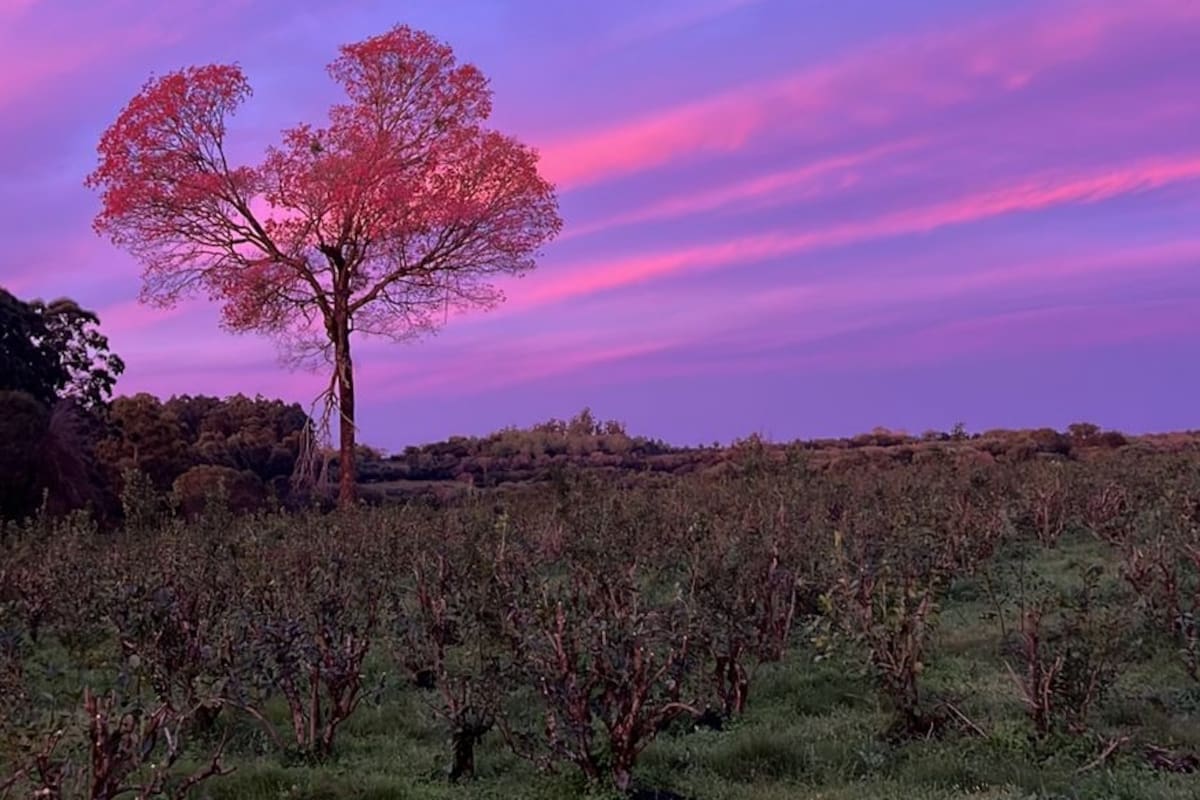
In Apóstoles, Misiones, the Nahirñak family turned a failed clearing attempt into the origin of their yerba mate brand. Four decades ago, when they tried to cut down a lapacho tree to plant yerba, the tree resisted. Today, that same tree gives its name to «Lapacho Rosa,» a family venture that went from selling bulk yerba to other brands to marketing their own product.
From producers to own brand: the Nahirñaks’ leap
The story began at the San Nicolás estate, where Miguel Ángel and Olimpia Nahirñak produced bulk yerba that they sold to other brands. Ten years ago, their daughters Valeria, Vanesa, and Verónica pushed for the project of having their own brand. «The name was obvious, Lapacho Rosa,» says Valeria, the visible face of the venture, in statements to La Nación.
In January 2022, they began selling under their own brand, distributing through digital channels and stores in the area and in the capital city. «We bet on quality; we have a 24-month aging period (double the traditional one) and we produce low volume but with quality,» Valeria highlights. Today they produce between 10,000 and 15,000 kilos per day, in a mill located 30 blocks from the center of Apóstoles, the National Capital of Yerba Mate.
The tree that inspired the name and visual identity
The lapacho they couldn’t cut down is over 20 meters tall with a crown of pink flowers. That tree became the brand’s symbol, which also stands out on shelves for its pastel color palette: pink, light blue, and yellow. «Going from producers to having our own brand is quite a challenge, but it’s possible if you dedicate yourself to quality,» Valeria explains.
The yerba is artisanal, without agrochemicals, with traditional belt drying. They offer three varieties: traditional, despalada (without stems), and for tereré, in 500-gram packages, the most popular format in the market (almost 7 out of every 10 kilos sold domestically use that packaging).
The context: small brands and official credits
The case of Lapacho Rosa is part of a growing trend in the yerba business: the proliferation of small producer brands that partner or invest in industrial facilities. A month ago, the Misiones government launched a line of credits for primary green leaf producers to create their own brands.
The main incentive is the low price of green leaf, which is paid approximately 250 pesos per kilo, while production costs are calculated at 500 pesos per kilo according to the National Institute of Yerba Mate (INYM) grid. For the business to work, small producers seek to «buy their own» raw material, package it, and generate added value.
What the documents say and what remains to be confirmed
The primary source of this note is the La Nación article, which tells the family’s story. No official documents from the company or INYM are available. Below, what each source establishes and open questions are detailed:
| Document/Source | What it establishes | What it does not establish | Open questions |
|---|---|---|---|
| La Nación article (secondary source) | Family history, origin of the name, production process, varieties, production and distribution data. | It does not provide exact revenue figures, employment data, or financial details of the provincial credit. | What is the exact installed capacity of the mill? How many employees does the company have? What requirements does the provincial credit demand? |
| INYM grid (mentioned in the article) | Production cost of green leaf estimated at 500 pesos per kilo. | The exact date of the grid or its methodology is not specified. | Is the grid updated? Does it include all variable costs? |
Value module: the price of green leaf vs. production cost
According to the article, the price of green leaf is approximately 250 pesos per kilo, while the production cost is 500 pesos per kilo. The difference is 250 pesos per kilo, which represents 50% of the cost.
- Document: La Nación article (secondary source) citing the INYM grid and market data.
- Organization and date: INYM, without specific date in the article; market data from August 2026 (article publication date).
- Unit: Argentine pesos per kilo of green leaf.
- Values used: Market price: 250 pesos/kg; production cost: 500 pesos/kg.
- Operation: Difference = 500 – 250 = 250 pesos/kg. Percentage of cost = (250 / 500) * 100 = 50%.
Currencies are not converted because no official exchange rate is available in the material.
What to follow up on
It would be relevant to monitor the implementation of the Misiones government’s credit line and its impact on the creation of new brands. It is also worth following the evolution of the green leaf price and its relationship with production costs, as well as the market response to small brands like Lapacho Rosa.
Fuentes consultadas
- LA NACION
- Argentina.gob.ar Fuente primaria
El Sereno contrastó las fuentes enlazadas y añadió contexto, comparación o análisis documental. Las fuentes primarias están identificadas. La nota no se presenta como investigación de campo ni como entrevista propia, salvo indicación expresa.


Comentarios