
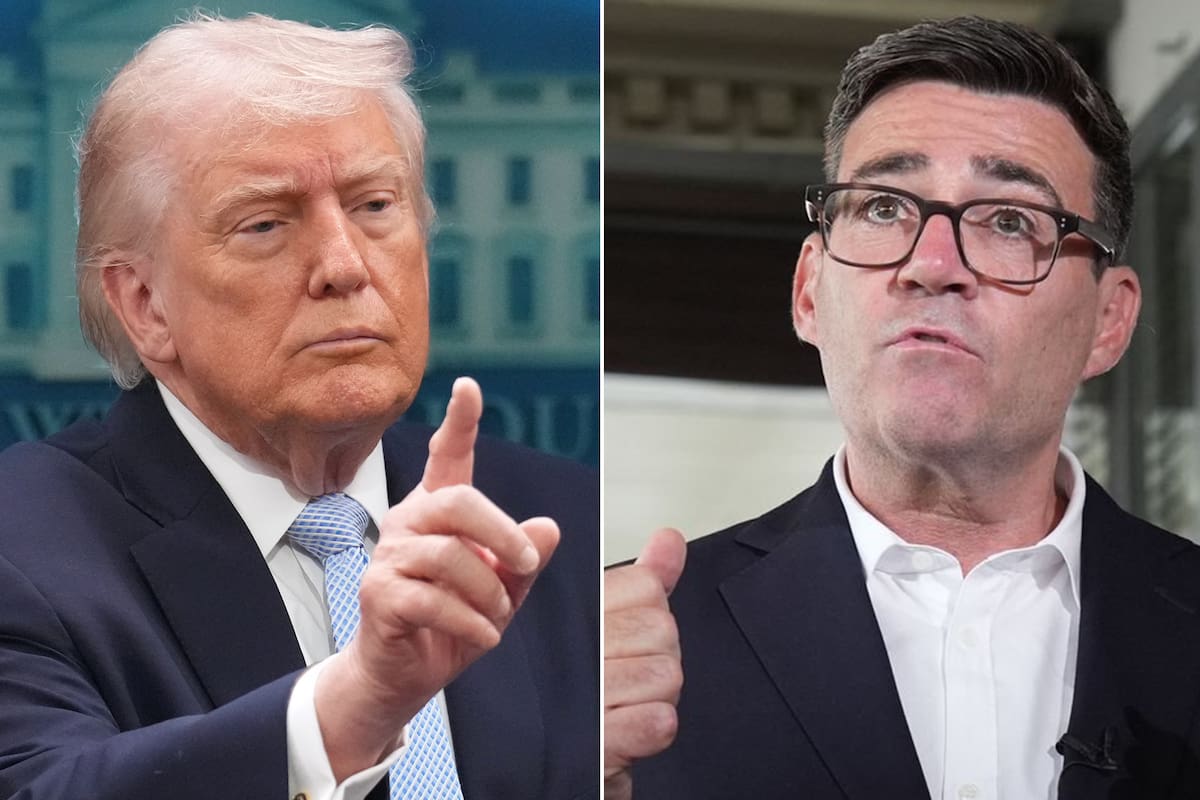
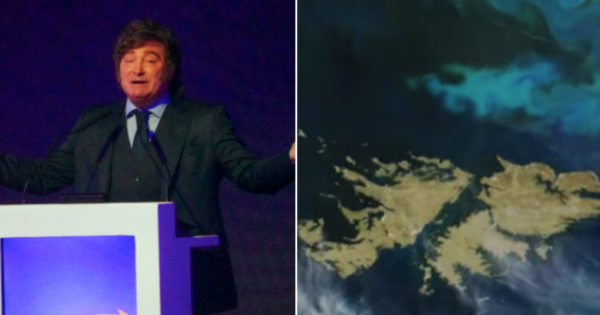
In recent weeks, the Falkland Islands issue has been on Argentina’s diplomatic agenda and in the international context. Two seemingly disconnected events have occurred in parallel: on one hand, the formal protest filed by Argentina’s Foreign Ministry to the UK over the transit of the HMS Medway; on the other, statements by US President Donald Trump that some interpret as a possible shift in Washington’s historical position on the archipelago. Available sources offer versions that coincide on some points but differ on others, and it is necessary to cross-check them to understand the real scope of what happened.
Formal protest over HMS Medway: what the Foreign Ministry says
According to the primary source, Argentina’s Foreign Ministry filed a formal protest note to the UK Embassy on July 13. The reason: the movements of the HMS Medway, which were not notified in accordance with current bilateral commitments. The note expresses the «strongest rejection» and describes the action as «unilateral» and «illegal,» as it involved transit through Argentine territorial waters.
The protest is based on the Joint Declaration of September 25, 1991, which replaces the annexes of the 1990 Madrid Declaration, specifically section I.2 on «Confidence-building measures.» According to the Foreign Ministry, this action contravenes UN General Assembly Resolution 31/49, which urges both parties to refrain from modifying the situation while the sovereignty dispute is pending.
The official source does not mention any other international context or link this event to the political situation in the US or UK. It merely describes the protest and reaffirms Argentina’s sovereignty rights over the islands.
The international context: tension between Trump and the UK
The secondary source, an opinion piece from La Nación, places the Falklands issue in a broader framework: the growing tension between Donald Trump’s government and the British administration of Prime Minister Andy Burnham, of the Labour Party. According to this source, Trump is upset with London for having denied him permission to use Diego Garcia island in his attacks on Iran. Additionally, Trump allegedly halted a deal to cede sovereignty of Diego Garcia to Mauritius, which he had previously supported.
This context, according to La Nación, would explain the supposed shift in Trump’s stance on the Falklands. However, it is important to note that this is an opinion piece, not an official source. No direct quotes from Trump or documents confirming a formal change in US policy are cited.
La Nación mentions that Trump allegedly said, on one occasion, that «I always review all positions» in reference to the Falklands, and on another, he praised Margaret Thatcher for the 1982 war. These statements, according to the author, do not constitute a policy change but rather a «relativism» characteristic of the American president.
Coincidences and differences between sources
Both sources agree that there is a sovereignty dispute over the Falklands and that the UK carries out unilateral actions that Argentina rejects. However, they differ in focus: the Foreign Ministry focuses on a specific event (the HMS Medway) and the bilateral legal framework, while La Nación addresses a supposed shift in the US position, linked to British domestic politics and Trump’s global strategy.
A key difference is that the Foreign Ministry does not mention any change in the US position or link the protest to the situation in Diego Garcia. La Nación, for its part, does not refer to the protest over the HMS Medway. These are two events occurring in parallel but not necessarily connected.
Furthermore, La Nación introduces an element not present in the official source: the alleged decision by Javier Milei to dispute the Falklands in international courts and to warn of reprisals against oil companies. The Foreign Ministry does not mention this. This information comes from «official sources» cited by La Nación, but it does not specify who they are or provide a supporting document.
Data analysis: comparison of positions
To better understand the landscape, we can compare the positions of the actors involved according to the sources:
| Actor | Position according to Foreign Ministry | Position according to La Nación |
|---|---|---|
| Argentina | Rejects unilateral actions by the UK; reaffirms sovereignty rights; seeks peaceful solution. | Milei decides to dispute in international courts; warns oil companies; seeks Trump’s support. |
| United Kingdom | Not directly mentioned, but it is inferred that it carries out unilateral acts. | New Labour government of Burnham; tension with Trump over Diego Garcia; support for oil companies in the Falklands. |
| United States | Not mentioned. | Trump with changing stance; possible support for Argentina, but unconfirmed; tension with the UK. |
Methodological note: The table compares the positions attributed to each actor according to the two sources. The Foreign Ministry is a primary source (official statement), while La Nación is a secondary source (opinion piece). La Nación’s positions are based on the author’s interpretations, not official documents.
Value module: What really changed?
To assess whether there was a change in the US position, it is necessary to compare Trump’s statements cited by La Nación. However, no exact dates or full transcripts are provided. La Nación mentions two moments: one in which Trump said that «I always review all positions» and another in which he praised Thatcher. It is not indicated whether these statements are recent or from years ago.
Document: Opinion piece from La Nación, published on September 6, 2026 (according to the URL). Organization and date: Not specified. Unit: Trump’s statements. Values used: «I always review all positions» and praise for Thatcher. Operation: Qualitative comparison of two statements. A percentage difference cannot be calculated because there is no numerical data.
Regarding the protest over the HMS Medway, the Foreign Ministry provides an exact date (July 13) and a precise legal framework. There are no numerical differences to calculate.
Given that no quantitative data is available, no currency or unit conversions are made. The magnitudes are qualitative.
Which data to follow
The most relevant data to follow is whether the US formalizes a change in its position on the Falklands. So far, we only have vague statements from Trump and a context of tension with the UK. A clear signal would be an official statement from the White House or a change in the US vote at the United Nations. It is also important to observe whether Argentina’s protest over the HMS Medway has any effect on bilateral relations with the UK, and whether the oil companies mentioned by La Nación (Rockhopper and Navitas) continue their operations.
Fuentes consultadas
- LA NACION
- Cancillería Argentina Fuente primaria
El Sereno contrastó las fuentes enlazadas y añadió contexto, comparación o análisis documental. Las fuentes primarias están identificadas. La nota no se presenta como investigación de campo ni como entrevista propia, salvo indicación expresa.

Comentarios