
What is CASER and how it was created
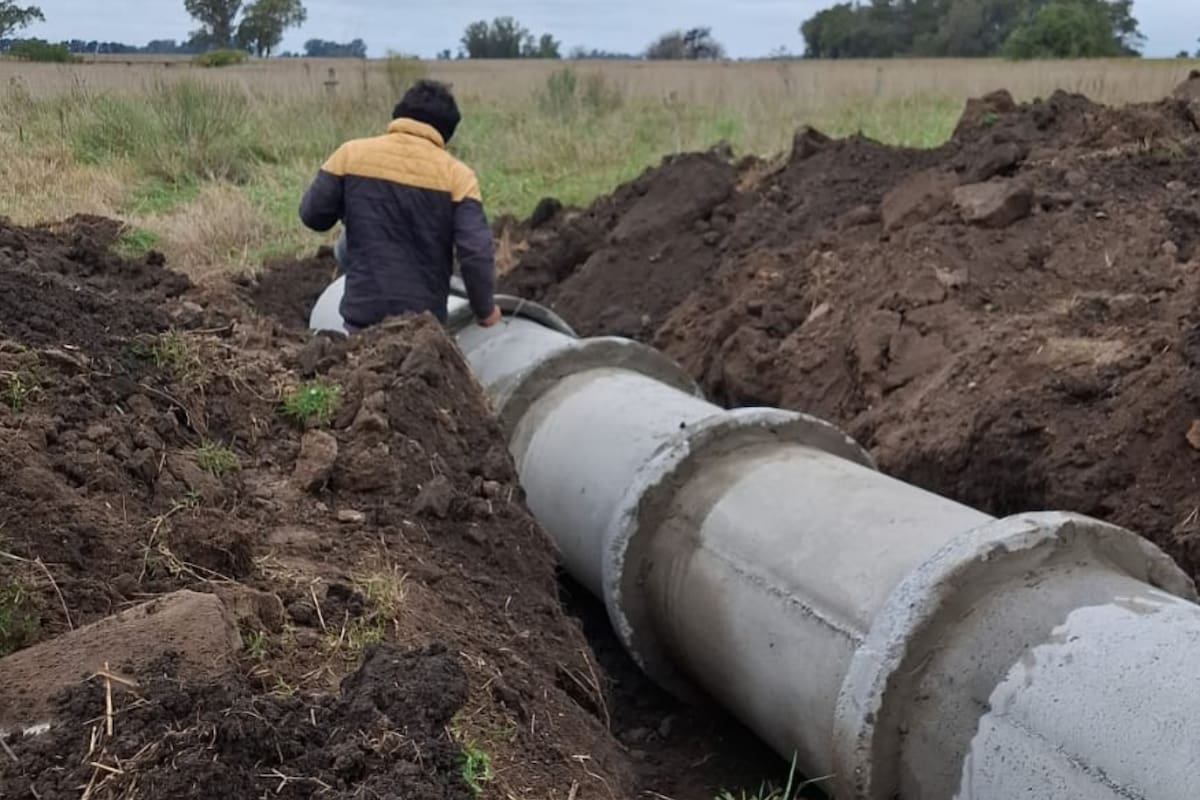
In Magdalena, Buenos Aires province, a committee administers 80% of the revenue from the general road network fee, guides, marks and signs, and pest bird control. It is called the Rural Services Administrative Commission (CASER) and is made up of producers, road users, and municipal representatives. It began operating on February 2, 2025, although the participation of the Rural Society of Magdalena in road maintenance dates back further: in 2018 they were already using pest bird fee resources to buy pipes and replace culverts.
The system was approved by ordinance last year. According to Facundo Seambelar, secretary of the Rural Society of Magdalena, 80% of what a producer pays for that fee goes to a dedicated fund administered by the committee. The money does not pass through municipal accounts: the committee meets once a month and decides how to spend it, but operations are carried out through the municipality’s administrative channels and are subject to audit by the Buenos Aires Court of Accounts.
Before creating the committee, they requested a survey of the roads. Until then, 1,350 kilometers were mentioned, but a plan prepared by the National Technological University (UTN) determined that the actual network is between 900 and 920 kilometers. That study, according to Seambelar, was «the cornerstone» because it made it possible to know what needed to be done urgently and outlined a ten-year work program. They also brought in three engineers to carry out the tasks.
Results on the roads
When CASER began working, of the five municipal motor graders assigned to rural roads, only one was operational. Today, according to José Vergara, treasurer of the committee, all five are operational. The machinery and personnel were moved to a site ceded by the Rural Society and organized work by district: each one has a machine and an assigned operator.
Another early decision was to intervene on access to rural schools. The committee began on February 2 and, according to its members, by March 8 they had already covered the entrances to all rural educational establishments in the district. This prevented class suspensions that were previously frequent. Seambelar stated: «In less than a month and a half, we guaranteed teachers and students the ability to reach the classrooms and not suspend classes.»
There were also voluntary contributions from neighbors who, seeing that the work was progressing, put money on top of the road fee. Vergara estimated that with these contributions, between 200 and 400 truckloads of material were financed for the roads. In addition, a few weeks ago they bought a pickup truck and are about to purchase a truck to transport materials.
Differences between sources
The two available sources deal with different topics. The first, from La Nación, is a journalistic article describing the operation of CASER in Magdalena. The second, from the Ministry of Economy, is an official statement about changes to the Tax Innocence Bill. There are no direct thematic overlaps, so data cannot be cross-checked between them. The information about CASER comes exclusively from the La Nación article, which cites statements by Seambelar and Vergara. No official sources were found to independently confirm the data.
The La Nación article is a secondary source: it is not an official document or an academic study. The data on road kilometers comes from a UTN plan, but the original document is not cited. The figures on motor graders and deadlines are statements by the committee members themselves, so they should be taken as testimonials, not as independently verified data.
Verifiable data
- CASER began operating on February 2, 2025.
- It is made up of producers, users, and municipal representatives.
- It manages 80% of the funds from the general road network fee, guides, marks and signs, and pest bird control.
- The money does not leave municipal accounts and is subject to audit by the Buenos Aires Court of Accounts.
- A UTN plan determined that the road network is between 900 and 920 kilometers, not 1,350 as previously believed.
- At the start, only one of the five motor graders was operational; today all five are operational.
- By March 8, they had already intervened on access to all rural schools.
- Neighbors voluntarily contributed money, financing between 200 and 400 truckloads of material.
Illustrative calculation
Using the available data, we can estimate the pace of work on school access. If the committee started on February 2 and finished by March 8, that gives a period of 34 days (considering February 2025 with 28 days). If we assume the district has, for example, 20 rural schools (data not provided in the sources, used only to illustrate the method), the average would be 0.59 schools per day. However, it cannot be calculated without knowing the exact number of schools.
Another possible calculation is the difference between the kilometers estimated before and after the UTN survey. If previously 1,350 km were mentioned and now it is known to be 920 km (taking the midpoint of the range), the difference is 430 km, representing a 31.8% reduction in the estimate. This shows that the survey allowed resources to be adjusted to reality.
Document: La Nación article of August 24, 2025 (secondary source).
Organization and date: Rural Society of Magdalena, statements by Facundo Seambelar and José Vergara in August 2025.
Unit: kilometers.
Values used: 1,350 km (previous estimate) and 920 km (midpoint of the UTN range).
Operation: 1,350 – 920 = 430 km; (430 / 1,350) * 100 = 31.8%.
This calculation is illustrative because the number of schools is not in the sources, and the figure of 920 km is a midpoint of the given range (900-920). It cannot be converted to other units without additional data.
What to follow
It is worth following the evolution of the UTN master plan: whether the committee complies with the ten-year program and how the works are financed. It is also relevant to monitor whether the shared administration system extends to other districts, since the article mentions that they took General Madariaga as a reference. A specific point to watch is the acquisition of the truck they are about to buy and whether they manage to keep the five motor graders operational over time.
Fuentes consultadas
- LA NACION
- Argentina.gob.ar Fuente primaria
El Sereno contrastó las fuentes enlazadas y añadió contexto, comparación o análisis documental. Las fuentes primarias están identificadas. La nota no se presenta como investigación de campo ni como entrevista propia, salvo indicación expresa.


Comentarios