
There are houses that have a special light. Not necessarily because they have large windows or glass roofs, but because the clarity enters filtered through amber, green, pink or blue panes and draws reflections on floors, walls and furniture. That effect, which for decades was a hallmark of kitchens, galleries and entrances of the typical chorizo houses and Buenos Aires PHs, is experiencing a resounding comeback.
Long before contemporary design rediscovered its possibilities, repartido glass enclosures helped solve a central challenge of urban housing: how to make the most of natural light without sacrificing privacy. In chorizo houses, PHs and European-inspired constructions that multiplied between the late 19th and early 20th centuries, rooms were organized around patios and corridors. To bring light into interior spaces, glazed doors, fanlights, enclosed galleries and partitions were incorporated, allowing clarity to circulate throughout the house.
Textured glasses —martelé, cathedral or fantasy— played a key role: they let light through but blurred views. The touches of color also added a changing effect that transformed the experience of spaces as the day progressed. Today, architects and decorators have rediscovered them as a versatile tool to divide spaces without losing luminosity.
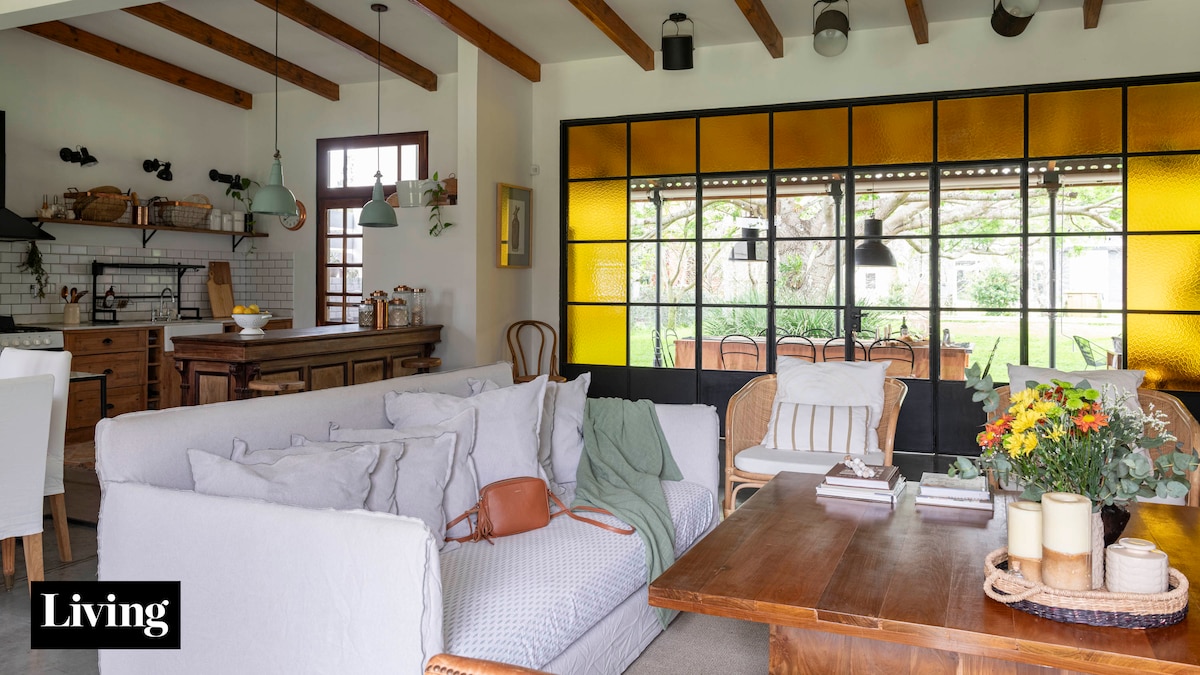
New versions often combine black metal profiles with textured glass in amber, olive green, dusty pink or yellow tones. The result maintains the original spirit —filtering light, delimiting spaces and preserving some intimacy— although with a more contemporary aesthetic. These enclosures appear as an attractive alternative to traditional partitions. They separate without enclosing, let light through and add color without needing to resort to cladding or paint.
But perhaps their greatest virtue remains the same one that seduced previous generations: the ability to transform something as everyday as the entry of light into a silent spectacle that changes every day. Some trends return out of nostalgia; others, simply because they never stopped working.
Among rustic furniture, natural fibers and a palette dominated by whites, the old window becomes the protagonist of the kitchen. The texture of the panes softens the light and creates a changing backdrop that accompanies daily life without losing delicacy. From the living room, the view toward the gallery remains intact, but the presence of the amber panes adds an extra dose of warmth. As the hours progress, the different tones modify the perception of the space and create an atmosphere impossible to achieve with completely transparent surfaces.
In an industrial-style loft, the iron and glass structure allows separating sectors without sacrificing visual spaciousness. The texture barely hints at what happens behind and adds a layer of intimacy in a completely open floor plan. Combined with old wooden doors and a crystal chandelier, they add color, depth and an imprint hard to forget from the first step inside the house.
The original openings allow clarity to circulate between the different sectors of the home, even when the doors remain closed. A common detail in period houses that continues to prove its relevance and that many renovations seek to preserve. Integrated into a simple-lined renovation, they function as a nod to the past and as proof that, sometimes, the smallest details leave the strongest mark.


che re lindo el vidrio repartido pero para mi esto es una gentrificacion estetica de los barrios obreros los arquitectos viviendo de robarle la onda a las casas chorizo y encima cobrando fortunas basta de romantizar la pobreza
Para mí esto es una falta de respeto total. El vidrio repartido lo inventaron nuestros abuelos, no estos modernitos de mierda que se creen genios. Yo creo que tendrían que pedir permiso antes de tocar lo nuestro. ¡Basta de boludeces, giles!