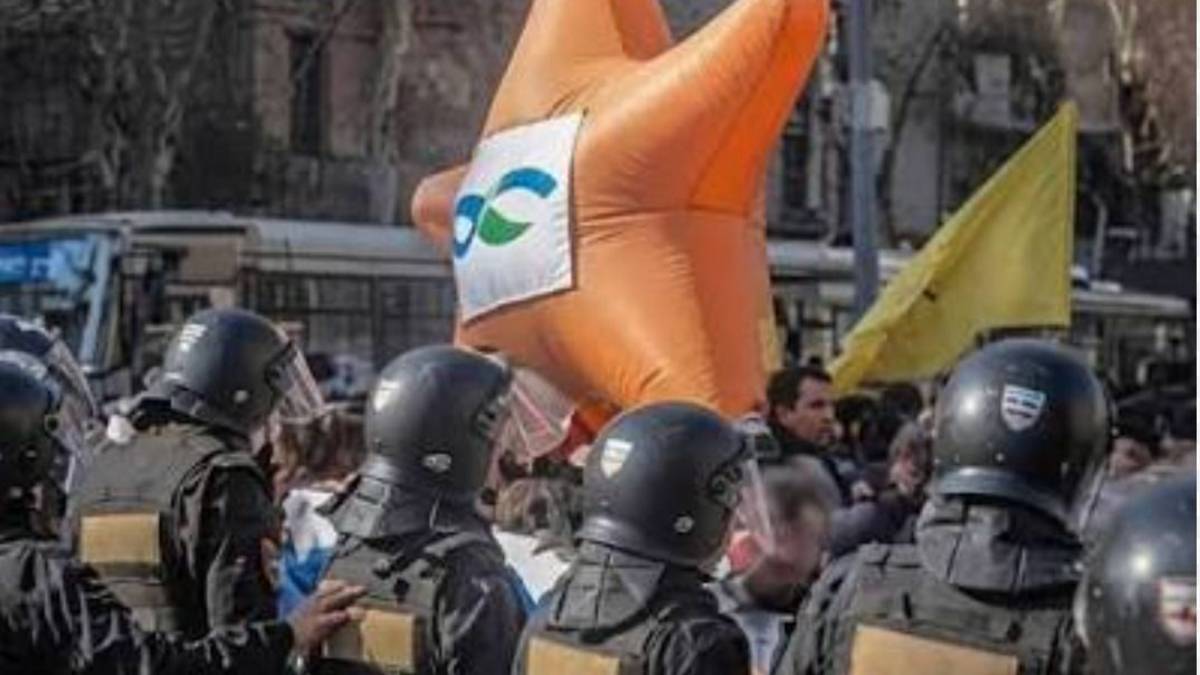
While the government advances with the dismantling of the National Atomic Energy Commission — emblematic projects halted, budget decimated, and expulsion of scientists leading to scenes of militarization — the results of the 2025 postdoctoral fellowship call were announced. Only 505 were awarded, 40% fewer than in 2023. The news hit the scientific community like a bucket of cold water.
The fellowships, including those in research and transfer centers (CIT) and co-financed modalities, will not start until August 1, 2026, subject to budget availability. The distribution allocated 70% of the quota to prioritized topics and specific geographic regions; the remaining 30% was distributed by order of merit in each discipline.
“It was a massacre, plain and simple,” said a researcher who preferred to remain anonymous. “I can’t believe people still apply for postdocs. Interrupting careers at that point is the most expensive thing for the country: the state pays for a person’s training only for them to end up abroad or in a private company, with no return. A sweet deal.”
Five hundred fellowships represent only 60% of what was awarded in 2023. Considering that Conicet alone has over 300 institutes, there are consolidated research areas and lines on the brink of extinction. “The impact is not the same for everyone. The largest groups will survive, but some areas will disappear,” lamented a scientist whose institute received no fellowships. “My postdoc trained for five years on a topic with few experts in the country. Her work plan aimed to contribute to long-term management. Now my group, one of the few studying this, has no chance to continue. I still can’t believe it.”
Nicolás Lavagnino, coordinator of the Economics, Politics, and Science group (EPC), explained that the trend is alarming: “In the 2020, 2021, and 2022 calls, we were around 700 fellowships, with a cap of 800. But all areas are declining rapidly. Each year, between 1,600 and 1,800 people earn PhDs; in the last call, there were 1,320 applicants. The applicant-to-award ratio is not bad, but only because everything has dropped. Fewer people apply for worse-paid fellowships, and fewer fellowships are given.”
The stipend, in some cases, falls below the collective bargaining salary in the private sector in non-formal areas, such as commerce. “Historically, the system allowed 40% to enter Conicet and another 20% to other agencies. With the widespread downsizing, that number of PhDs has nowhere to go,” Lavagnino added.
Entry into the researcher career is a tortuous process. Jorge Aliaga, a member of Conicet’s board representing universities, detailed: “There was a call in 2022, whose selected candidates were announced between September and November 2023. There were about 850. Of those, about 300 were appointed only between October and December 2025. In 2025, about 100 people from previous calls were appointed. About 550 remain pending. There was a call at the end of 2023 (CIC 2023), which was evaluated between 2024 and 2025. The lists came out in August 2025: another 400, in line to be appointed. There was also a call at the end of 2025 (CIC 2025). Registration began early this year and evaluation is starting. There was no call or appointments in 2024. Now it has started with an annual quota of 400 positions, which is roughly the number of annual departures, so the staff neither grows nor shrinks. Everything is very slow and delayed.”
The scientific community is in a state of shock. While the government insists on austerity, PhDs are left without a place. The question hanging in the air is: how much more can the system endure before it collapses entirely?

Para mí esto es una masacre científica planificada por el gobierno facho de Milei. Nos quieren rajar porque no servimos a sus intereses capitalistas. Se van a cagar cuando nos veamos todos yéndonos del país. ¡La ciencia no se negocia, carajo! Firma: El Che del Conicet
qe se vayan a laburar a la privada manga de zurdos lacras 40% menos de becas bien ahi menos ñoquis ideologizados para mi la ciencia argentina no da mas puro curro kirchnerista viva la libertad carajo