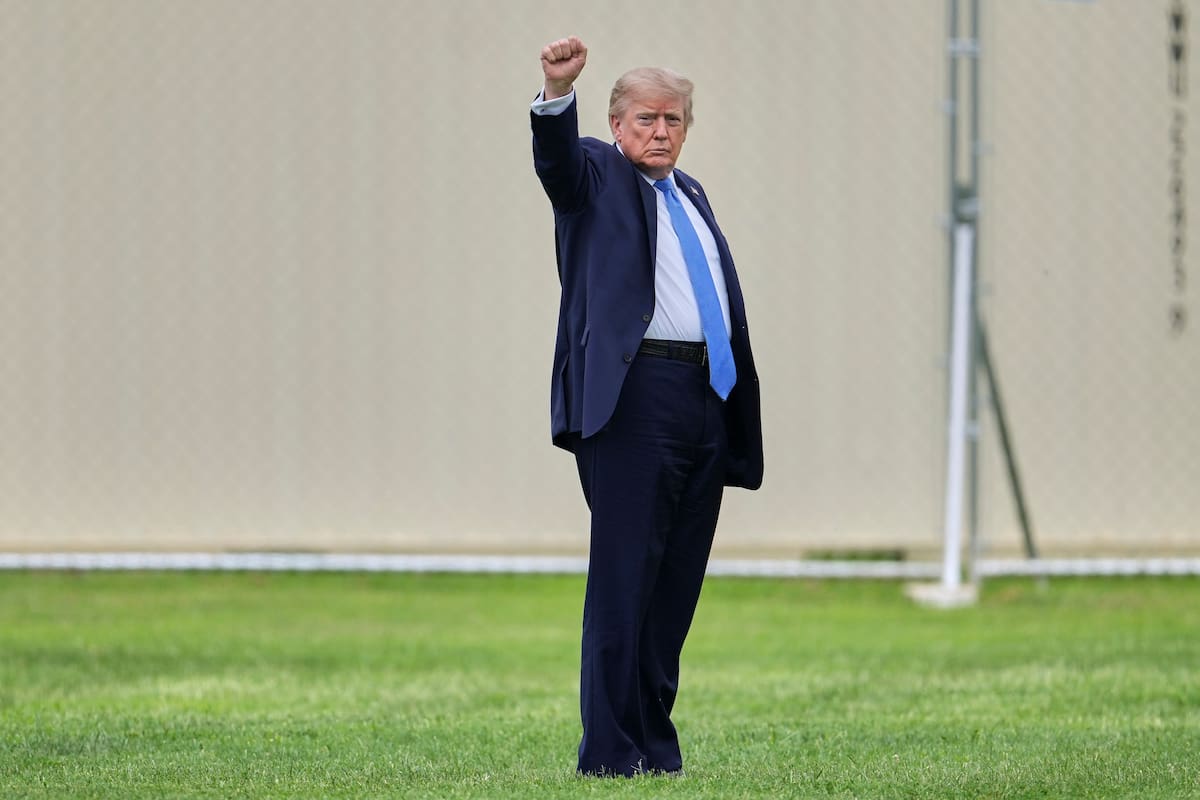
US President Donald Trump announced this Friday an oil deal with Venezuela, which he called «the greatest oil deal in world history.» According to his message on Truth Social, the pact ensures Washington’s «majority control» of more than 65 billion barrels of proven Venezuelan oil reserves, at no cost to the American taxpayer. However, available sources present significant differences in the figures and scope of the agreement, and the text of the deal has not yet been published.
What the official announcement says and what leaks say
Trump’s announcement came after US media, such as Axios and The Washington Post, revealed advanced negotiations. The primary source is Trump’s statement on his Truth Social network, reproduced by La Nación. There, Trump claims the deal was sealed by Secretary of State Marco Rubio and Secretary of War Pete Hegseth, with the collaboration of Delcy Rodríguez, whom he called «interim president of Venezuela.» He also mentions an alliance with the private sector.
La Nación, citing sources close to the negotiations, indicates that the agreement would ensure long-term access to a portion of Venezuela’s reserves, the largest on the planet, estimated at around 303 billion barrels. The outlet mentions that the list of 17 fields under negotiation includes deposits in the Orinoco Belt and mature areas in Lake Maracaibo. It also notes that a «lease» model with a subsequent auction was considered.
Meanwhile, La Izquierda Diario, citing an Axios exclusive, claims the deal would involve more than a dozen fields with about 90 billion barrels of proven reserves. This outlet, which opposes Rodríguez’s government, describes the agreement as «looting» and denounces a loss of sovereignty. It also mentions that Venezuela would be studying leaving OPEC, according to Bloomberg, although this is not confirmed by other sources.
Differences and coincidences among sources
All three sources agree that there is an agreement or advanced negotiation between the United States and Venezuela involving access to oil reserves. However, they differ on the figures: Trump speaks of 65 billion barrels, while Axios (via La Izquierda Diario) mentions 90 billion. La Nación does not give an exact figure for the deal but does mention Venezuela’s total reserves (303 billion) and that the agreement «more than doubles» US reserves. This latter claim is consistent with other sources, though current US reserves are not specified.
Another key difference: Trump claims the deal is «at no cost to the American taxpayer,» but La Izquierda Diario argues that Venezuela has already stopped receiving income due to US control of oil billing, citing statements by Luigi Pisella of the Special Commission for the Evaluation and Classification of Public Assets. This information does not appear in La Nación or the official statement.
Additionally, La Nación mentions that Rubio and Energy Secretary Chris Wright plan to visit Venezuela in early September, while La Izquierda Diario says Wright already visited the country in February. This discrepancy could be because La Nación refers to an upcoming visit, while La Izquierda Diario mentions a previous one. There is no official confirmation of either.
What available documents establish
So far, the only primary source is Trump’s statement on Truth Social. Neither the text of the agreement nor an official document detailing its terms has been published. La Nación reproduces Trump’s tweet and Rubio’s statements but does not include the full text. La Izquierda Diario relies on Axios leaks, which in turn cite anonymous US officials.
| Document/Source | What it establishes | What it does not establish | Open questions |
|---|---|---|---|
| Trump’s statement on Truth Social (primary source) | Announces an agreement with Venezuela on oil reserves; mentions majority control of more than 65 billion barrels; no cost to taxpayers; participation of Rubio, Hegseth, and Rodríguez; alliance with the private sector. | Does not detail specific fields, legal model, investment amount, or timeline. | What is the exact text of the agreement? Which fields does it include? How is control guaranteed? |
| La Nación article (secondary source) | Reports on the announcement, quotes Trump and Rubio, mentions 17 fields under negotiation, lease model, and the global energy crisis. | Does not confirm the deal’s reserve figures; provides no official documents. | What are the 17 fields? Which companies would participate? How will it affect prices? |
| La Izquierda Diario article (secondary source) | Reports Axios leaks about 90 billion barrels, direct US involvement in fields, and denounces loss of sovereignty. | Presents no official documents; its editorial stance is critical. | Are the leaks reliable? What does the Venezuelan government say? |
The value module: comparison of figures
Sources differ on the amount of reserves involved. To size the difference, we present an explicit comparison:
- Document: Trump’s statement (primary source) and La Izquierda Diario article (secondary source).
- Organization and date: Trump, August 28, 2026; Axios, August 27, 2026 (according to La Izquierda Diario).
- Unit: Millions of barrels of proven reserves.
- Values used: Trump: 65,000; Axios: 90,000.
- Operation: Difference: 90,000 – 65,000 = 25,000 million barrels. Percentage: (25,000 / 65,000) * 100 = 38.5% more in Axios’s figure.
This difference is not explained in the sources. It could be because Trump refers to part of the deal, while Axios includes more fields, or due to interpretation errors. We cannot determine which is correct without the text of the agreement.
What to watch closely
Given that the agreement has not yet been formally made public, it is crucial to follow the announced visit of Rubio and Wright to Venezuela, scheduled for early September. There, the full text of the agreement, specific fields, and legal model could be announced. It is also relevant to observe whether Venezuela actually leaves OPEC, as Bloomberg suggested, since that would have global implications. Finally, it is worth monitoring statements from Delcy Rodríguez and the Venezuelan government, which have not yet officially commented on the deal.
Fuentes consultadas
El Sereno contrastó las fuentes enlazadas y añadió contexto, comparación o análisis documental. Las fuentes primarias están identificadas. La nota no se presenta como investigación de campo ni como entrevista propia, salvo indicación expresa.

Comentarios