
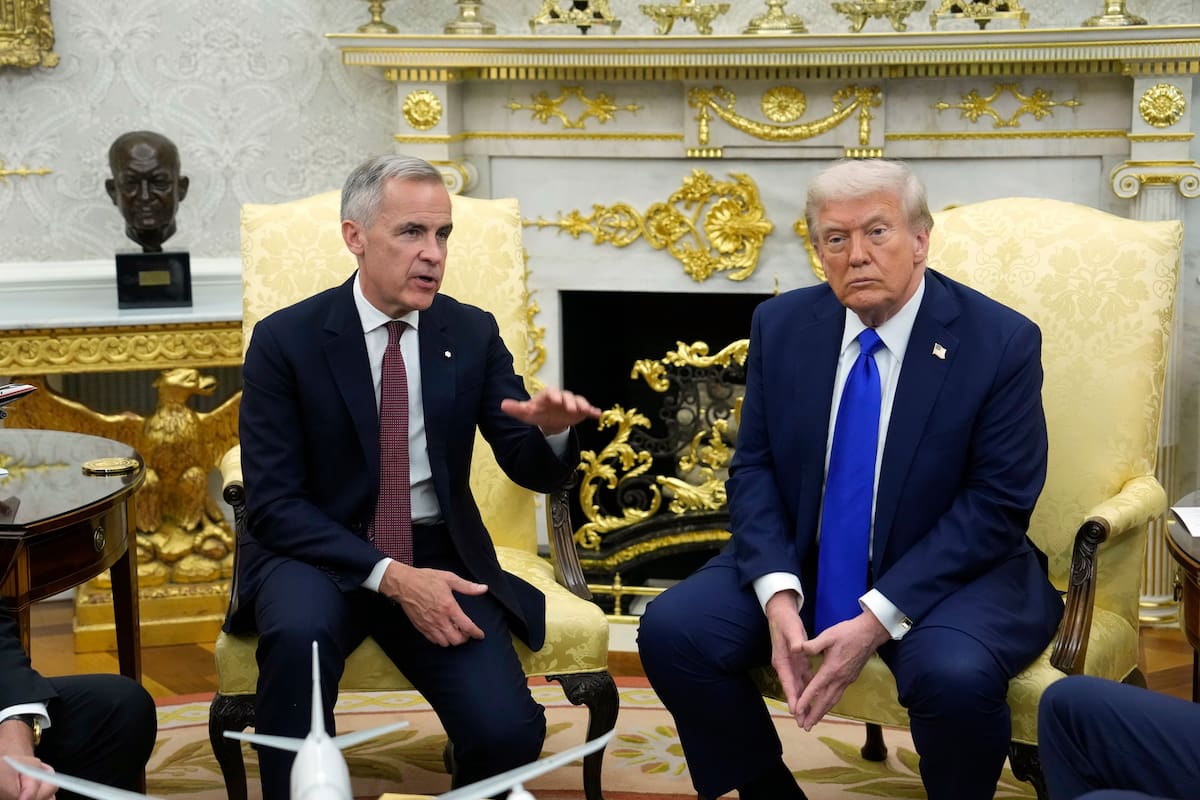
The United States government imposed 50% tariffs on products from Canada, according to La Nación. The measure, which went into effect just after midnight on Saturday, affects Canadian products worth approximately US$20 billion, representing just over 5% of Canada’s exports to its southern neighbor. In response, Canadian Prime Minister Mark Carney suspended talks in Washington and announced that he will apply similar tariffs.
Scope of the US measure
According to La Nación, the tariffs reach about 500 items, including cement, hockey equipment, clothing, furniture, wine, and fishing rods. For now, the measure does not cover key shipments such as energy, essential minerals, and fish. The rule has no time limit. President Donald Trump invoked Section 338, a 1930 law that allows tariffs to be set on countries that «discriminate against the trade of the United States.»
Canadian response and suspension of negotiations
Carney ordered the return of Canadian negotiators to Ottawa and confirmed that retaliation will begin on September 8 on steel and dairy products from the United States. In a statement, Carney said: «I have decided to suspend trade negotiations with the United States and have ordered Canadian negotiators to return to Ottawa.» Furthermore, he promised to match the tariffs «dollar for dollar» and add assistance to businesses and workers totaling US$25 billion.
The talks, which lasted three days in Washington, sought to reduce tariffs on steel and aluminum by half, and set at 15% (instead of 25%) the tariffs on the automotive industry. However, US demands on access for its dairy producers to the Canadian market and differences over trade in items such as lumber stalled the understanding.
Attribution of responsibility
The US Trade Representative, Jamieson Greer, blamed the Canadian government for the breakdown. Greer stated: «Canada refused to finalize the trade agreement under the terms previously agreed upon this week. Despite the United States’ offer to receive the best treatment of any major exporter to our market, new demands and backtracking on other commitments by Canada disrupted the careful balance achieved in recent days.»
For his part, Carney argued that «the last-minute changes in the conditions proposed by the United States were unfair, uneconomical, and cast doubt on the reliability of any agreement.» The primary source (USTR) does not mention this specific dispute, but rather focuses on another tariff action under Section 301 on forced labor, indicating that these are separate processes.
Practical impact and follow-up
The measure directly affects Canadian exporters of the products included in the list, as well as US consumers who import those goods. It also impacts Canadian companies that depend on the US market, which represents the majority of their exports. The Canadian response will affect US steel and dairy producers.
- Immediate effects: The 50% tariffs have been in effect since Saturday. Canadian exporters of the 500 affected products face an increase in costs that could reduce their sales. Canadian retaliation on steel and dairy will begin on September 8.
- Conditional effects: If negotiations are not resumed, the impact could extend to other sectors. Carney’s promise to match tariffs «dollar for dollar» could expand the list of taxed products. The US$25 billion assistance to Canadian businesses and workers could partially mitigate the damage.
- Uncertain effects: The final scope of the measure will depend on the evolution of negotiations. It is unknown whether there will be new exceptions or if the measure will extend to other products. The response of other countries and international organizations is uncertain.
It is key to monitor whether negotiations resume and if there are changes in the list of affected products. It is also worth observing the implementation of Canadian retaliation on September 8 and whether it expands to other sectors. The evolution of prices of affected products in both countries will be an indicator of the real impact.
Fuentes consultadas
- LA NACION
- Oficina del Representante Comercial de Estados Unidos Fuente primaria
El Sereno contrastó las fuentes enlazadas y añadió contexto, comparación o análisis documental. Las fuentes primarias están identificadas. La nota no se presenta como investigación de campo ni como entrevista propia, salvo indicación expresa.


Comentarios