At noon on June 26, 2002, it was just another day in an Argentina that had been in flames for months. That morning’s headlines spoke of an unyielding IMF, while Economy Minister Roberto Lavagna traveled to Washington almost on a begging mission. In this context of terminal crisis, thousands of activists from piquetero organizations and unemployed workers marched toward the Pueyrredón Bridge in Avellaneda, demanding genuine jobs, increased social plans, and food for community kitchens. What happened in the following hours would change the country’s recent history.
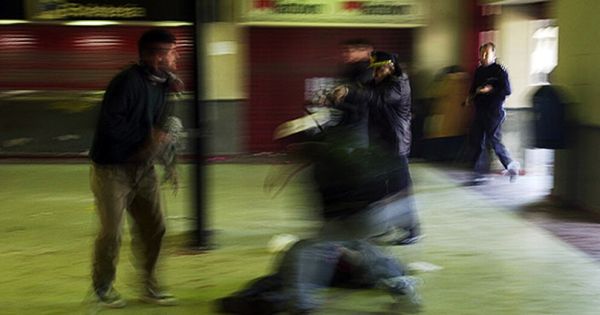
When the crowd tried to advance onto the bridge, police opened fire. Demonstrators ran in different directions. On Avenida Pavón, near the Avellaneda station of the Roca Railway, Maximiliano Kosteki, 22, from Guernica, fell wounded by a gunshot to the back. His comrades dragged him inside the station to protect him.
Among those trying to help him was a 21-year-old named Darío Santillán, a leader of the MTD-Lanús and responsible for demonstrator security. Santillán had already escaped the security forces but returned to the area to rescue his fallen comrade. He knew first aid and wanted to help him. That was when Commissioner Alfredo Fanchiotti and Corporal Alejandro Acosta arrived. The others ran. Darío, crouched next to Kosteki, raised a hand. The police forced him to stand up and, when he was turned away, shot him.
Afterward, the officers dragged Santillán across the station hall and left him lying next to a kiosk, where his blood pooled. Before leaving, they didn’t clean the blood but cleaned the scene: they hastily picked up the red cartridges that identified the lead pellets.
From the national and provincial governments, the version that the piqueteros had killed each other was immediately put forward. Eduardo Duhalde’s government bet that the narrative would hold. It did not count on what was already revealed in two rolls of film.
The images by photographer Pepe Mateos and Madres de Plaza de Mayo collaborator Sergio Kowalewski precisely recorded what had happened inside the station. They showed Commissioner Fanchiotti aiming his gun, Kosteki on the ground dying, and Santillán crouched and turned away, covering himself, moments before being executed. The next day, those images traveled across the country and the world. The official version collapsed within hours.
Social shock was immediate, and the subsequent mobilizations forced Duhalde to move up the presidential elections originally scheduled for October 2003.
In January 2006, Argentine justice sentenced Commissioner Alfredo Fanchiotti and Corporal Alejandro Acosta to life in prison as the material authors of the homicides. But the case for political responsibility never progressed. The prosecution points to Eduardo Duhalde as the main political responsible for the repression ordered to prevent demonstrators from entering the City of Buenos Aires, a case that remains unresolved in federal court.
Every June 26, social and piquetero organizations mobilize to the Pueyrredón Bridge in memory of Darío and Maxi. The station where they were killed has borne their names since 2013. Twenty-four years later, the memory of the two young activists remains an open wound in Argentine history.
24 años y la yuta sigue siendo la misma lacra para mi kosteki y santillan viven en nuestra lucha las fotos mostraron la verdad pero el poder sigue encubriendo fuerza compañeros ni olvido ni perdon 🖕al estado asesino
24 años y siguen llorando por dos chorros! para mi la poli hizo bien, punto. estos zurdos de mierda inventan cualquier verso. viva la libertad carajo! firmado @VolveLapoli$ia