
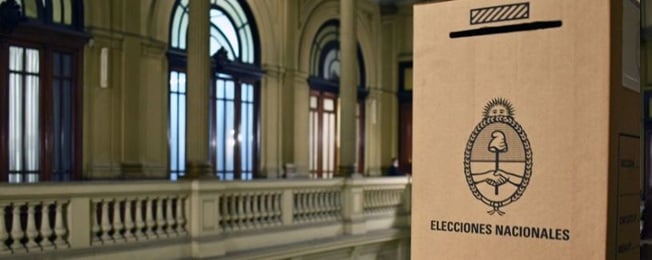
“Again I have to vote for the least bad.” That phrase, which millions of Argentines repeat election after election with a mix of resignation, anger, and disenchantment, has become the epitaph of a democracy that seems condemned to choose between options that never truly represent us. But almost no one asks the key question: who decided that those would be the candidates?
Eliminating the PASO can save money, yes. But it can also take away from citizens the only instance in which they today have the possibility—imperfect, but real—to influence the selection of those who will later compete to govern the country. In other words: it can return to the caste almost absolute control over the electoral offering. And that price may end up being much higher than any fiscal savings.
Javier Milei turned the word caste into one of the most powerful political concepts of recent years. Many identify it with Kirchnerism, others with old politics. But the caste does not belong to a specific party: it is a way of exercising power. It exists when a small group decides for everyone, when candidates are handed out in an office, when lists are negotiated among leaders and citizens can only choose between options that others selected for them beforehand. For that to work, a tool is needed: the machine.
The machine has no ideology. It changes names, colors, and speeches. It can be Peronist, Radical, Macrista, or Libertarian. Its goal is always the same: to maintain control over who can compete and who cannot.
Until the enactment of Law 26,571 in 2009, Argentina did not have a national system of open, simultaneous, and mandatory primaries. Each party resolved its candidates according to its own charter. In practice, party conventions, agreements among leaders, decisions by national and provincial leaderships, and often the famous “finger-pointing” prevailed. Open primaries were exceptional, and the vast majority of citizens only participated when the candidates were already defined. The decision was not in the hands of the electorate, but of those who controlled the parties.
In Peronism, territorial control of candidates was a structural feature for decades. Academic literature describes the role of local brokers as intermediaries between the state and citizens: networks of favors, social assistance, employment, paperwork management, and electoral mobilization built a political machine capable of ordering internal elections and disciplining leaders. The disputes between Antonio Cafiero and Carlos Menem in 1988, the weight of Eduardo Duhalde’s Buenos Aires machine during the 1990s, and the PJ crisis in 2003 show a constant: candidates depended much more on territorial control and negotiations among governors and leaders than on open competition before the citizenry.
The Radical Civic Union, for its part, historically developed a more institutional internal culture than Peronism. But it was not free from the predominance of conventions, internal lines, and provincial leaderships. For decades, national and provincial candidates were the result of negotiations among delegates, leaders, and party structures. The difference with Peronism was one of intensity, not logic.
It is worth saying without naivety: the PASO never eliminated the influence of the machines. The machines continued to exist. What they did was remove their monopoly. Before, those who controlled the party decided practically without interference who the candidates would be. Afterwards, an actor impossible to fully discipline appeared: the citizen. For the first time, any Argentine could participate in the selection of candidates without depending on party affiliation, a convention, or a territorial structure. The PASO did not guarantee perfect internal democracy, but they did force the machines to expose their decisions to millions of citizens.
The data help understand why a large majority of citizens reject the current mechanism. In the 2023 PASO, 8 of the 15 parties that presented presidential formulas had no internal competition. Not even the candidate who was elected president competed within his own space. In the province of Buenos Aires, for national deputies, 30 lists from 24 groups were presented, but only 4 surpassed the 1.5% threshold. For senators, there were 37 lists from 26 groups, and only 4 managed to pass the filter.
People do not reject voting. They reject being forced to vote to ratify decisions that others have already made. Because the PASO also failed part of the promise with which they were born: too often they became a mandatory election without real competition. There were single lists, fictitious internal elections, and parties that used the system solely to access public funding.
Polls confirm that perception. According to a survey released by the Isasi Burdman consulting firm, seven out of ten Argentines want to eliminate the PASO. Analyst Viviana Isasi sums it up precisely: “People want to participate, but they don’t want to be called to vote all the time.” Argentines are not tired of choosing. They are tired of voting when they feel their vote changes nothing.
Here appears the great contradiction. The PASO were not created so that we vote more. They were created so that we can choose better. It is true that many times they did not fulfill that promise. But eliminating them without replacing them with a superior mechanism means renouncing the only instance in which the citizen can influence the electoral offering before it is closed. In the PASO, the question should be: who do I want to represent me? In the general election, that question is no longer the same: it is who do I want to govern among the candidates that others have already selected?
When the first instance disappears, citizens stop participating in the construction of the electoral offering. They can only choose among the candidates that party leaderships decided to present. And then the famous “lesser evil” appears. It is not born in October or in the runoff. It begins when we no longer have the possibility to influence who gets on the ballot.
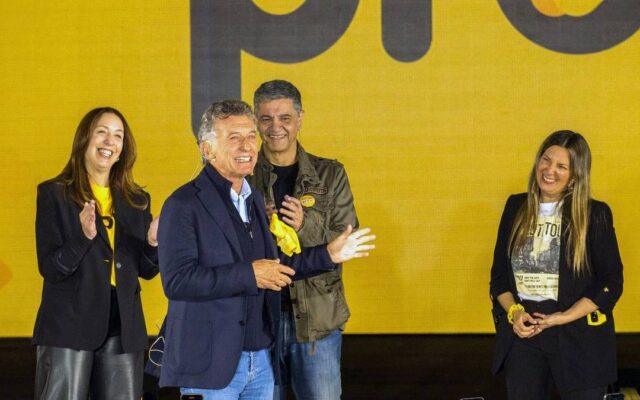
The 2015 PASO did not create Mauricio Macri’s leadership. They did allow a coalition made up of the PRO, the UCR, and the Civic Coalition to order their candidates through an open competition among Mauricio Macri, Ernesto Sanz, and Elisa Carrió, granting it a political legitimacy that would hardly have been achieved with a simple leadership agreement. That is why it is striking that today some PRO leaders, close to La Libertad Avanza, push to eliminate that mechanism. It is not a position shared by the entire space: other sectors of the PRO and a good part of the UCR maintain that the PASO need a deep reform, not their disappearance.
Behind the discourse of savings and efficiency, the elimination of the PASO hides a masterstroke by party machines. The caste never left. It was just waiting for the moment to recover what it always considered its own: the right to decide, behind closed doors, who the candidates will be. And if the citizen is left without a voice in that decision, then the famous “lesser evil” will cease to be an exception and become the rule.


che pero para mi estos hdp quieren volver a la dictadura con las listas sabanas sacan las paso y la casta decide todo es un choreo monumental aguante la democracia interna carajo firma perro del pueblo
Para mí esto huele a curro de los zurdos de mierda. Las PASO eran un choreo de la casta y ahora lloran porque pierden el control. Viva la libertad carajo, abajo el régimen. ¡No me jodan!