
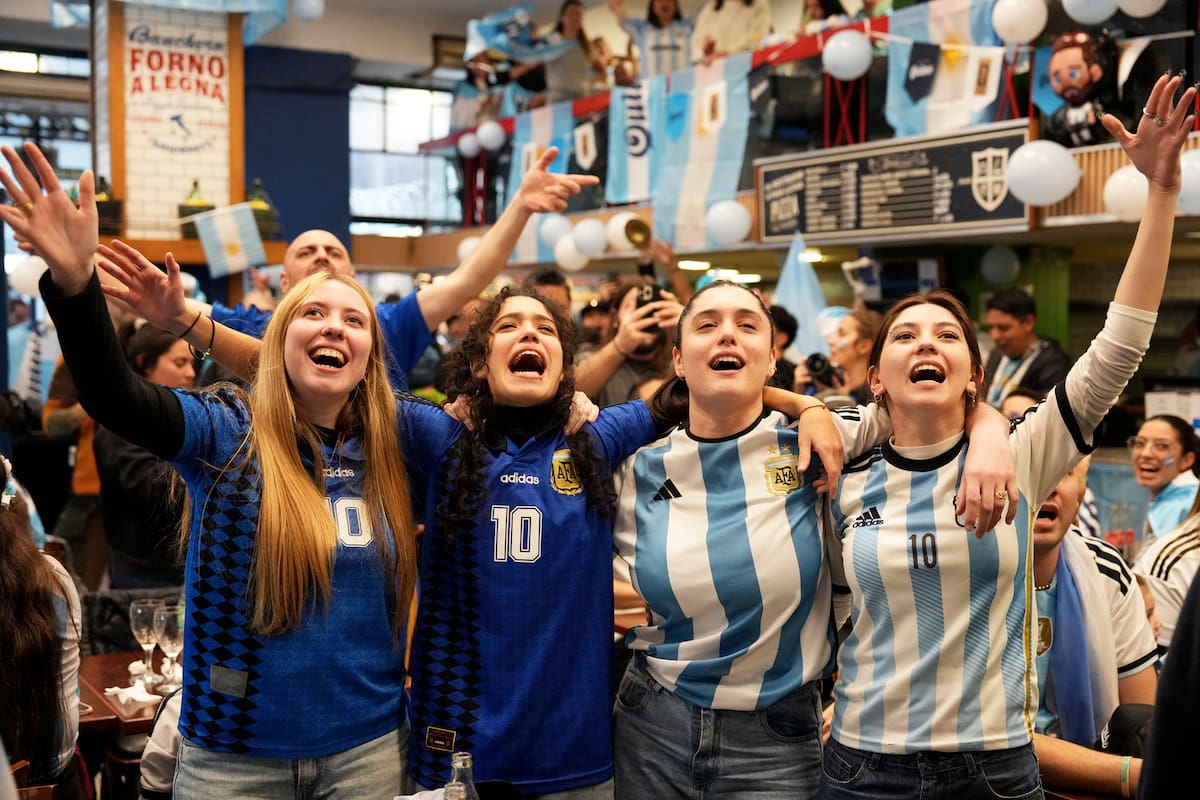
Today’s final against Spain will once again put the body to the test: anguish, frayed nerves, accelerated heart rate, and an emotional roller coaster. Although it is part of football folklore, it also places a strain on the body: sustained tension can alter appetite, mood, hinder digestion, or even trigger physical symptoms such as headache or stomach discomfort.
To minimize the effects (or preferably prevent them), nutrition and mental health specialists propose a series of strategies aimed at reducing the impact that stress can have on the body.
While some people lose their appetite, others turn to heavy meals, alcohol, or snacks simply to channel their nerves. To prevent this combination from taking a toll on the body, they emphasize paying attention to what you eat before, during, and after the match.
“Certainly, stress modifies digestion,” says Yael Hasbani, a health coach focused on gut health. This, she explains, is a consequence of the direct connection between the gut and the brain. It is the vagus nerve that acts as the main physical link of this bidirectional axis. “When watching an important match, the brain goes into fight-or-flight mode and focuses on survival; therefore, it has to choose which bodily functions to prioritize and which not,” says Hasbani. In that equation, the digestive system tends to be relegated, and as a result, digestion becomes slower, one feels heavier, and abdominal distension, reflux, heartburn, and even nausea appear.
Stimulating drinks such as energy drinks, coffee, and alcohol are the most harmful for these occasions, the professional assures. “They increase adrenaline levels, spike cortisol, and trigger reflux in predisposed individuals,” she adds. In the case of alcohol, she notes, the liver is the most affected organ, given that the metabolic process of the drink is complex. Water, fruit juices, and non-carbonated drinks are what she recommends as healthy alternatives to prevent the aforementioned discomforts.
Regarding food, both she and Germán Busch, coordinator of the coronary unit at Hospital Universitario Austral, agree that “eating well in advance is the golden rule.” This, they explain, ensures that the body has already done most of the digestion by the time the ball starts rolling.
The ideal menu: a “easy-to-digest” dish composed of carbohydrates and lean proteins, such as pasta with olive oil, fish with vegetables, grilled chicken breast with rice or mashed potatoes, a sandwich on French bread with turkey and soft cheese, or a bowl of oatmeal with slices of ripe banana.
Both experts suggest avoiding foods rich in saturated fats and excess fiber, such as barbecue, fried empanadas, heavy sauces, pizzas, french fries, stews, whole cheeses. Also simple sugars and refined flours, such as pastries, baked goods, cakes, ice cream, cookies, and sweet snacks.
Regarding recommended foods to eat during the match, they suggest vegetable sticks like carrot and celery with hummus. Homemade popcorn (made with little oil, butter, or salt), a handful of nuts or raisins, olives in moderate amounts (preferably low in sodium), chopped fruits like apple or strawberries (optionally add yogurt for a satiating effect). Also seed-based toast, bruschetta with basil, tomato and Port Salut cheese, and fruit skewers. These are light and healthy options that help calm nerves because they require chewing.
After the match, emotions stabilize and dopamine levels plummet. Thus, the brain seeks a quick and pleasurable reward, which often leads to a binge. To avoid this, Busch advises drinking one or two large glasses of water after the match so that the body does not confuse dehydration or dry mouth with ravenous hunger.
If foods with excess fat were consumed, Hasbani suggests prioritizing the next day all types of lean proteins (chicken breasts, white fish, egg whites, nonfat Greek yogurt, among others) and herbal teas that aid digestion: chamomile, boldo, mint, or spearmint.
Identification with the team led by Lionel Messi, the uncertainty of the result, and accumulated expectations activate mechanisms linked to stress that can translate into palpitations, muscle tension, rapid breathing, or difficulty concentrating. Understanding why this phenomenon occurs is the first step to learning how to regulate it.
“Such a decisive match can be interpreted as a threatening situation: amygdala activity increases, adrenaline and cortisol are released, the heart speeds up, breathing becomes shallow, and muscles tense up,” reports neuropsychologist Karina Carreño. According to her, in these cases “the nervous system responds to act, not to be a spectator.”
The most common symptoms are: irritability, difficulty concentrating, impulsivity, sleep disturbances, and euphoria. Why are they triggered? Ricardo Corral, a psychiatrist and president of the Argentine Association of Psychiatrists, explains that they are also due to strong patriotic feelings. “In this type of tournament, an identification arises with the person or team that will compete representing the social group,” he states.
Those players on the field carry on their shoulders millions of Argentines who trust them. Therefore, as Corral explains, a particular atmosphere is generated: “If we win, we are all happy, and if we lose, we are all sad.”
Sol Buscio, a clinical psychologist and founder of the PsicoSol space, makes a key distinction: positive or negative reactions depend largely on the personality and resources a person already has to face successes and failures. The ebb and flow of emotions also affects external factors such as the time of year, social or political situation.
Thanks to neuroplasticity —the brain’s ability to reorganize, adapt, and form new synaptic connections— it is possible to reduce psychological discomfort with small strategies that help restore balance between emotional areas and the prefrontal cortex (responsible for self-control and decision-making).
Carreño suggests techniques to successfully “master” the brain and emotions:
Find the service guides with expert tips on how to act in the face of everyday problems: Addictions, violence, abuse, technology, depression, suicide, online gambling, bullying, eating disorders, and more.


Para mí esto es una joda. El argentino de verdad no come ensaladas ni se pone nervioso, se clava un asado y un fernet antes del partido. Los zurdos de España se van a cagar en las patas, esto huele a que quieren debilitarnos con comidas de puto. Vamos Argentina carajo, a romperles el orto.
che para mi esto es verso de chetos los pobres laburan y estos hablan de sushi y te verde mientras argentina siempre comio asado y birra viendo la final los jugadores se bancan la presion nosotros tambien los españoles vienen cagados vamos argentina carajo