
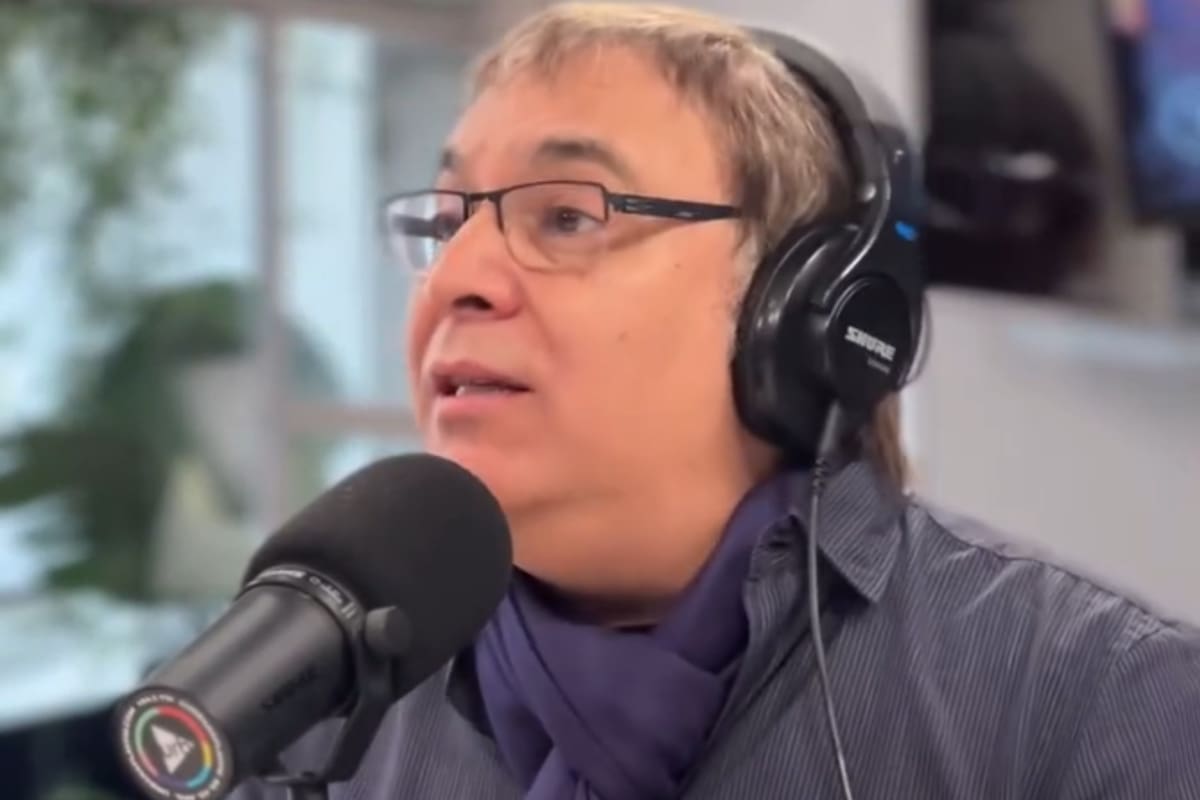
Renowned psychoanalyst and writer Gabriel Rolón has once again shaken the world of self-help and pop psychology with statements that leave no stone unturned. In an interview that is already causing a stir, the author of La felicidad tore down the scripted discourses that promise a full life without effort. ‘Pain is stronger than happiness, because the memory of a happy moment, of an absence, also marks a lack,’ he said without anesthesia.
Rolón does not mince words: he criticized currents that simplify emotional processes as a mere individual decision. ‘Being happy implies a very great responsibility,’ he warned, and made it clear that society is hooked on magical solutions that do not exist. For him, true fulfillment lies in accepting one’s own shortcomings, not in pursuing an unreal happiness.
The psychoanalyst coined a term that promises to spark debate: ‘faltacidad’. He defines it as a happiness that embraces all the subject’s lacks, absences, pains, and wounds. ‘Happiness does not exist. There is faltacidad, which is a happiness capable of embracing all my lacks, my absences, my pains, and my wounds,’ he explained. An idea that clashes head-on with the culture of ‘everything is fine’ and toxic positivity.
Along the same lines, Rolón focused on the present moment: ‘Happiness is in the eternity of the here and now.’ And he warned that living anchored to the past or an uncertain future nullifies the meaning of existence. ‘We must build happiness in the present,’ he insisted, although he clarified that this happiness will always be imperfect.
But the highlight came when he spoke about love. For Rolón, love is ‘that wonderful invention of humans to try to deceive death for a while.’ A definition that shakes any sugary romantic idea. The analyst argued that love serves to make loneliness hurt less and sadness less disturbing. However, he also issued a warning: ‘Loving someone is granting them power over you.’ And he added that a healthy love is one where the person voluntarily renounces using that power to harm the other, even in an argument.
Rolón also targeted the social and family mandates that condition us from birth. ‘We are so crossed by others’ opinions that we become eccentric to ourselves,’ he shot. In that sense, he defined psychoanalysis as ‘the art of trying to prevent someone from fulfilling their destiny,’ understanding destiny as an external mandate that often prevents us from being who we truly are.
‘It is not easy to know what one desires,’ he acknowledged, but closed with a message of hope: ‘Desire never runs out.’ With these statements, Gabriel Rolón once again puts his finger on the sore spot of a society that seeks quick answers and refuses to face its own wounds.
Para mí este tipo es un vendido más del sistema. El dolor pesa porque nos tienen explotados laburando como burros mientras él se llena de guita con su psicología de ricos. Me parece que el psicoanálisis es un verso de la clase alta. Viva la lucha de los laburantes, che.
che este rolon es un zurdo de mierda la felicidad perfecta no existe claro por culpa de los inmigrantes q nos roban la identidad el dolor es mas fuerte xq nos tienen podridos con la ideologia de genero faltacidad la tuya pa viva la libertad carajo