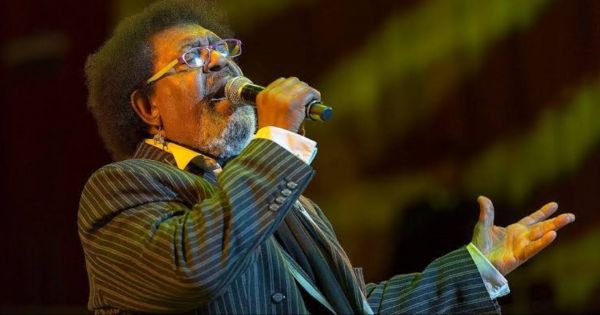
Rubén Rada’s family confirmed this Wednesday, August 26, the death of the Uruguayan musician at the age of 83. The artist had been hospitalized for about a month due to pneumonia and its complications, according to Crónica. The news was spread through a statement on Instagram, where his loved ones wrote: “With great pain we inform you that today, Wednesday, August 26 at 3:30 p.m., our beloved husband, father, and grandfather left and now rests in peace.”
The post surpassed 64,000 “likes” and was filled with comments from artists who expressed their sadness. Valeria Lynch, Ivonne Guzmán, Dante Spinetta, Conociendo Rusia, Rochi Igarzábal, Julieta Díaz, Pedro Aznar, Fernanda Metilli, Pachu Peña, and Migue Granados were some of those who left messages, according to Crónica. Natalia Oreiro shared images and wrote: “Dear Negro… I have no words, you were, are, and will be the greatest thing in Uruguay…” Fito Páez published a photo album and said: “The Rada family is the Páez family. Today the great caudillo of love and music left us.”
A career spanning more than seven decades
La Izquierda Diario recalled that Rubén Rada, whose full name was Omar Rubén Rada Silva, began his artistic career at age 10 on the streets of Montevideo, joining the black and lubolos comparsa Morenada. His passion accompanied him for more than seven decades. He was a musician, singer, composer, percussionist, and also a television and film actor.
According to La Izquierda Diario, Rada released more than 30 live albums and as many studio albums and collaborations. His style mixed candombe, the genre he cultivated most, with jazz, samba, bossa nova, and Argentine rock, of which he was an early reference.
The meaning of “¿Quién va a cantar?”
La Izquierda Diario highlighted one of his most emblematic songs: “¿Quién va a cantar?”, which led the album of the same name. The lyrics, dating from times of neoliberalism in Latin America, include the stanza: “When all poetry is lost, when people only survive, when fatigue kills joy, we will be a work machine (yes, of course).”
The outlet noted that this song summarizes an idea that will remain etched, in reference to the artist’s legacy.
Contrast between sources
Both sources agree on the date of death (Wednesday, August 26), age (83), and reason for hospitalization (pneumonia). However, Crónica provides additional details such as the exact time (3:30 p.m.) and the number of “likes” on the Instagram post, while La Izquierda Diario delves into Rada’s biography and musical context.
There are no contradictions between the sources, but it should be noted that Crónica relies on the family statement and social media comments, while La Izquierda Diario offers a broader profile. Neither source is primary in the sense of being the family’s official statement, although Crónica reproduces it verbatim.
Documents and open questions
| Document/Source | What it establishes | What it does not establish | Open questions |
|---|---|---|---|
| Family statement on Instagram (reproduced by Crónica) | Confirms Rubén Rada’s death on August 26 at 3:30 p.m. | Does not detail the cause of death or the exact location. | What was the direct cause of death? |
| Article from La Izquierda Diario | Provides biographical data and highlights the song “¿Quién va a cantar?”. | Does not include statements from the family or other artists. | What other tributes will be held? |
A legacy that transcends
Rubén Rada’s death generated a wave of reactions in the artistic world. Farewell messages highlight his warmth, generosity, and contribution to music. Natalia Oreiro defined him as “the greatest thing in Uruguay,” while Fito Páez called him “the great caudillo of love and music.”
Beyond the differences in the sources’ focus, both agree that Rada was a central figure in Uruguayan and Latin American music. His blend of candombe with other genres made him an innovator, and his song “¿Quién va a cantar?” remains an anthem of resistance.
The family asked for respect in this moment of grief, and details of the wake or burial have not yet been announced. More tributes from colleagues and followers are expected in the coming days.
What to follow
It is advisable to follow the social media of the family and close artists to learn the details of the farewell and possible posthumous tributes. It will also be relevant to observe whether any cultural institution or the Uruguayan government declares official mourning or makes a special recognition.
Fuentes consultadas
El Sereno contrastó las fuentes enlazadas y añadió contexto, comparación o análisis documental. Las fuentes primarias están identificadas. La nota no se presenta como investigación de campo ni como entrevista propia, salvo indicación expresa.

Comentarios