
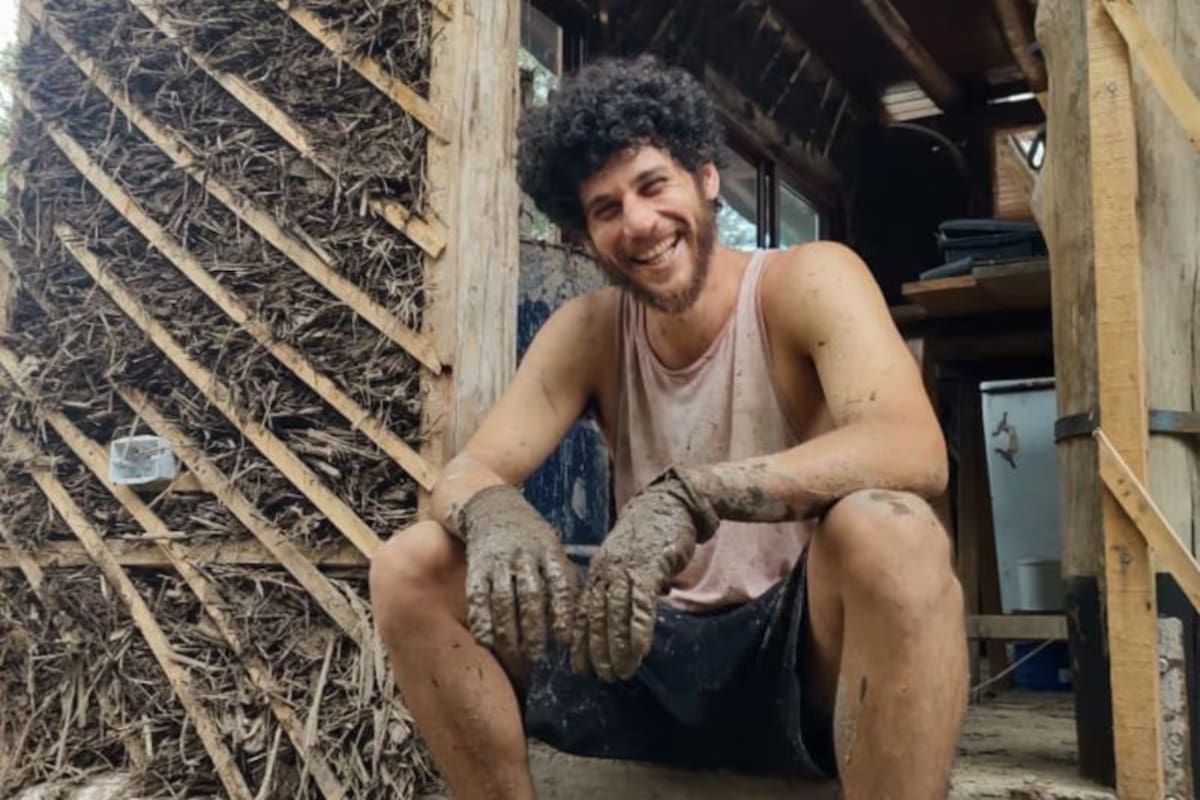
Jerónimo “Momo” Weich, son of TV host Julián Weich, decided to slam the door and move to the countryside. Today he lives in Los Hornillos, Córdoba, where he built his own mud house using bioconstruction techniques. No apartments or city noise: his home is made of mud, stone, wood, and reusable materials.
“The paradigm I inhabit is not sustainability, but regeneration, which is a step further because being sustainable is no longer enough. We need to collaborate with nature to speed up processes, and that’s what I dedicate myself to today,” the young man said in an interview given in July 2025.
The house is 56 square meters and took three and a half years to build. The walls are made of quincha, filled with lightweight straw 30 centimeters thick, with insulation in both walls and roof. The house faces north to take advantage of the sun in winter. The floors are limestone bricks, combining modernity with an ancestral touch.
One of the most striking details are the large double-glazed windows that allow views of the green outdoors while maintaining indoor temperature. The openings are aluminum with a wood-like finish, airtight to insulate against cold and noise. On the walls, irregular glass skylights let in natural light and give the house an artistic touch.
To combat the cold, they recycled glass bottles placed under the subfloor, creating an insulating air chamber. They also have a high-efficiency double-combustion stove that burns gases to make the most of firewood gathered from the garden. The house has two floors: downstairs are the living room, decorated with recycled furniture, and a room converted into a library, which is the coolest in the house. Upstairs, the main bedroom features a large window with mountain views, where they say they see shooting stars, and access to a green roof covered with vegetation that absorbs sound and keeps the roof cool.
They also built a dry toilet with fiberglass mesh walls and microcement stucco. The toilet uses no water, but they have a bidet. Ailuz Celeste, his partner, said she feels “very comfortable” with the system: “It’s a habit, something you acquire over time.” On the roof, they have solar panels and a solar water heater.
Outside, a structural system known as an “elephant foot” made of stone and cement repels water from the walls, although they admit they had to make repairs due to leaks. “It’s part of the living experience; sometimes making mistakes to learn,” they noted. The land has fruit trees (apple, peach, quince) and plants such as mint, sunflowers, aloe, and thyme.
To make a living, Weich does gardening, landscaping, vegetable gardening, and pruning, while Ailuz works on a bioconstruction team doing finishes, plastering, and painting. They also have a project to support others who want to apply these techniques. For now, meetings are virtual, but they plan to build an outdoor kitchen and dry toilets for in-person gatherings.
“Connecting with nature and transitioning from the inside out to be able to shape a life project in the countryside without repeating city patterns. You don’t need to buy land to make that transition; it’s much more internal and can start while you’re still in the city,” Weich concluded.



Para mí, Momo Weich es un héroe de la clase obrera. Dejó la ciudad, construyó con barro y paja, y le dijo chau al sistema. Los que viven en torres de concreto y comen soja transgénica son unos vendidos. No alcanza con ser sustentable, hay que ser anticapitalista. Viva la revolución, che!
Para mí este Momo es un vago de mierda que se hace el hippie para no laburar. Se piensa que con un rancho de barro ya salva el planeta mientras nosotros rompemos el lomo. Esto huele a zurdo de manual, viven en la fantasía. Si querés progresar ponete a producir como la gente de bien.