
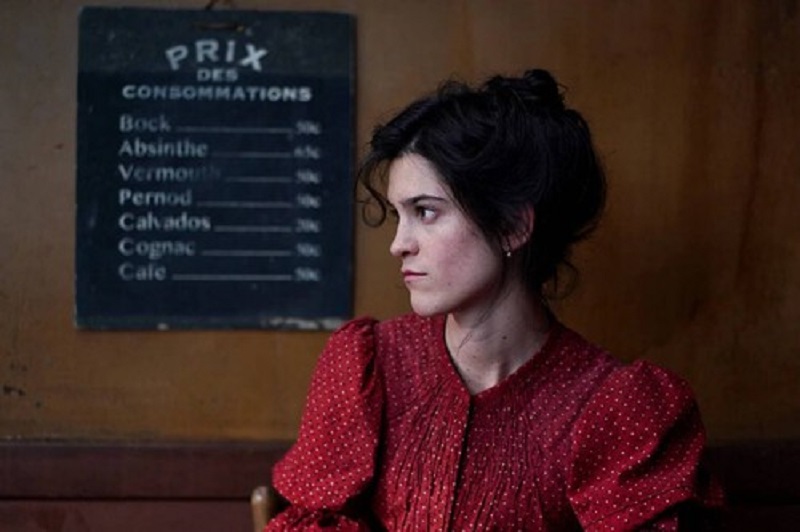
French filmmaker Cédric Klapisch returns with a proposal that promises to shake the structures of contemporary thought. In his latest film, The Colors of Time (original title La venue de l’avenir), the director dives headfirst into a reflection on time, love, and art as tools to escape capitalist alienation.
The plot begins with an event that seems minor but triggers a storm of emotions: thirty descendants of Adele Meunier, the last occupant of a rural house in Normandy that remained closed since 1944, gather to decide the fate of the property. The local government wants to buy it to build a shopping center and parking lot, but the heirs have other plans. Four of them are chosen as delegates to open the house and take inventory, and from there, the story spirals out of control.
We meet Seb (Abraham Wapler), a young photographer and digital content creator entangled in a relationship with a model; Guy (Vincent Macaigne), a beekeeper and activist against agrotoxins; Celine (Julia Piaton), a transport engineer going through a relationship crisis; and Abdel (Zinedine Soualem), a literature professor about to retire. Four lost souls in the whirlwind of the 21st century who, upon entering the old house, come across letters, photos, and an Impressionist painting that transport them to another era.
Klapisch doesn’t mess around: he introduces a hallucinogenic ayahuasca journey that functions as a time portal, in the style of Woody Allen’s Midnight in Paris, but with a much more political message. The film suggests that the future is not a straight line starting from the present, but a discontinuous irruption of the past that short-circuits the now and forces everything to be reinvented. An idea that, in times of algorithms and productivity at all costs, sounds like a cry for freedom.
The French director plays with cross-cutting, dreams, and time jumps to establish parallels between eras. Thus, we see how love triangles repeat: that of young Odette (Sara Giraudeau) with photographer Felix Nadal and painter Eduard Monet; that of young Adele with photographer Lucien and painter Anatole; and that of Seb with his model girlfriend and a singer. All face the same dilemma: sell themselves as commodities or bet on art as a unique and unrepeatable experience.
The film also reflects on the technological leap from painting to photography and from analog to digital, but without falling into the easy trap of demonizing technology. Klapisch shows that the problem is not the tool, but the use it is put to: whether for commercial purposes or to capture an unrepeatable moment of joy. A key scene shows Monet painting Impression, Sunrise (1872), trying to capture that unique morning light alongside his beloved. That is the key: art as resistance to the quantification of everything.
The Colors of Time is a beautiful and emotional film that invites us to stop the digital noise and reconnect with the gentleness of time, with the encounter between bodies. A bet to open a gap that cuts the repetition of the same and ignites the spark of a new future. In times of austerity and hopelessness, a necessary breath of fresh air.


Para mí esto es una pelotudez atómica. Klapisch y su cine zurdo queriendo frenar el capitalismo con arte, jaja. El tiempo es lineal y el mercado manda, no vengan con cuentos de colores. Arte es para entretenerse, no para resistir nada. Vayan a laburar, che.
Para mí esta peli de Klapisch es un misil directo al corazón del capitalismo, justo lo que necesitamos pa’ despertar. El tiempo no es mercancía, los zurdos sabemos que la vida no se vende. Los liberales de mierda que nos quieren cronometrar hasta el alma, que se vayan a laburar a Wall Street. Vamo’ a verla y a rebelarnos.