
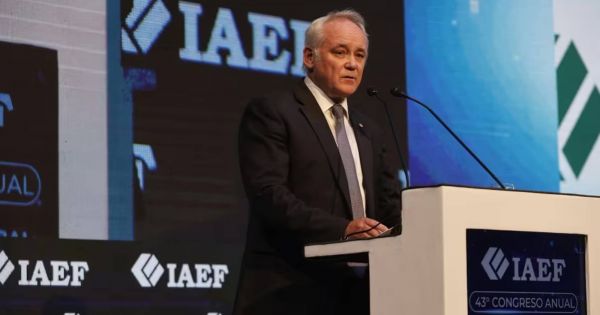
Vice President of the Central Bank of Argentina (BCRA), Vladimir Werning, stated that 75% of foreign currency acquired by small investors remains within the local financial system. The statement was reported by Crónica, which attributes the information to the monetary authority.
Werning also maintained that current exchange-rate behavior «is not destabilizing» and dismissed that delinquency levels pose a threat to the stability of the credit market. During his presentation, he highlighted the impact of regulations such as the tax moratorium and the Fiscal Innocence Law to consolidate foreign-currency savings within the country.
The BCRA’s position on bailouts and subsidies
According to the report, Werning confirmed that the regulator will not apply subsidies, liquidity injections, or bailouts to debtors or banking entities. The stance aims to avoid so-called «moral hazard» and prevent incentives for defaulting on financial obligations.
Regarding the cost of credit, the official stressed the need for coordinated action among government jurisdictions. The stated goal is to reduce the tax burden on loans, lower interest rates, and boost financing for small and medium-sized enterprises in competition with the capital market.
The Charter reform project
The Presidency of the Nation reported that the Executive Branch is drafting a reform project for the BCRA’s Charter. The official announcement is expected in the coming weeks and will then be sent to Congress for consideration.
The Cabinet meeting that addressed the issue was held at Casa Rosada after the Independence Day ceremonies. President Javier Milei led the meeting and provided details on the initiative. Officials participating included Chief of Staff Diego Santilli; Foreign Minister Pablo Quirno; Defense Minister TG Carlos Presti; Legal and Technical Secretary María Ibarzabal; Security Minister Alejandra Monteoliva; Deregulation Minister Federico Sturzenegger; Government Bloc Leader in the Senate Patricia Bullrich; Central Bank President Santiago Bausili; Presidential Advisor Santiago Caputo; Justice Minister Juan Bautista Mahiques; Presidential Spokesperson Adrián Ravier; Health Minister Mario Lugones; President of the Chamber of Deputies Martín Menem; Secretary of Communication and Press Fabián Fernández; Secretary General of the Presidency Karina Milei; and Provisional President of the Senate Bartolomé Abdala.
Contrast between sources
The sources differ in focus. Crónica, a secondary source, reproduces statements attributed to Werning on the exchange market, delinquency, and the BCRA’s position on bailouts. The Presidency of the Nation, a primary source, reports on the drafting of a preliminary reform project for the Charter, without mentioning the figures or Werning’s statements.
There is no textual coincidence between the two: the first focuses on saver behavior and credit; the second on the institutional reform process. Neither source confirms the other. The Crónica article does not detail the methodology behind the 75% or the period it corresponds to. The official release does not specify the content of the preliminary project or its scope.
Comparable data
| Data | Crónica (secondary source) | Presidency of the Nation (primary source) |
|---|---|---|
| Percentage of savers’ dollars remaining in the system | 75% | Not mentioned |
| Statement on exchange-rate behavior | «Not destabilizing» (attributed to Werning) | Not mentioned |
| Position on bailouts | No subsidies, injections, or bailouts | Not mentioned |
| Charter reform | Not mentioned | Preliminary project in drafting, announcement expected in coming weeks |
| Submission to Congress | Not mentioned | Yes, once the text is finalized |
Methodological note: The table compares the presence or absence of data in each source. No percentage differences or conversions are calculated because the sources do not offer comparable numerical series. The 75% comes exclusively from the secondary source and is not accompanied by a denominator, period, or methodology. The primary source neither confirms nor denies that percentage.
What to follow
The data point to follow is the official publication of the preliminary reform project for the BCRA’s Charter and its submission to Congress. It is also worth watching whether the BCRA releases the methodological support for the 75% mentioned by Crónica, with denominator, period, and primary source. The evolution of delinquency and decisions on bank bailouts are points that the sources mention but do not quantify.
Fuentes consultadas
- Crónica
- Argentina.gob.ar Fuente primaria
El Sereno contrastó las fuentes enlazadas y añadió contexto, comparación o análisis documental. Las fuentes primarias están identificadas. La nota no se presenta como investigación de campo ni como entrevista propia, salvo indicación expresa.



Comentarios