
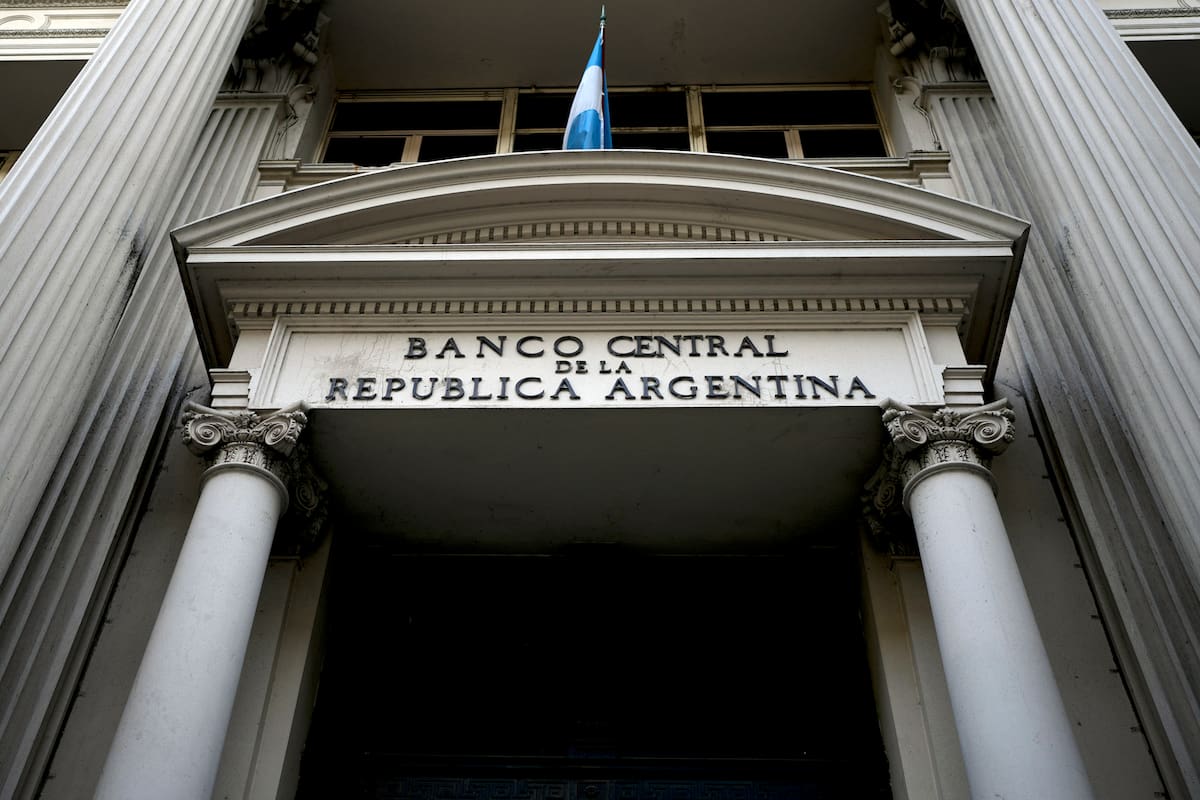
The Central Bank of Argentina (BCRA) is said to have acquired US$340 million in the first seven trading sessions of October, nearly triple the US$112 million bought in the same stretch of September, according to information published by La Nación. The article attributes the figure to market operations and consultations with traders. This is not a primary source: it is a secondary source citing a report by Invertir en Bolsa (IEB) and statements from market agents.
In parallel, the Presidency of the Nation announced in a statement that the Executive Branch is drafting a bill to reform the BCRA’s charter. That statement, a primary source, does not mention reserve purchases or provide figures on foreign exchange intervention. The two sources are independent and do not corroborate each other. One refers to the BCRA’s daily operations; the other to a draft regulatory bill with no public text at the time of the statement.
What the La Nación article says about the purchases
According to La Nación, the BCRA added US$69 million on Friday through interventions, equivalent to 10.5% of the volume traded that day. The total acquired in the seven October sessions would have reached US$340 million. The comparison with September comes from the same article: in the same period of that month, US$112 million had been bought. The volume traded, again according to that source, fell 20% from US$4.557 billion to US$3.643 billion between the two starts of the month.
The article also notes that the US$340 million represents 71.8% of the US$473 million bought in all of September. At that pace, it indicates, about US$2 million per session would be enough in the remainder of October to match or exceed the previous month’s balance. These relationships are calculations by the secondary source, not by the BCRA.
The piece attributes the acceleration to demand behavior and mentions traders’ accounts of an IMF recommendation. It also alludes to the electoral result in Brazil and its effect on the real. None of those hypotheses is confirmed by an official document cited in the material. The article itself presents them as accounts or interpretations from those consulted.
What the Presidency’s statement establishes
The official statement, published on argentina.gob.ar, reports that President Javier Milei led a Cabinet meeting after the Tedeum for Independence Day. At that meeting, he provided details on a draft bill to reform the BCRA’s charter being prepared by the Executive Branch. The text of the draft was not yet finished and its official announcement was expected in the coming weeks. It would then be sent to Congress.
The statement lists participating officials, including Chief of Staff Diego Santilli; Foreign Minister Pablo Quirno; Security Minister Alejandra Monteoliva; Deregulation Minister Federico Sturzenegger; the ruling party’s Senate bloc leader, Patricia Bullrich; BCRA President Santiago Bausili; and presidential adviser Santiago Caputo, among others. It does not include the content of the reform or specific deadlines beyond the coming weeks.
Contrast between the sources
The primary source (Presidency) and the secondary source (La Nación) address different topics. The former does not confirm or deny the reserve purchase figures. The latter does not mention the draft bill to reform the charter. There is no textual coincidence or shared data point that allows one to be validated with the other.
The La Nación article includes a figure it attributes to an IEB report: that the BCRA would need to buy a total of US$10.7 billion to sell to the Treasury, of which US$2.9 billion would be missing if it allocates all the current surplus. That report is not reproduced in the material as a primary source; it is only cited. The Presidency does not comment on that operation.
What is not established and what questions remain open
There is no official confirmation from the BCRA on the purchase amounts. The Presidency’s statement does not mention reserves or the exchange rate. It is not reported whether the draft bill to reform the charter includes changes to foreign exchange intervention powers or reserve accumulation targets. It is also unknown whether the IMF made any recommendation, despite La Nación reporting that account from traders.
It remains open whether the October purchases will hold in the coming sessions, whether the Treasury will ultimately use the AR$8 trillion deposited at the BCRA — a figure mentioned by La Nación — and whether the draft reform bill will be sent to Congress within the expected timeframes. None of those questions has an answer in the available sources.
Value module: data and limits
| Document | Body and date | Unit | Values used | Operation |
|---|---|---|---|---|
| La Nación article | La Nación, October 9, 2026 | Millions of dollars | US$340 million (October, seven sessions) / US$112 million (September, same period) | 340 / 112 = 3.04. The source states it is «nearly triple.» |
| La Nación article | La Nación, October 9, 2026 | Millions of dollars | US$340 million (October) / US$473 million (all of September) | 340 / 473 = 0.718. The source states 71.8%. |
| La Nación article | La Nación, October 9, 2026 | Millions of dollars | US$4,557 million / US$3,643 million | (4557 – 3643) / 4557 = 0.200. The source states a 20% drop. |
| Presidency statement | Presidency of the Nation, date not specified in the material | Not applicable | Contains no figures | Cannot be calculated or compared with the La Nación data. |
No currencies or units are converted because the material does not include an exchange rate, factor, or exact date to do so. Values are kept in dollars and pesos as published. The operations listed are reproductions of the relationships already appearing in the secondary source, not our own calculations on primary data.
What to watch
The item to watch is the publication of the text of the draft bill to reform the BCRA’s charter and its submission to Congress, as announced by the Presidency. In parallel, it should be verified whether the BCRA officially confirms the October reserve purchases and whether the IEB report cited by La Nación is made public. Until then, the foreign exchange intervention figures come from a secondary source and the hypotheses about the IMF or the Treasury are unconfirmed.
Fuentes consultadas
- LA NACION
- Argentina.gob.ar Fuente primaria
El Sereno contrastó las fuentes enlazadas y añadió contexto, comparación o análisis documental. Las fuentes primarias están identificadas. La nota no se presenta como investigación de campo ni como entrevista propia, salvo indicación expresa.

Comentarios