
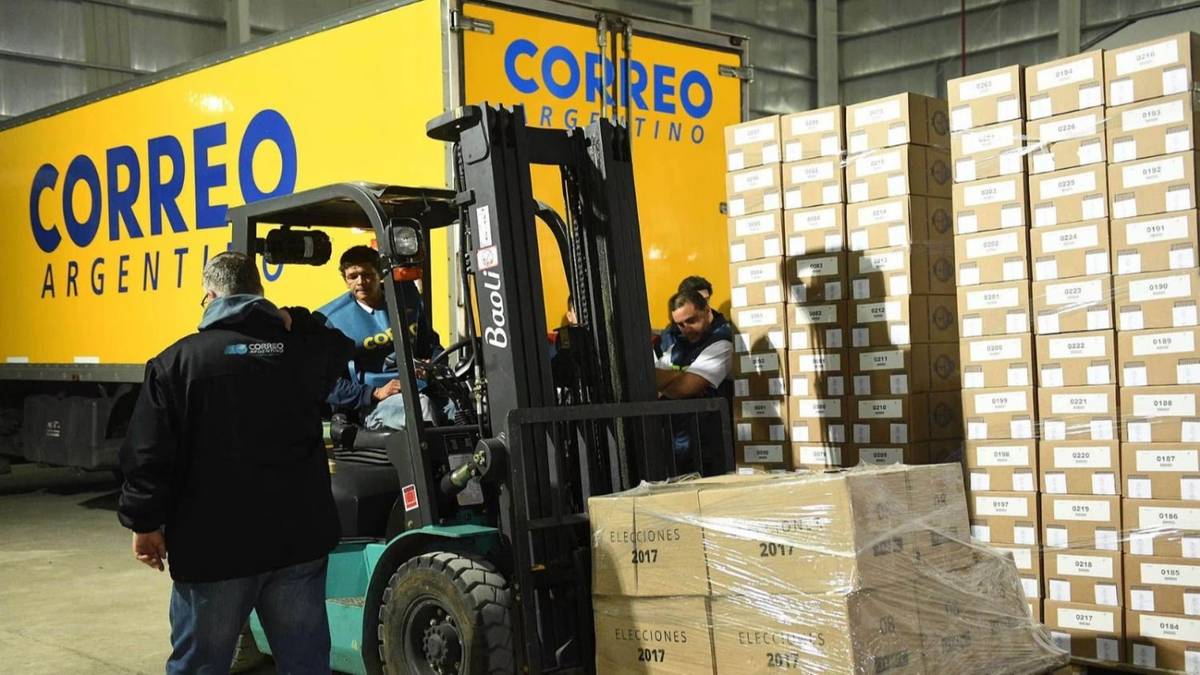
The government of Javier Milei is accelerating the dismantling of the Argentine Post Office with the ultimate goal of privatizing it. The figures are staggering: 300 branches closed out of a plan for 900, thousands of voluntary retirements, downward wage negotiations, and entire towns losing the only state service that connected them to the country.
“It is a policy of shrinking and emptying. The post office is a basic universal service. They want to shrink the company to sell it ‘in good condition,’” denounce the Federation of Postal and Telecommunications Workers (FOECyT), the union that groups the workers.
The hardest-hit provinces are San Luis, Catamarca, Mendoza, and Santiago del Estero. Precisely the smallest and most remote towns, where the Post Office is sometimes the only presence of the state. “They reduce the number of branches in towns where there are no banks, no ANSES, nothing. The state company is the one that must provide the basic universal service; otherwise, those people have to travel 100, 200 kilometers. There, the post office is everything. We cover all services, it’s not just letters or parcels, it’s the possibility,” the workers explain.
In Neuquén, the mayor of Villa Manzano, Daniel Hernández, exploded against the definitive closure of the local branch. “I offered to renew the lease; not a single peso was paid in rent or services. The municipality absorbed everything. But not even that was enough, and they closed it,” he denounced. Residents will now have to travel 60 kilometers by road to reach the nearest branch. “It hurts us deeply because we know what this closure represents: loss of an indispensable service, inconvenience for the elderly, difficulties for workers, entrepreneurs, and those who need to collect or send documentation,” he added.
In several towns, the postal service has been replaced by “post points” operating in shops, but according to the union, the cost is higher than maintaining the state office. Workers’ salaries at the Post Office average 900,000 pesos, with a minimum of 700,000. Outsourced transporters are paid 12,000 pesos per hour for a 10-hour daily availability.
Wage negotiations are in full swing, and the company offered a miserable 6.6% increase, which was flatly rejected. “We are talking about workers who every day sustain an essential service across the country and today earn 700,000 pesos. Faced with that reality, a 6.6% offer is a mockery,” said Alberto Cejas, general secretary of the union, which demands 15%.
The scenario is completed with 6,000 voluntary retirements and 300 layoffs under the shrinking plan. The ultimate goal is to privatize the company by selling the share package and also the branch buildings. To top it off, in December a fleet of 240 robots with artificial intelligence was introduced to sort parcels, a unique technology in the region. The union interprets the investment as a tune-up for privatization: “Whoever buys it will have a company with the latest technology incorporated; no investment in modernization will be required,” they conclude.


Para mí el Correo Argentino es un curro sindical de la casta. Milei hace bien en cerrar esas 300 sucursales inútiles. Los zurdos quieren seguir choreando con nuestra plata. Que compren Starlink, vagos. ¡Viva la libertad, carajo!
che milei es un hdp cerrar 300 sucursales del correo deja a todo el interior aislado esto es para regalarle el servicio a los amigos como siempre vergüenza de gobierno se están robando hasta los sellos firmado el zurdo