
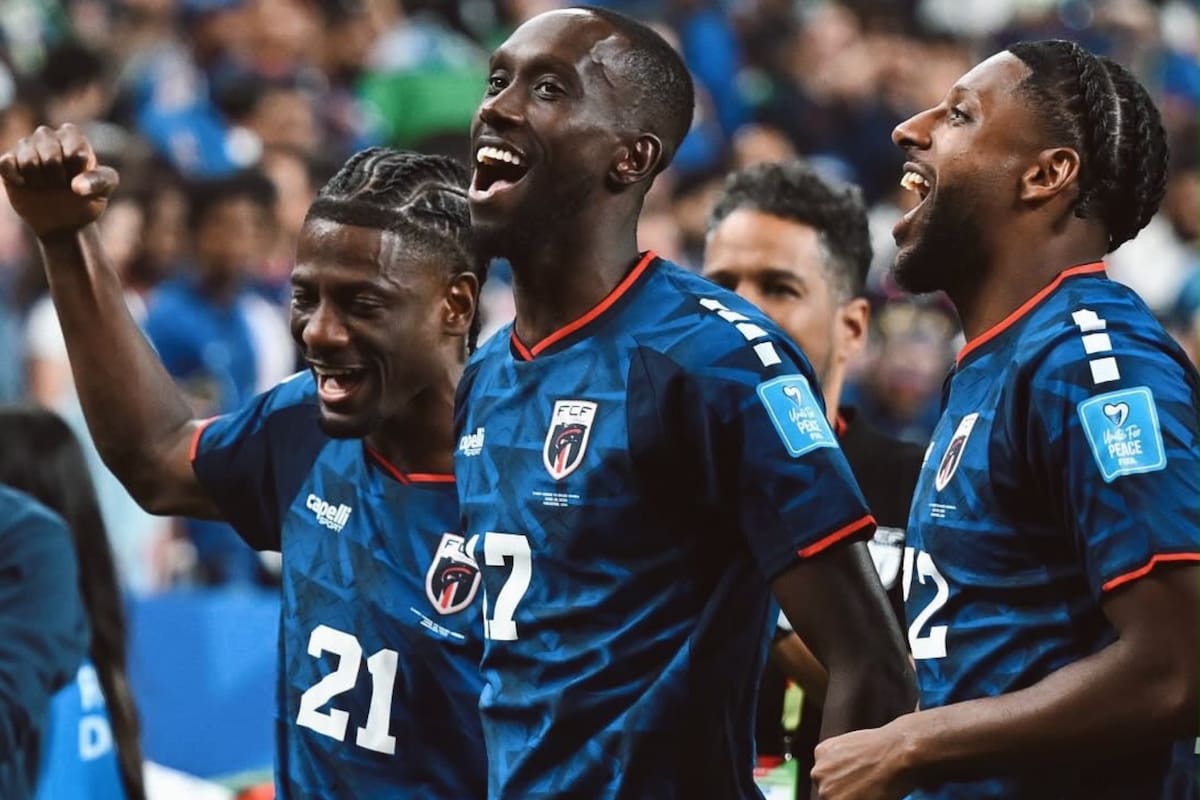
On Friday, July 3, the Argentine National Team will face Cape Verde in the round of 32 of the 2026 World Cup. The African team, a World Cup debutant, has caused an upset and earned a place among the top 32. But beyond the pitch, the island nation is a rarity on the continent: a stable democracy, with a history of colonial resistance and a geography that blends volcanoes and deserts.
Cape Verde is located in the Atlantic Ocean, about 500 kilometers off the coast of Senegal, at the northern tip of Africa. It is an archipelago of 10 islands, of which only one, Santa Luzia, is uninhabited and a protected area. The capital is Praia, on the island of Santiago, where half of the 524,000 inhabitants live. But the Cape Verdean diaspora is enormous: an estimated two million people of Cape Verdean origin live abroad, mainly in Portugal and the United States.
Cape Verde’s history is marked by Portuguese colonization. In 1456, Portugal invaded the islands and turned them into a colony. For centuries, the archipelago was a strategic point for the transatlantic slave trade: captured Africans were first taken to Cape Verde, where they were assigned their final destination in the Americas. After the abolition of slavery, reality changed, but independence did not come until July 5, 1975, after a bloody war of liberation led by Amílcar Cabral, who also fought for the independence of Guinea-Bissau.
Until 1990, Cape Verde had a single-party system. But in 1991, with the arrival of the Movement for Democracy (MPD), the first free elections were held. Since then, the country has been considered the best democracy in Africa, with stable institutions, peaceful alternation of power, and respect for human rights. An example in a continent where authoritarian regimes abound.
The Cape Verdean population is mostly descended from African slaves, with a strong Euro-African mix. The official language is Portuguese, but a national dialect, Cape Verdean Creole, is spoken, with nine variants. The culture is a blend of African and European influences, reflected in music, dance, and gastronomy.
Geographically, Cape Verde is an extremely dry archipelago. It depends on desalination plants for fresh water, and only 11% of the land is suitable for agriculture. The highest point is the Pico do Fogo volcano, at 2,829 meters, which erupted between 2014 and 2015, forcing the evacuation of a thousand people. The islands are divided into two groups: Barlavento (to the north) and Sotavento (to the south). The Barlavento islands include Santo Antão, São Vicente, Santa Luzia (uninhabited), São Nicolau, Sal, and Boa Vista. The Sotavento islands are Maio, Santiago, Fogo, and Brava.
In the 2026 World Cup, Cape Verde has shown organized and combative play. Their team, known as the Blue Sharks, is made up of players who play in European and African leagues. The match against Argentina promises to be a clash of styles: South American technique against African grit. But beyond the result, Cape Verde has already earned the respect of the football world and has put on the map a nation that is much more than a tourist paradise: it is an example of democracy and resistance.
Watch the 2026 World Cup in the best quality
These are the most sought-after TVs to watch the National Team. All with 12 interest-free installments:
- Smart TV Kanji 32″ LED HD – From $120,000 in 12 interest-free installments (VAFTS9-89J3)
- Smart TV LG 43″ 4K UHD WebOS – From $450,000 in 12 interest-free installments (VAFTS9-WXW9)
- Smart TV Samsung 50″ 4K UHD – From $600,000 in 12 interest-free installments (VAFTS9-VVE0)
Approximate prices. 12 interest-free installments subject to each seller. Look for the codes on Mercado Libre.


para mi cabo verde es una democracia modelo pero la fifa y la afa son unas mafias capitalistas q chorean todo ojala les ganemos con patada en el orto al sistema vamo argentina carajo aguante el socialismo insular ✊🇦🇷
Para mí estos negros de Cabo Verde se piensan que por tener una democracia berreta ya nos van a ganar? Argentina les pasa el trapo en todo, hasta en estabilidad política. Vamos Lionel, partilos a estos insulares de mierda, no tienen historia ni huevos.