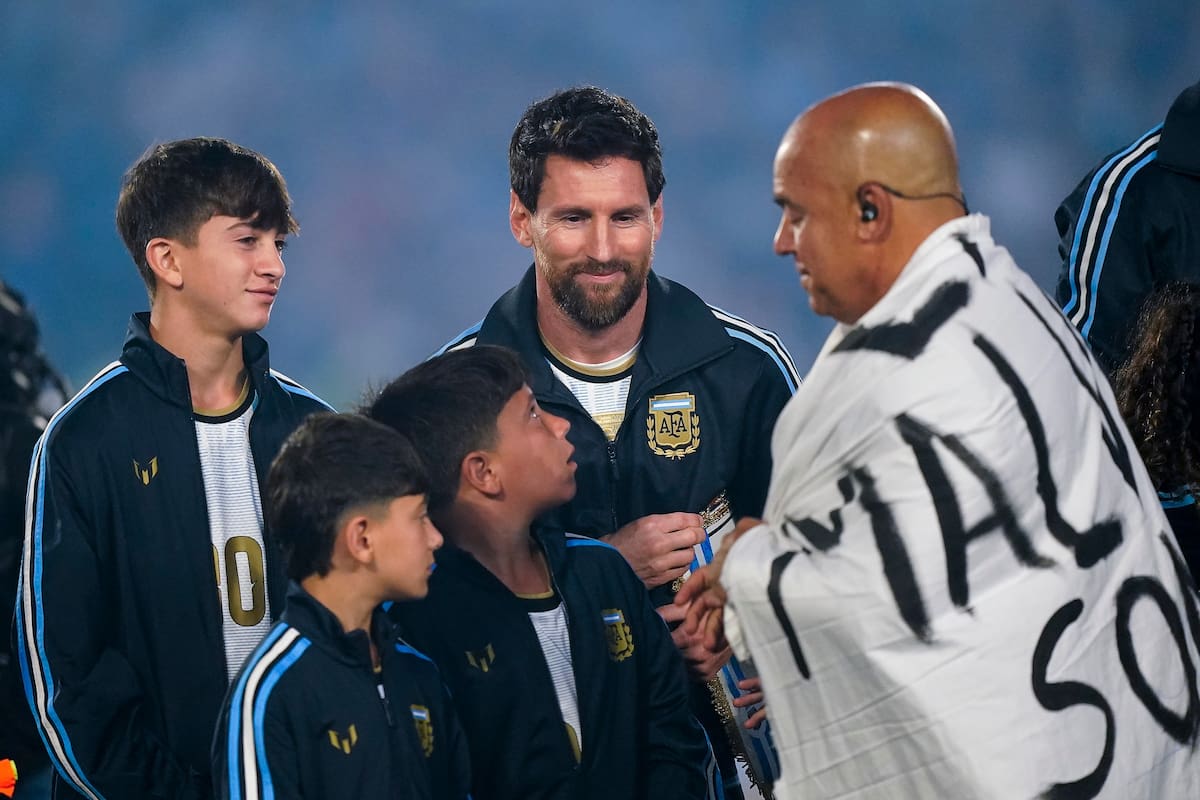
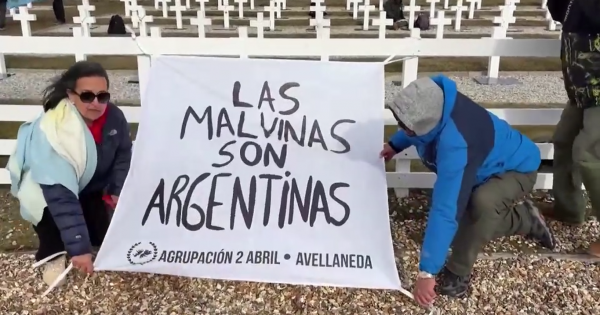
The British newspaper The Sun maintained that the Argentine national team could receive a new FIFA sanction for displaying a flag with the phrase «Las Malvinas son argentinas» during the events prior to Lionel Messi’s farewell match, according to La Nación. The same banner had been unfurled after the 2-1 victory over England in the semifinal of the 2026 World Cup, an episode that resulted in a US$321,000 fine, according to the secondary source.
What the British newspaper says and what La Nación recalls
La Nación attributes to The Sun the warning about a possible new sanction. The Argentine outlet notes that the English newspaper recalled the previous fine that FIFA applied to the national team when the players unfurled the same flag on the field after the victory over England.
According to that account, the previous sanction was based on the breach of Article 13, paragraph 2 c) of the FIFA regulations: «using a sporting event to make demonstrations of a non-sporting nature.» Added to that infraction were, again according to La Nación, violations of other articles for «misconduct of a team,» «discrimination and racist abuse,» and «order and security at matches.»
The text describes that the «incident» occurred minutes after the match at Mercedes Benz Stadium in Atlanta. A group of fans allegedly bypassed security controls and threw onto the field an improvised sheet with the message. The cloth was handmade from a hotel sheet and black paint, given the prohibition on bringing in symbols or slogans linked to the 1982 war. Although FBI agents and local forces allegedly seized similar flags at checkpoints, a handful of people managed to smuggle the object in. Upon seeing that internal security prevented displaying the cloth in the stands, the fans chose to throw it onto the grass, where it was picked up by players Giovani Lo Celso, Cristian Romero, and Lisandro Martínez, who posed with it before the cameras.
La Nación adds that, before Messi’s last match with the albiceleste, the same banner was displayed while former combatant Fabio Santana sang the national anthem. Before singing the verses, the veteran greeted Messi with the flag over his shoulders, and then team members and Lionel Scaloni posed next to the flag. Santana said they asked him to leave the cloth on the ground, but he decided to go up to Messi, shake his hand, and ask him to wink at him. He also revealed that the flag is the same one used during the World Cup match and that an AFA employee rescued it and kept it.
The Argentine diplomatic protest over the Malvinas
At the same time, the Argentine Foreign Ministry reported that, on the instructions of Foreign Minister Quirno, a formal note of protest was submitted on July 13 to the Embassy of the United Kingdom of Great Britain and Northern Ireland. The rejection was directed at the movements of the vessel HMS Medway, «illegally deployed in the Malvinas Islands,» which were not duly notified in accordance with the bilateral agreements and declarations in force, and which involved transit through Argentine territorial sea.
The official statement maintains that this unilateral action constitutes a violation of the commitments assumed in the Joint Declaration of September 25, 1991, which replaces Annexes I, II, III, and IV of the Joint Declaration of Madrid of February 15, 1990, in its section I.2 «Confidence-building measures,» point «b» (text according to the Joint Declaration of Buenos Aires and London of July 12, 1993).
The Argentine Government rejects «firmly» the British military incursion into spaces under Argentine jurisdiction and frames it within a sustained policy of unilateral acts incompatible with United Nations resolutions. It mentions in particular General Assembly Resolution 31/49, which urges both parties to refrain from adopting decisions that introduce unilateral modifications in the situation of the Malvinas Islands while the sovereignty dispute remains pending. The Foreign Ministry reaffirms the «legitimate and imprescriptible rights of sovereignty over the Malvinas, South Georgia and South Sandwich Islands and the surrounding maritime spaces.»
What each document establishes and what remains open
| Document | What it establishes | What it does not establish | Open questions |
|---|---|---|---|
| La Nación note on The Sun (secondary source) | That The Sun warned of a possible new FIFA sanction; that the previous fine was US$321,000; that Article 13, paragraph 2 c) was invoked; that the flag was displayed before Messi’s farewell match. | It does not confirm that FIFA has opened a new case or that there is an ongoing sanction. It does not reproduce The Sun’s original note or a FIFA resolution. | Has FIFA opened a formal investigation? What article would apply this time? Did The Sun cite an official source or was it speculation? |
| Statement from the Argentine Foreign Ministry (primary source) | That on July 13 a note of protest was submitted to the British Embassy over the movements of the HMS Medway; that the 1991 Joint Declaration was violated; that UN Resolution 31/49 is invoked. | It does not mention the Malvinas flag at the farewell match or the possible FIFA sanction. It does not quantify damages or consequences. | Was there a British response to the protest? Did the HMS Medway modify its deployment? Did the Foreign Ministry comment on the flag episode? |
The data point worth following
The central difference between the sources is one of subject and status. La Nación, as a secondary source, reports on a journalistic warning regarding a possible sporting sanction. The Foreign Ministry, as a primary source, documents a diplomatic protest over a military action. There is no FIFA resolution or United Kingdom response in the material provided. The data point to follow is whether FIFA confirms or denies the opening of a new disciplinary proceeding and whether the Foreign Ministry expands its protest to the flag episode. Neither source allows stating that the sanction has already been decided.
Fuentes consultadas
- LA NACION
- Cancillería Argentina Fuente primaria
El Sereno contrastó las fuentes enlazadas y añadió contexto, comparación o análisis documental. Las fuentes primarias están identificadas. La nota no se presenta como investigación de campo ni como entrevista propia, salvo indicación expresa.

Comentarios