
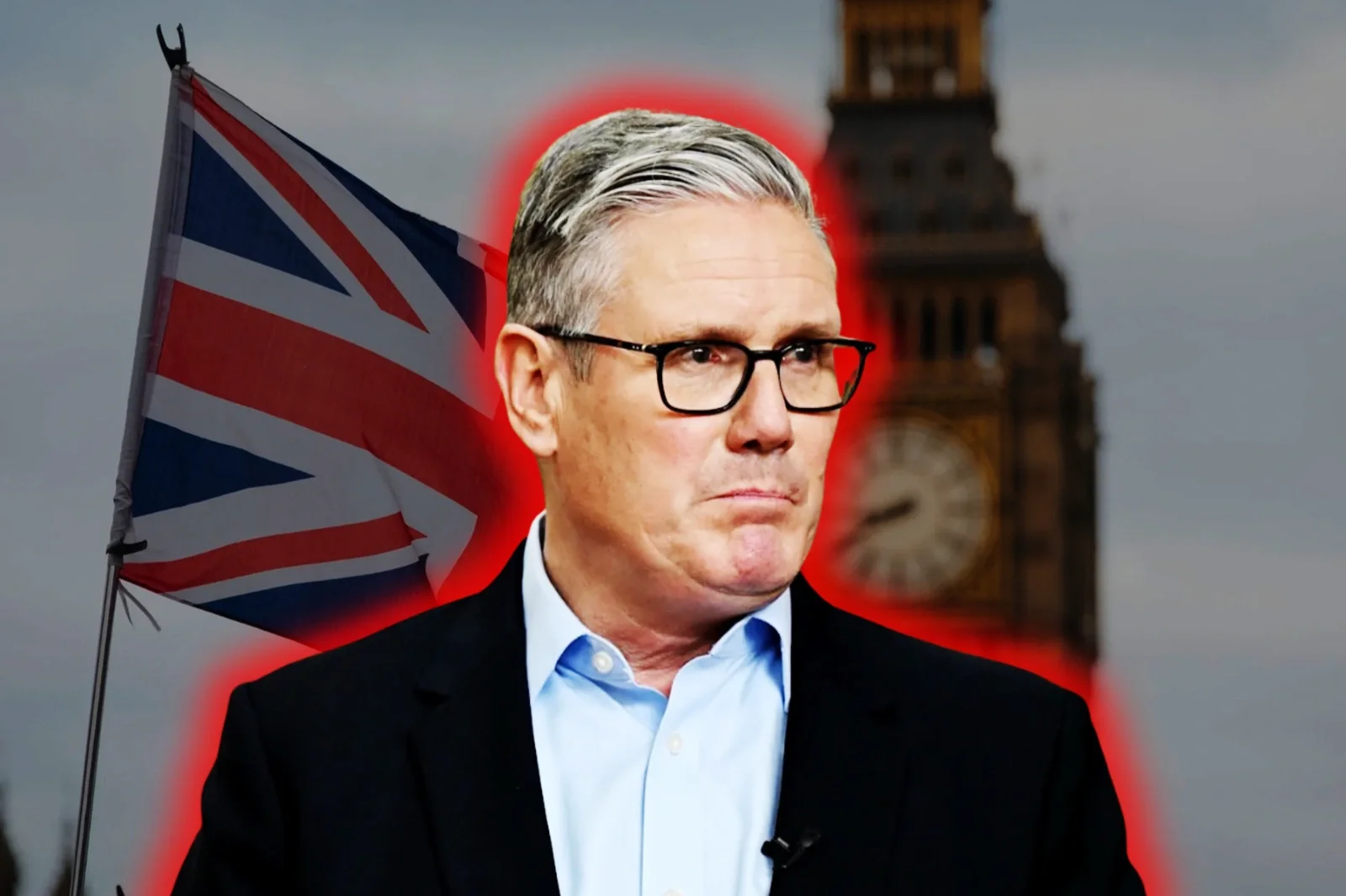
The political crisis that had been eroding the British government reached its climax this Monday when socialist Prime Minister Keir Starmer announced his resignation, less than two years after leading the Labour Party to a fragile electoral victory. The decision comes after a series of harsh political defeats, internal rebellions, and a growing loss of confidence among both voters and within his own party.
In a statement delivered outside 10 Downing Street, Starmer acknowledged that he no longer had the necessary support to continue leading the Labour Party or to steer it toward the next general election. The premier confirmed that he had communicated his decision to the king and assured that he accepted the verdict of his parliamentary colleagues with serenity.
«I heard the response of my parliamentary party to that question and I accept that response in good spirit,» he said. Visibly emotional, he concluded his speech by thanking his wife, Victoria, for being his main support during the most difficult moments of his tenure.
Starmer’s fall represents a dramatic turn for a leader who came to power promising stability, economic growth, and political renewal after years of Conservative turmoil. However, his nearly two years in Downing Street were marked by broken promises, political setbacks, and an increasingly evident inability to respond to citizens’ concerns.
The final trigger was the disastrous Labour performance in recent local elections. The party lost over a thousand seats nationwide, while Reform UK, led by Nigel Farage, made significant gains in numerous regions of England. The results were interpreted as a clear sign of rejection of the government’s management.
The situation worsened with a wave of resignations within the cabinet. Health Secretary Wes Streeting left the executive after publicly expressing his loss of confidence in Starmer. In a particularly harsh resignation letter, he accused the prime minister of lacking a clear vision for the country.
«Where we need vision, we find a void. Where we need direction, we find drift,» wrote Streeting, reflecting the growing unease among prominent Labour figures.
Shortly after, Defense Secretary John Healey also resigned, criticizing the government’s lack of investment in military capabilities in an increasingly complex international context. His departure reinforced the perception of a divided government without strategic direction.
For months, Starmer’s approval ratings steadily deteriorated. Among the factors contributing to this erosion were several policy shifts on welfare, economic reforms that generated discontent among broad sectors of the population, and the government’s persistent inability to alleviate the cost-of-living crisis that has affected the UK for years.
Critics also pointed to the lack of concrete economic results. Despite promising to boost growth and improve living conditions for British families, the executive failed to generate the expected upturn, while inflation and high costs of basic services continued to affect millions of households.
Another controversy that damaged the prime minister’s image was the appointment of Peter Mandelson as British ambassador to Washington. The decision drew criticism due to the controversies that have long accompanied the veteran Labour figure, fueling questions about the government’s political judgment.
After the resignation was announced, Nigel Farage celebrated Starmer’s departure and intensified his attacks on the traditional political class. The Reform UK leader argued that the prime minister’s failure reflects a growing disconnect between rulers and citizens.
According to Farage, voters are tired of leaders who come to power with ambitious promises and later abandon commitments made during election campaigns. He also used the opportunity to call for early general elections, arguing that the next prime minister will lack a direct mandate from the citizens.
Attention now turns to the race for Labour leadership. The nomination process will begin on July 9 and could conclude before the summer parliamentary recess. Among the possible successors, Andy Burnham, former mayor of Greater Manchester, stands out as the main favorite thanks to his popularity among the grassroots and his recent electoral successes.


Para mí, al fin se fue este zurdo nefasto. Starmer y su banda de genuflexos nos dejaron el país hecho mierda. Ojalá venga uno de verdad, que ponga orden y saque a los inmigrantes de una vez. Inglaterra para los ingleses, carajo.
para mí Starmer se va y bien merecido lo tiene este traidor vendió a los trabajadores nos prometió cambio y nos dio más de lo mismo los laboristas son tibios no sirven ni pa gobernar un kiosko ojalá venga alguien de verdad de izquierda a barrer con estos farsantes viva la lucha obrera