
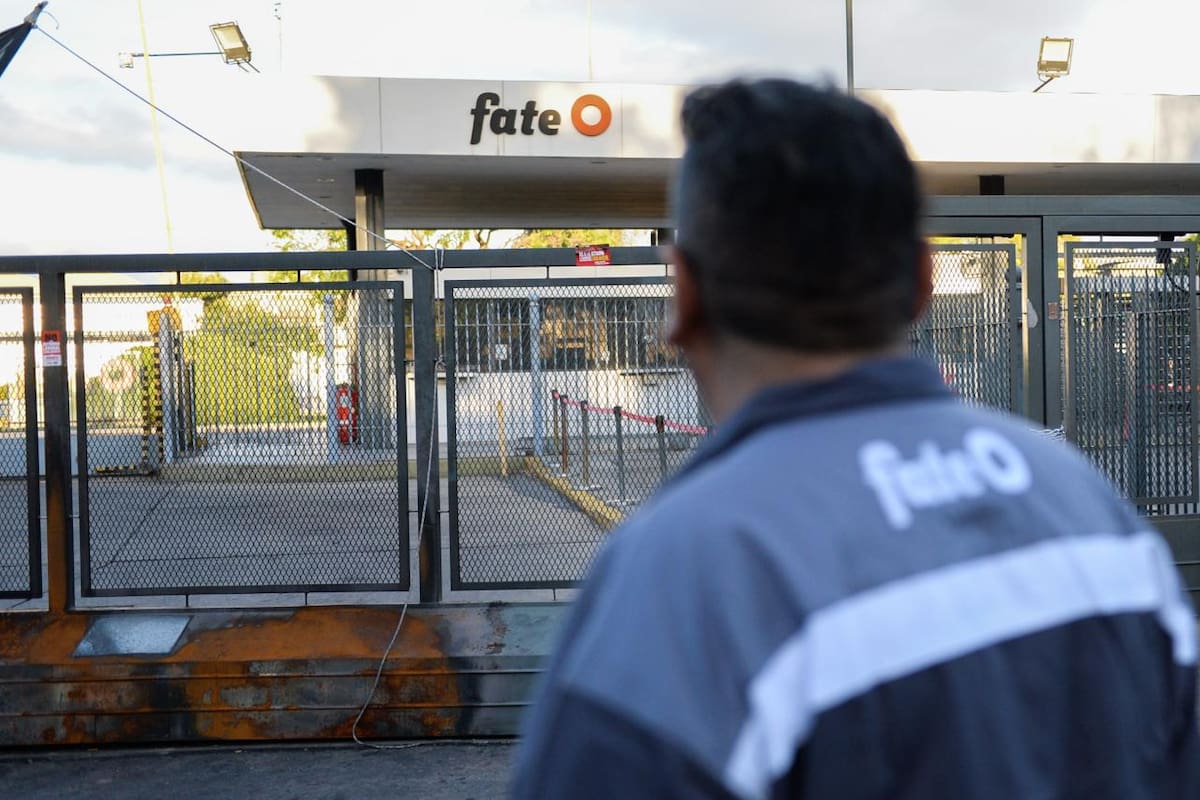
Chamber 2 of the San Isidro Appeals and Guarantees Chamber ordered the eviction of the Fate plant in San Fernando, occupied by workers since last February. The measure was confirmed by judicial and union sources, and the Single Union of Argentine Tire Workers (SUTNA) called for a rally at the entrances of the premises to reject it.
The court order and the union response
According to La Nación, the San Isidro Appeals and Guarantees Chamber ordered the eviction of the plant. Crónica specifies that it is Chamber 2 of that court. Both sources agree that the measure applies to the factory located in Virreyes, San Fernando district.
SUTNA described the decision as “aberrant” and claimed that the company maintains a lockout. For this Thursday at 10, the union organized a symbolic embrace and a press conference at the gates of the establishment, as reported by local outlet Que Pasa Web and echoed by La Nación. Crónica adds that the call includes reinforcing presence during the early morning hours.
The arguments of the union and the company
Alejandro Crespo, general secretary of SUTNA, questioned the measure in statements to LN+: “There is a contradiction. There cannot be an intervention that serves any purpose from the criminal area, in a conflict that is clearly labor-related.” He also confirmed that they will appeal the judicial decision to prevent it from becoming final.
Crespo framed the plant closure as an “economic fight” between the Executive Branch and the owner of the firm over the aluminum market. “We are hostages of a fight between those who defend openness and those who defend protectionism. But here there are a lot of families that have nothing to do with it and are suffering the consequences,” he stressed, referring to a dispute between the Government and Aluar, a company under the same management as Fate.
The company, for its part, announced the closure with a sign at the entrance, according to La Nación, arguing “changes in market conditions” that forced them to face challenges “from a different approach.” Crónica does not reproduce that phrase but does indicate that the closure was announced on February 18.
The workers and the occupation
The occupation began after the closure announcement and the dismissal of more than 900 employees, according to La Nación. Crónica raises the figure to 920 dismissed workers. That numerical difference is not explained in the material: one source speaks of “more than 900” and the other of “920.” There is no primary source to settle the exact figure.
The workers remain inside the plant. An employee told Crónica: “First they didn’t pay us, they owed us wages; then severance payments and, when they started paying, they paid poorly. What we understand is that this is a lockout and the factory should be operating.”
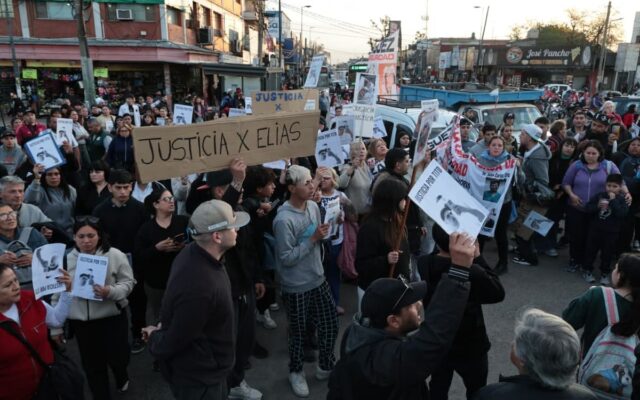
Crónica describes a dual form of protest: a camp with tents on the public road by former employees and support organizations, and the presence of a group of workers inside the plant. La Nación mentions that SUTNA asked for support from the CGT, the Autonomous CTA, ATE, and leaders of the Workers’ Party and the PTS.
Practical impact: who is affected and since when
The eviction order directly affects the workers occupying the plant since February, their families, and the union and social organizations accompanying them. It also involves the company Fate and the judicial authorities of San Isidro, who will have to execute the measure if it becomes final.
The conflict has lasted seven months according to La Nación, or six months according to Crónica. The difference could be due to the publication date of each note, but no source clarifies it. The occupation began on February 18, according to Crónica, and La Nación indicates that the closure was seven months ago.
- Immediate effects: the call for a symbolic embrace and press conference this Thursday at 10 at the plant gate; the appeal announced by SUTNA to prevent the measure from becoming final; and the possibility that the eviction will be executed with security forces, although it is not confirmed that this will happen.
- Conditional effects: if the appeal succeeds, the eviction could be suspended; if not, the plant could be vacated. The company has not issued statements on the judicial order in the consulted material.
- Uncertain effects: it is not known whether there will be a labor solution for the more than 900 dismissed workers, nor whether the plant will reopen. The scope of the dispute between the Government and Aluar mentioned by Crespo is also unclear.
Value module: differences between sources
The two consulted sources are secondary: La Nación and Crónica. Neither is primary. The text of the judicial resolution and official statements were not accessed.
The following discrepancies are identified:
- Number of dismissed workers: La Nación says “more than 900”; Crónica says “920.” Document: journalistic notes. Organization and date: La Nación and Crónica, September 18, 2026 (according to URL). Unit: workers. Values used: “more than 900” and “920.” Operation: no calculation applies because the values are neither exact nor equivalent. A percentage difference cannot be established without a certain base.
- Duration of the conflict: La Nación says “seven months”; Crónica says “six months.” Document: journalistic notes. Organization and date: the same. Unit: months. Values used: 7 and 6. Operation: simple difference of 1 month. Not converted to days because there are no exact start and end dates in the material.
- Date of the press conference: La Nación says “at 10”; Crónica says “tomorrow, September 18 at 10.” Document: journalistic notes. Organization and date: the same. Unit: time and date. Values used: “at 10” and “September 18 at 10.” Operation: not applicable.
No currencies or units are converted because there is no monetary data in the material. Original units are preserved.
What to follow
The decisive fact is whether SUTNA’s appeal succeeds or whether the eviction order becomes final. It is also worth following the response of the company Fate and the judicial authorities regarding the deadlines and methods of execution. The evolution of the dispute between the Government and Aluar, mentioned by Crespo, could influence the conflict, but there are no elements in the sources to confirm its scope.
Fuentes consultadas
El Sereno contrastó las fuentes enlazadas y añadió contexto, comparación o análisis documental. Las fuentes primarias están identificadas. La nota no se presenta como investigación de campo ni como entrevista propia, salvo indicación expresa.


Comentarios