
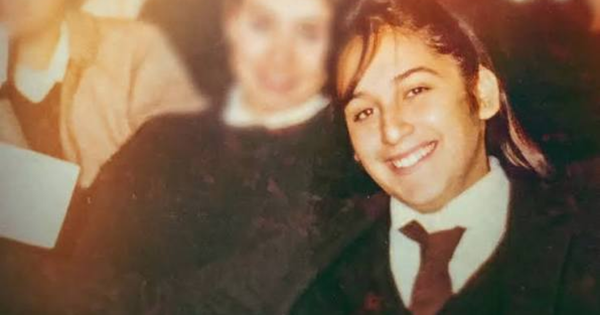
On October 10, 2024, Netflix released the documentary «María Soledad: The End of Silence,» directed by Lorena Muñoz. The production revisits the case that shocked Argentina in 1990 and led to the historic marches of silence in Catamarca. Below are the key points to understand both the documentary and the background of the crime.
The documentary’s focus
According to Crónica, the documentary centers on the voices of María Soledad’s schoolmates, who drove the marches of silence. The film combines archival material with current testimonies from her friends, prosecutor Gustavo Taranto, and Sister Martha Pelloni. Director Lorena Muñoz, known for her work on «Gilda» and «El Potro,» shifts the focus away from the strictly police procedural to emphasize the friendship and struggle of those teenage girls.
Meanwhile, Periódico Tribuna provides details about the political and social context of the era, such as the province’s domination by the Saadi family and the federal intervention ordered by then-President Carlos Menem. Both sources agree that the case exposed the impunity of the powerful’s children, but the documentary prioritizes the perspective of the women who led the demand for justice.
Central facts of the crime
- María Soledad Morales was 17 years old and a student at Colegio del Carmen y San José.
- The incident occurred in the early hours of September 8, 1990, after a party at the nightclub Le Feu Rouge.
- Her body was found on September 10 on the outskirts of San Fernando del Valle de Catamarca.
- According to Periódico Tribuna, she was raped and murdered, with an injected dose of cocaine.
- Luis Tula, 28, took her from the nightclub to the mega-disco Clivus, where Guillermo Luque, son of national deputy Ángel Luque, was present.
- Guillermo Luque was sentenced in 1998 to 21 years in prison; Luis Tula received 9 years as a secondary participant.
- The marches of silence, led by María Soledad’s parents and Sister Martha Pelloni, gathered more than 30,000 people at their peak, according to Crónica.
- The case was recognized as the first femicide in Argentina, although that term did not exist legally at the time.
Time between the crime and the convictions
The crime occurred in September 1990. The convictions of Guillermo Luque and Luis Tula were handed down in February 1998, according to Periódico Tribuna. This means approximately 7 years and 5 months passed between the event and the sentence. The calculation is as follows:
Document: Periódico Tribuna (article on the anniversary of the crime).
Organization and date: Not specified in the source; the article date is taken as reference (September 8, 2026, according to the context of 36 years).
Unit: Years and months.
Values used: Date of crime: September 8, 1990; date of conviction: February 1998.
Operation: Difference between February 1998 and September 1990: 7 years and 5 months (considering that February is earlier than September).
This detail does not appear in Crónica, which only mentions the trials and convictions without specifying dates. The difference between the two sources lies in the level of detail: Tribuna provides specific dates, while Crónica focuses on the documentary’s content.
The role of the marches of silence
The marches of silence were fundamental in bringing visibility to the case and pressuring the justice system. Crónica indicates they gathered more than 30,000 people, while a counter-march organized by the provincial power attracted about 7,000. Periódico Tribuna highlights that these marches, led by the victim’s parents and Sister Martha Pelloni, were key for President Menem to intervene in the three provincial branches of government, ending the Saadi family’s dominance.
Both sources agree on the importance of the marches, but they differ in emphasis: Crónica presents them as a social and emotional phenomenon, while Tribuna frames them within the struggle against the feudal power of the Saadi family. The documentary, according to Crónica, recovers the demand for justice from the voices of the classmates, which constitutes a novel angle.
Differences between the sources
Crónica is a secondary source that reviews the documentary, while Periódico Tribuna is a journalistic article commemorating the anniversary of the crime. Neither is a primary source, as neither presents official documents or original testimonies. Crónica is based on the film, and Tribuna on already known historical data. The coincidences between the two reinforce the veracity of the facts, but they do not constitute mutual confirmation, as they could stem from the same original sources.
A notable difference is that Crónica mentions that the documentary ranks among the most-watched titles on Netflix in Argentina, a detail not found in Tribuna. On the other hand, Tribuna offers details about the Saadi family and the federal intervention that Crónica does not mention. For a complete understanding, it is necessary to contrast both perspectives.
Point to follow
Given that the documentary was recently released, it would be relevant to track its audience evolution and critical reception, as well as possible statements from the protagonists or the director about the production’s impact. It is also important to monitor whether the documentary generates new repercussions in the case, such as requests for review of the convictions or statements from those involved. The memory of the case remains alive, and the documentary could open debates about justice and femicide in Argentina.
Fuentes consultadas
El Sereno contrastó las fuentes enlazadas y añadió contexto, comparación o análisis documental. Las fuentes primarias están identificadas. La nota no se presenta como investigación de campo ni como entrevista propia, salvo indicación expresa.


Comentarios