
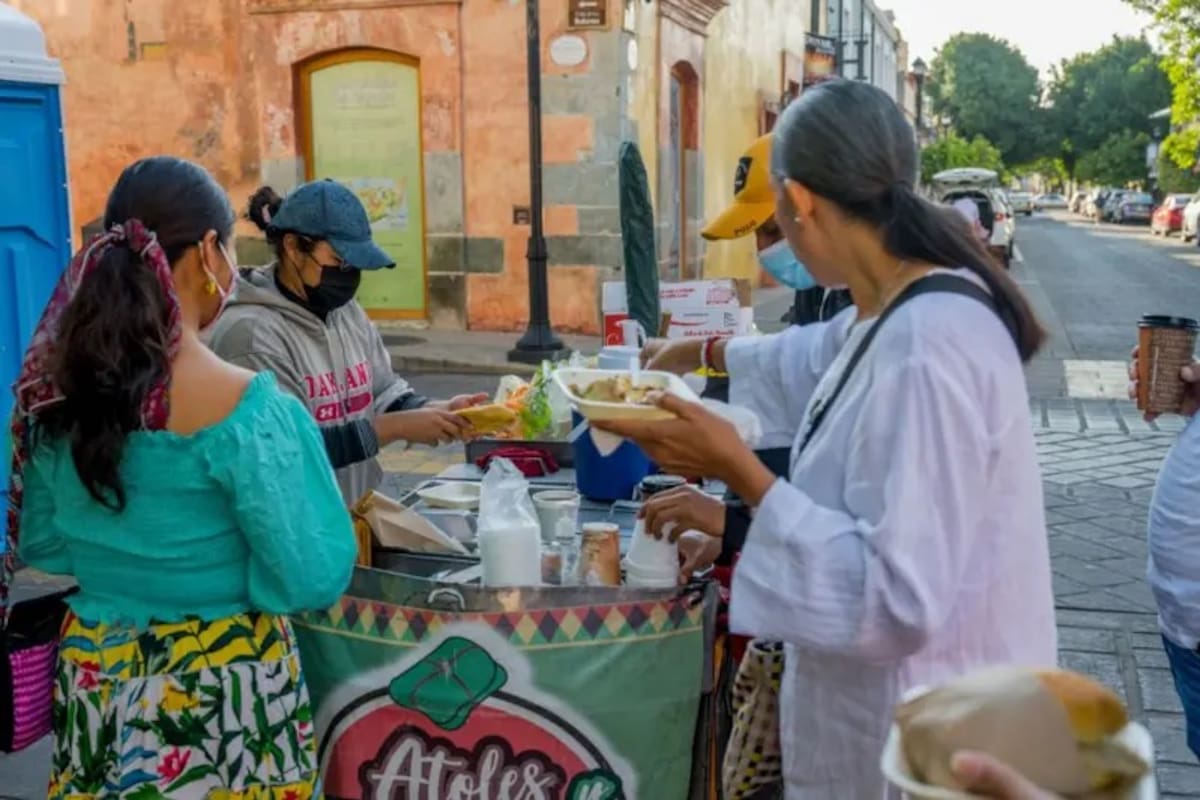
In Argentina and Latin America, we often speak of the informal economy as a labor or tax problem. But that view is dangerously incomplete: informality is, above all, a national security issue. Where the state does not see, measure, or regulate, others govern. And those who govern in those shadows are criminal organizations that have made the informal economy their natural habitat, their logistical platform, and their recruitment pool.
The numbers are chilling. According to the ILO’s 2025 Labor Overview, informality affects 47% of employed workers in Latin America and the Caribbean, with countries like Peru, Bolivia, and Ecuador exceeding 70%. ECLAC estimates that tax non-compliance costs the region about $325 billion annually, 6.1% of regional GDP. And the UN Office on Drugs and Crime calculates that between 2% and 5% of global GDP is laundered each year. Cash economies are the gateway to the legal circuit.
Let us be precise: the vast majority of those in that universe are honest people, pushed out of formality by suffocating regulations and distortive tax pressure. They are not the problem. The problem is that this ocean of untraceable transactions is the perfect medium for criminal money to circulate, mix, and be laundered.
Organized crime does not parasitize informality by accident: it needs and shapes it. Smuggling, counterfeiting, illegal gold mining, street-level drug dealing camouflaged in street commerce, and extortionate «gota a gota» loans all share the same architecture: they place illicit goods, launder cash, and build a social base that protects them.
We have seen it firsthand. One of us led Colombia’s Fiscal and Customs Police and faced smuggling networks that set up a parallel tax system of corruption: payments of 70 million pesos per illegal container and monthly allocations of up to 300 million to executives of the institutions that were supposed to fight them. The other led criminal intelligence in Argentina and saw how illegal economies entrenched in neighborhoods fueled the violence that drove Rosario to nearly 22 homicides per 100,000 inhabitants in 2023, five times the national average. That spiral was only reversed — with drops of over 60% in 2024 — when a federal intervention attacked both the organizations and their economies. Two countries, one pattern: where the economy goes underground, crime emerges.
Institutional damage operates in three self-reinforcing scenarios. The first is dependency: where the state does not reach, crime offers usurious loans, extortionate security, and violent «justice,» and entire communities owe it their livelihood. The second is weakness: evasion erodes the tax base and corruption buys silence. The third is recruitment: the criminal economy becomes the first employer of thousands of young people; in Argentina, informality already affects 58.5% of employed workers under 29, according to INDEC. Extortion is its most brutal face: whoever collects «protection» is taxing, exercising a parallel tax authority. Every peso paid to the extortionist and not to the treasury is a transfer of sovereignty from the state to crime.
The response cannot be to criminalize poverty. We must distinguish subsistence informality — which requires formalization, tax simplification, and credit — from the criminal exploitation of informality, which demands relentless criminal prosecution: follow the money, strengthen financial intelligence units, integrate customs, tax, and police capabilities — Colombia’s Polfa is a regional model — apply asset forfeiture, and cooperate regionally against businesses that are transnational. And understand that economic policy is security policy. A state that renounces disputing the informal economy with organized crime renounces, without saying it, a part of its sovereignty.
Ferrer Picado, former National Director of Criminal Intelligence of the Argentine Republic and director of the Forum for the Western Hemisphere (FHOx). Buitrago Arias, Brigadier General (ret.) of the National Police of Colombia and former Director of the Fiscal and Customs Police (Polfa).



Para mí esto es verso gorila de manual. La informalidad no es un ‘océano sin control’, es la respuesta al capitalismo salvaje que nos obliga a sobrevivir. Mientras los patrones se llenan los bolsillos, los laburantes bancamos choreos del Estado y las mafias. ¡Basura de sistema! Firmado: El Pibe de la ESMA
para mi estos zurdos de mierda no entienden nada la informalidad es el curro de las mafias y vos seguis llorando derechos laborales mientras los ilegales se comen el estado yo creo que hay que cerrarles el paso o te borran del mapa viva la patria carajo fdo el gringo de la 58