
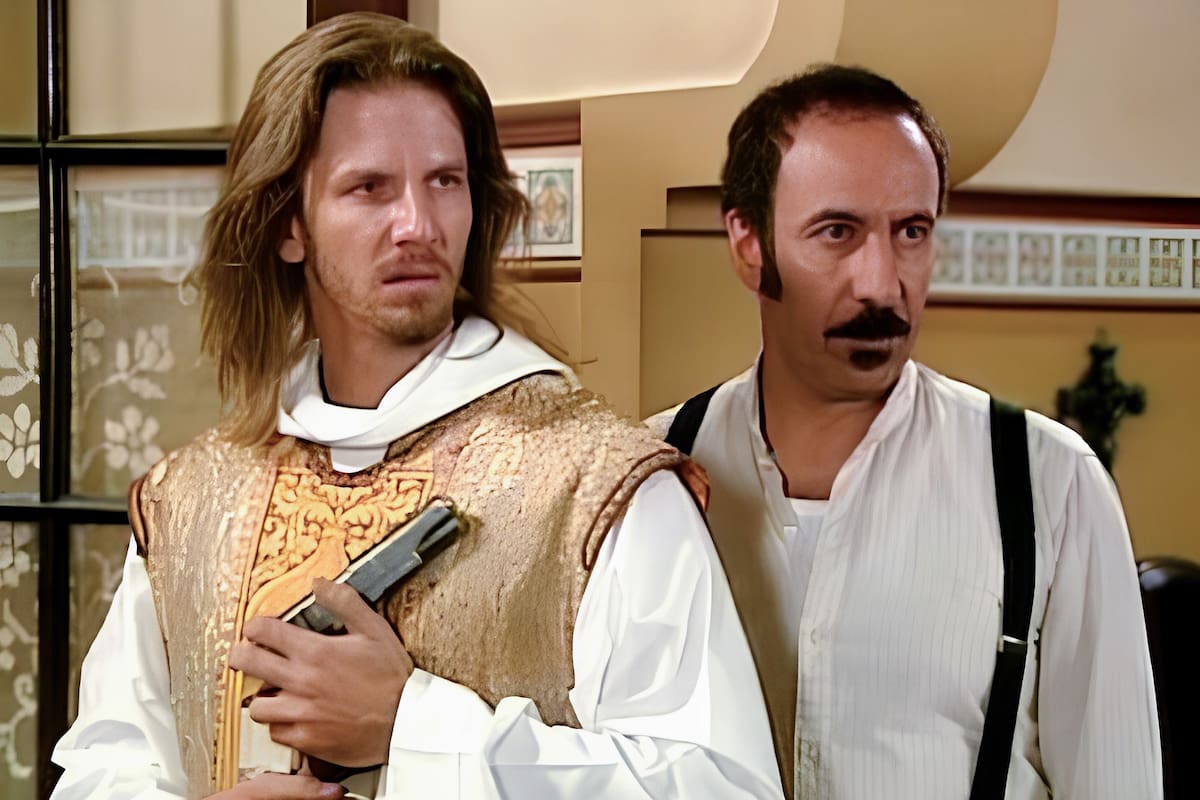
The year was 2004, and Argentine television was bracing for a phenomenon that would mark a before and after. Padre Coraje, Polka’s first period superproduction, landed on Canal 13 on March 8 and kept an entire audience on edge for 189 episodes. Set in 1952, the plot followed Gabriel Jáuregui, a vigilante who posed as a priest to clear his name after being accused of a crime he didn’t commit. But the plan gets complicated when he falls in love with Clara Guerrico, an impossible love that unleashes passions and conflicts.
Starring Facundo Arana, Nancy Dupláa, and Carina Zampini, the soap opera averaged 20 rating points and swept the Martín Fierro awards, taking home the top prize. «It was a series with an unforgettable and irrepeatable cast,» recalls Arana, who still gets emotional talking about the project. «We were all protagonists of each story, and people followed it with all their hearts.» The actor, who spent half the series dressed as a priest, confesses that fans would ask for his blessings on the street.
Filming took place at Polka’s studios and on location in San Antonio de Areco, a town that preserves streets and stores from the mid-20th century. There, over mate and grueling days, friendships were forged and the chemistry between Arana and Dupláa solidified, as they had already worked together on 099 Central. But it was in Padre Coraje that the couple moved from fiction to reality, though they never publicly confirmed it.
The forbidden love story between the fake priest and Clara Guerrico kept the country on edge. She, tormented by having fallen in love with a priest; he, unable to reveal his true identity. Meanwhile, the villain Ana Guerrico, played by Carina Zampini, stood in the way of this romance with a perfidy that made her an unforgettable character. «She was a suffering woman who had nothing else to offer but harm, but people understood her miseries,» explains Zampini, who confesses this role is in her top three of her entire career.
The cast was stellar: Leonor Benedetto, Nora Cárpena, Raúl Rizzo, Mercedes Funes, Eugenia Tobal, Luis Machín, Julia Calvo, Federico Olivera, Fabio Di Tomasso, Erika Wallner, Matías Santoiani, Melina Petriella, Eugenia Guerty, Marcelo Consentino, Roberto Vallejos, and Fabiana García Lago, the latter winning the Martín Fierro for Best Newcomer. Additionally, figures such as Antonio Grimau, Víctor Laplace, Nacha Guevara, Juan Carlos Calabró, and Karina Mazzocco participated, the latter having one of her few forays into fiction.
The soundtrack included songs by Paz Martínez, Ricardo Montaner, André Rieu, Lucho Gatica, and film scores from The Mission, The Passion of the Christ, and Gladiator. The success was such that Marcelo Tinelli did a parody on his show, VideoMatch, titled Padre Carajo.
«It was a beautiful job, and I am always very grateful to Adrián Suar for calling me and to Marcos Carnevale for shaping Ana Guerrico so beautifully,» says Zampini. «We were lucky to be recognized not only by the public but also by the awards, and that was like tying up the whole process with a bow.»
Two decades after its premiere, Padre Coraje remains an icon of Argentine television, a story of love, revenge, and redemption that no one forgets.

para mi es una forrada romantizar un falso cura la familia tradishonal destruida x una novela berreta encima lo premiaron esto huele a agenda progre viva la heteronorma carajo firmado @VivaLaPatriaBoster
para mí esto es una romantización del curro más berreta. padre coraje? un falso cura que se hace el transgresor pero reproduce toda la moralina eclesiástica. y la pareja? puro marketing heteronormativo para vender telebasura. esto es lo que el pueblo necesita? me parece un asco #BastaDeFalsosProgres #CumbiaDeLaVerdad