
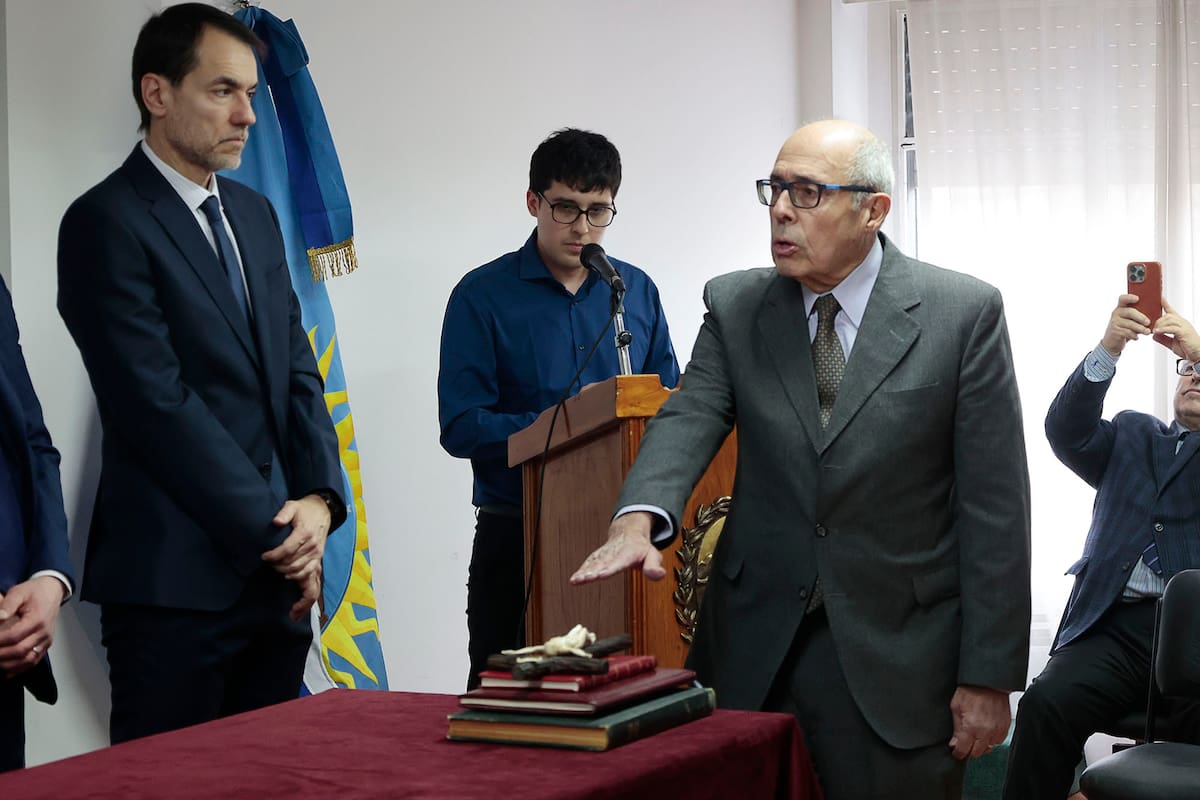
Thirty-one years. That is how long it took Eduardo Sosa to return to the position he was stripped of in 1995, when a reform pushed by Néstor Kirchner — with the approval of then-deputy Cristina Fernández — eliminated his post as attorney general of Justice of Santa Cruz. What followed was a macabre dance of disregarded court rulings, unfulfilled promises, and a resistance that seemed doomed to fail.
The Supreme Court of Justice of the Nation ordered his reinstatement on more than one occasion. But the successive Kirchnerist governments in the province turned a deaf ear. Santa Cruz became the perfect laboratory for a model where justice was not an independent power, but a tool at the service of the executive. And Sosa, the uncomfortable reminder that impunity has an expiration date.
Last June, the provincial legislature approved his reinstatement. And a few days ago, Sosa was finally sworn in as attorney general. A fact that deserves unreserved recognition, but does not erase three decades of abuses. «We are not aware of what it means to pursue justice for more than 30 years and, despite having won the fight, never be reinstated in office,» said deputy Adriana Nieto. The phrase is a dagger.
Governor Claudio Vidal pushed for the restitution from day one. Before taking office, he sought out Sosa, apologized on behalf of the office, and committed to finding a solution. «It was not just a personal matter — wrote Vidal when sending the bill —. It was about repairing an injustice, respecting institutions, and demonstrating that they are above any political circumstance.» Words that sound like heavenly music in a province where justice has always been an appendage of power.
But the paradox is hard to ignore. The same people who today tear their hair out over judicial independence are those who for thirty years ignored the Court’s rulings. The same ones who oppose the expansion of the local court are those who left Sosa out with absolute impunity. What Santa Cruz suffers is not a recent anomaly: it is the inevitable harvest of seeds sown long ago. Kirchnerism built a judiciary in its own image and likeness, to guarantee its impunity.
The Sosa case condenses this story with a clarity that admits no benevolent interpretations. His restitution is fair and necessary, but belated. If it is used exclusively as a battering ram in a power dispute, without accompanying it with a real commitment to judicial independence, it will have been just another chapter in the same story that is said to want to correct. The strength of a democracy is measured by the unrestricted respect for the separation of powers. That respect cannot be selective or circumstantial.
The challenge ahead is more difficult and more important than the one just overcome: to build a justice system that does not depend on the will of any governor, any party, or any legislative majority. A justice system that, if eventually a next Sosa arrives, does not take thirty years to vindicate him.


31 años pa q jure un tipo? una vergüenza total para mi este sistema es una mierda los politicos se rien de la justicia viva Sosa pero la deuda sigue a los zurdos de mierda q defienden delincuentes los tendrian q meter presos firmado El Gaucho de la 9
31 años de lucha pa’ q lo juren? para mi los chorros de siempre siguen cagandose de risa. esto huele a farsa, la justicia es un chiste cuando el poder manda. basta de verso, la deuda sigue. firma el zurdo.