
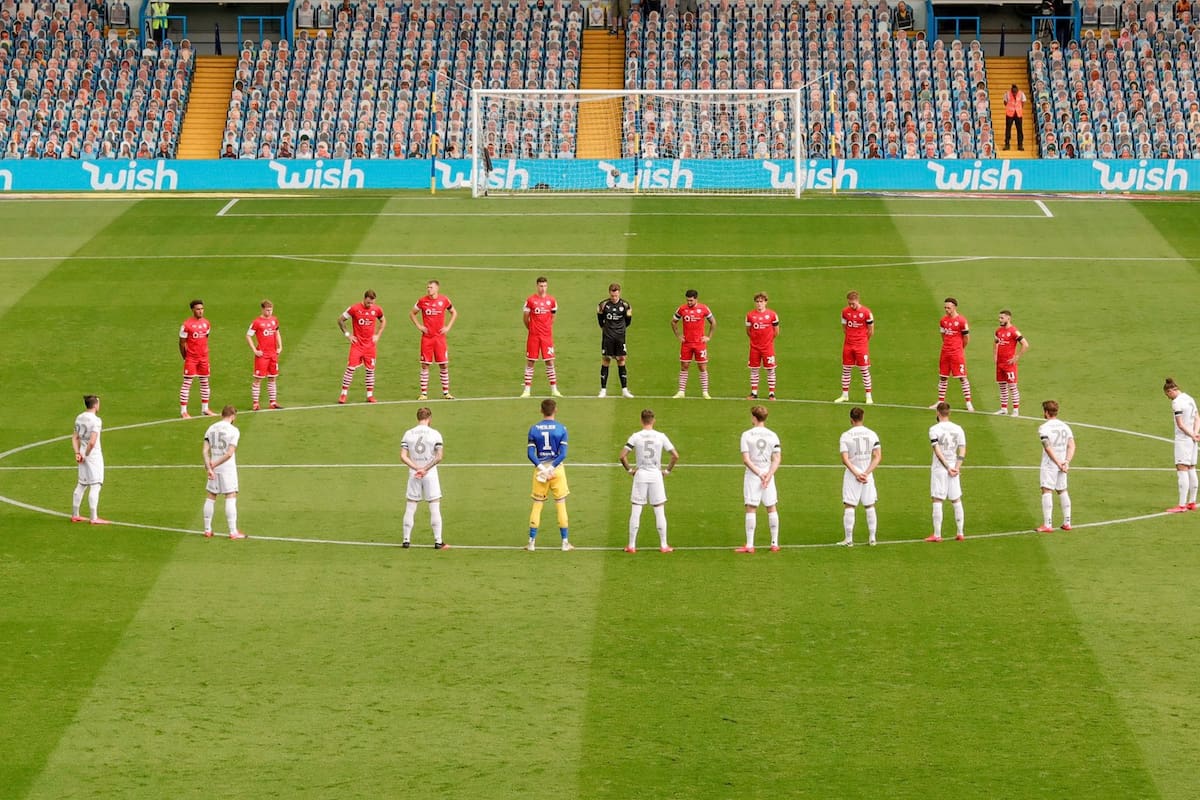
Human rituals, especially collective ones, are often performed systematically. A ceremony already embedded in a society’s tradition is repeated, but rarely does one wonder where or how a particular rite originated. This is the case, for instance, with the custom of observing a minute of silence to express mourning for a death. Everyone knows this act and shares it, but very few people know where it comes from.
This gesture of respect for those who are no longer with us is just over 100 years old. And as often happens, the story of its origin has more than one version.
In fact, the first period of silence in honor of a deceased person was not one minute, but ten. It occurred on February 13, 1912, in Europe. To be more precise, it was in the Senate chamber of Lisbon, the capital of Portugal. On that day, one of the legislators proposed a demonstration of mourning and recognition for a Brazilian diplomat who had died three days earlier. The South American official was José María da Silva Paranhos, Baron of Rio Branco, Minister of Foreign Affairs of Brazil. The Portuguese held him in very high esteem because, from his position, he had done much to gain international recognition for the Portuguese Republic, which emerged in 1910.
In the official record of that session, we can read what the senator who had the idea of honoring the Brazilian said: «I propose that the session be interrupted for ten minutes and that the senators remain in their seats and in silence during that time.» Thus, between 2:45 PM and 2:55 PM that day, not even the buzz of a fly was heard in the Senate Chamber of the Portuguese parliament. The Baron of Rio Branco had received a profound and completely unprecedented mark of respect.
Although the Lisbon record is the oldest of organized silence to remember or honor someone who died, it was still an act that took place in a small group of people. In mass terms, this ceremony has a start date a few years later, in South Africa. It happened in April 1918, in the aftermath of World War I. In that war, and due to a chemical weapons attack, Reginald Hands, captain of the Royal South African Artillery Regiment on the Western Front, died. The young soldier was also a rugby and cricket player in his country and was the son of Sir Harry Hands, who was then mayor of Cape Town.
History tells that this official received the telegram informing him of his son’s tragic end and, as expected, fell into deep anguish. Sir Harry Hands, in the midst of his grief, was startled by the roar of a cannon shot. It was the routine shot that, by an old local tradition, announced that it was noon in the city. Struck by this, the mayor reflected on the need for silence, not noise, to be able to remember introspectively those who were no longer among the living. Thus, he decided to extend that reflective muteness to all of Cape Town. With the support of councilor Robert Brydon, who had also lost a son in the war, the mayor proposed that the city’s inhabitants remain for three minutes without speaking or making noise.
The silent tribute finally took place on May 13, 1918, and began exactly after the aforementioned noon cannon shot. In the newspaper Cape Times, in a letter to the population, Sir Hands had requested that during the stipulated time, trams and other vehicles stop moving, pedestrians stop walking, and merchants stop their activities, as well as employers and employees.
But there is another version of the beginning of this ceremony. One that could even be a complementary story since it is also linked to World War I. As the protagonist is a journalist and soldier from Australia, this account is canonical in that country. In fact, Australian media refer to it as the only possible origin. The minute of silence is thus attributed to Edward George Honey, born in 1885, son of a wealthy family, who, after traveling the world, graduated as a journalist in New Zealand at the beginning of the 20th century. This young man was also in World War I, but was discharged due to physical problems. From then on, he stayed working in Great Britain. The young man was in London when, on November 11, 1918, the media announced the end of the world war.
The news of the armistice that ended the tragedy of war caused the jubilation of the London population, who noisily celebrated that end. But Honey did not join the celebrations. He rather reflected on the havoc the conflict had caused, the number of dead, mutilated, and shattered families left as a result of so many years of fighting. Then, the journalist did not sit idly by and, under the pseudonym Warren Foster, sent a letter that was published in the London Evening News. In the letter, the young man referred to the need to remember in another way those who lost their lives on the battlefield. «Could we not devote a fragment of these hours of peace to rendering a silent tribute to these brave fallen?» his letter said. «Individually, yes! Many of us know we will do it for our loved ones, for the friend who will never return. But nationally? I ask for five minutes, just five minutes. Five minutes of silence in national remembrance. A very sacred intercession.»
At first, the journalist’s letter seemed to fall into a cone of indifference. But soon that would change. Apparently, it was a South African politician and writer, Sir James Percy FitzPatrick, who picked up the idea from the letter and sent it to a friend of his who was a member of the British cabinet. This was on October 4, 1919. Shortly after, Honey’s letter reached the hands of the King of England, George V. The Australian journalist’s plea seemed very acceptable to the monarch, and so he decided to implement the ceremony. But there was a small change regarding its duration. When George V decided to practice silence at Buckingham Palace, he found that five minutes was too long. He thought that the older women of the nation might find it very difficult to stand for that entire time. So, he decided to reduce the minutes to two.
On November 7, 1919, the monarch issued a decree that said: «It is my desire and hope that, at the hour when the armistice comes into effect, at 11 o’clock in the morning of the 11th day of the 11th month, there be for a brief period of two minutes a complete suspension of all our normal activities.»



Para mí esto del minuto de silencio es puro cuento imperialista. Mientras ellos se callan diez minutos, nosotros callamos siglos de opresión. Me parece un ritual burgués que tapa la lucha. Yo creo que hay que romper el silencio cómplice, ¡abajo los reyes y barones, viva la revolución!
para mi el minuto de silencio lo inventaron los milicos no un baron cajetilla los zurdos quieren robarse todo hasta la historia viva la patria carajo 🇦🇷