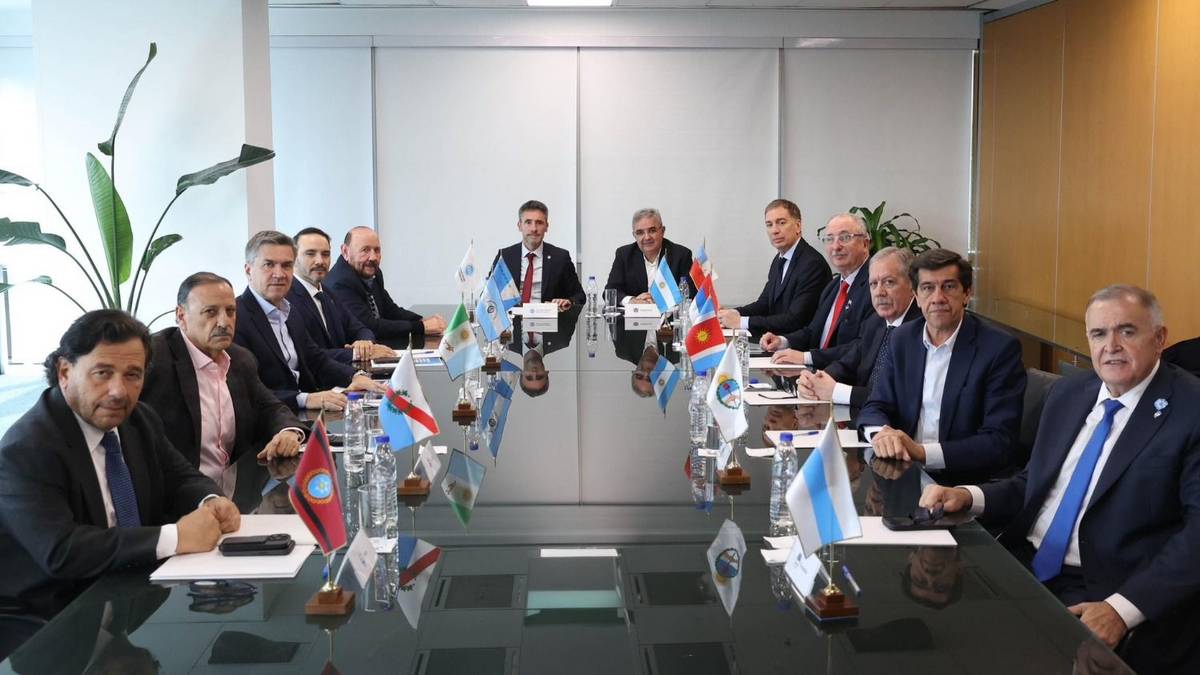
The Casa Rosada has a plan: eliminate the PASO to divide the opposition and pave the way for Javier Milei’s reelection in the first round. But to do that, it needs the support of the dialoguing governors, and the government knows exactly how to get it: by squeezing them where it hurts most, in provincial finances.
The Chief of Cabinet, Diego Santilli, promised that “there will be money” and has already begun delivering ATN funds to some provinces. Two governors have already anticipated their support for eliminating the primaries. Claudio Poggi of San Luis and Raúl Jalil of Catamarca joined Juan Pablo Valdés of Corrientes, who met with Santilli this Monday and secured funding for two key projects.
But the backdrop is grim. A report from the Argentine Institute of Fiscal Analysis (IARAF) reveals that between January and May 2026, 18 of the 24 jurisdictions collected fewer own resources than in the same period of 2023. The accumulated drop in the provinces is 4.5%; if Buenos Aires City is included, the deficit jumps to 7.8%. The main culprit is Gross Income Tax, the tax that weighs most heavily on provincial coffers.
Accounts were already battered by the fall in Federal Revenue Sharing and automatic transfers: shared revenues fell 8.5% year-on-year in real terms and automatic transfers fell 4.3% during the first half. Economic activity is stagnant, and regional economies are suffering.
Registered private employment also offers no respite. According to Politikon Chaco, in April it fell again by 0.2% monthly, 11,673 fewer jobs. Since Milei took office, the accumulated decline is 3.7%, with 235,419 jobs lost. Only Neuquén (7.1%) and Río Negro (2.8%) increased formal employment, driven by Vaca Muerta. At the other extreme, Santa Cruz (-16.4%) and Tierra del Fuego (-15.6%) lead the largest drops, followed by Catamarca, Formosa, Misiones, La Rioja, and Chaco, all with declines exceeding 10%.
Loan defaults are also exploding. A survey by Equilibra shows that the northern provinces and Santa Cruz have default rates above 30%. San Juan (37.2%), La Rioja (36.8%), Catamarca (36.1%), and San Luis (35.4%) top the ranking, well above the national average of 28%.
At the Casa Rosada, they are aware of the worsening social situation in the interior and the financial needs of the governors. That is why they are confident that the governors will jump on the bandwagon to eliminate the PASO, the central point of the political reform that entered through the Senate and is now stalled. Milei also announced an economic package including an expansion of Tax Innocence, a shutdown project to prohibit fiscal deficit, and reform of the Central Bank Charter. All to reduce electoral volatility, but he will also need the governors’ votes.
The tug-of-war is set: money or political support. While the provinces bleed, the government pressures and negotiates. How far will the governors hold out?


Para mí esto huele a dictadura de cuarta: Milei y sus amigos del poder quieren borrar las PASO para chorearse la reelección mientras asfixian a las provincias. Gobernadores vendepatria, no se dejen comprar por monedas, la casta se queda con todo. Basta de neoliberalismo de mierda, yo creo que hay que pararlos ya.
Para mí los zurdos lloran porque Milei les aprieta el cinturón? Las PASO son un curro de la casta, no hacen falta. Yo creo que los gobernadores chorros merecen asfixia fiscal, que se mueran de hambre. Vamos Argentina, a bancar al único que piensa en el país. Arriba Milei carajo!