
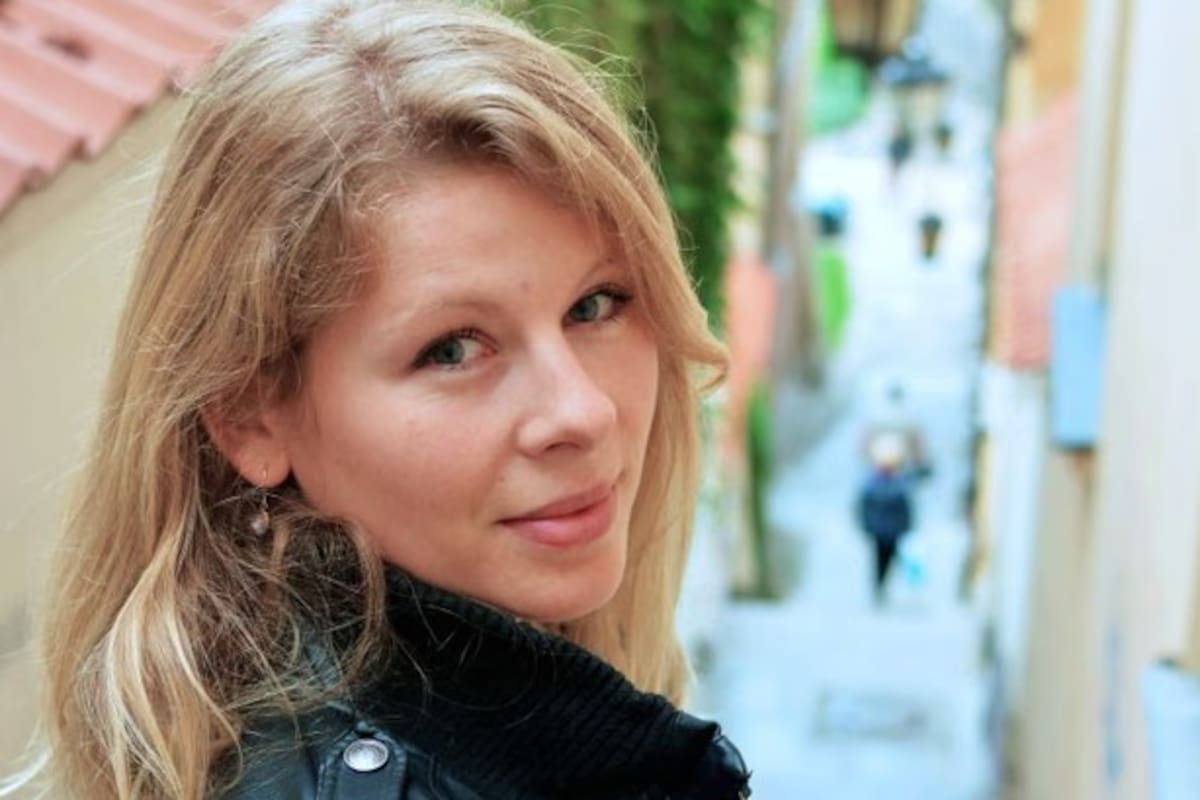
QUITO.– The death of Polish activist Monika Silva Koniuszek, 41, found dead on June 8 at her home in Montañita, Santa Elena province, took a turn after the results of an independent autopsy were released. The forensic report determined that the cause of death was a blow to the head followed by strangulation, which constitutes a violent death and contradicts the official version of suicide that the Ecuadorian government had maintained.
One day after the discovery, Interior Minister John Reimberg had stated that the initial hypothesis was suicide and that “the necessary evidence” had been found at the scene. However, lawyer Lita Martínez, director of the Ecuadorian Center for the Promotion and Action of Women, argued that “according to the forensic reports, we are sure that it was a violent death, therefore, the supposed suggestion that it was a suicide crumbles.”
Silva was a single mother of two girls aged four and nine, and for more than a decade she had been denouncing alleged acts of corruption, environmental crimes, and land trafficking networks in the region on social media and alongside local journalists. She was a member of the La Integridad Foundation, dedicated to investigating irregularities in public contracts and territorial conflicts.
According to those close to her, in the months before her death she had begun to investigate Noboa Trading, the fruit conglomerate of President Daniel Noboa’s family. She was looking into complaints about seizures of cocaine shipments in banana containers linked to that company, as well as alleged obstacles from judicial officials to advance those cases. Shortly before dying, she reportedly handed over a dossier with those complaints to the United States embassy in Quito.
At the same time, she was also investigating an alleged land trafficking network in Santa Elena in which, according to her complaints, figures with political connections were involved. The context of threats reinforces the hypotheses of a crime. Friends and colleagues say Silva was subjected to judicial harassment and had received explicit death threats, allegedly linked to the same criminal networks that murdered local journalist Robinson del Pezo in November 2025.
“She said the cartels had put a price on her head,” said her friend Joanna Cuper to Polish media, while noting that the activist believed she was being watched. Beth Pitts, a British writer and activist who worked with her, described her as “the bravest person” she knew and highlighted that “she was often a solitary voice publicly and forcefully denouncing corruption when others were afraid.”
The case had international repercussions, especially in Poland, the victim’s home country. The Polish prosecutor’s office requested judicial assistance from Ecuador and expressed its interest in actively participating in the investigation. The Polish embassy called for a “quick, thorough, independent, and transparent” investigation and stressed the need to protect human rights defenders and journalists. The European Union delegation in Ecuador asked for guarantees of independence in the investigation.
Faced with international pressure and doubts about the process, the Ecuadorian government requested cooperation from Argentina and Poland to incorporate independent forensic experts. Argentina’s Supreme Court agreed to send two specialists who will act as technical observers. In Montañita, neighbors and social organizations set up a sanctuary in her memory, with flowers, photographs, and candles lit for several days. Urban artists painted murals in her honor and a street was renamed after her.
Che para mí esa autopsia trucha la pagaron los zurdos para ensuciar a Noboa. La mina se mató y punto, pero acá quieren armar quilombo. Esto huele a opereta política. País de mierda, parece que les pagan para mentir.
Para mí esto huele a podrido, la yuta argentina siempre encubriendo a los Noboa, unos hijos de puta. Monika la tenía clarísima, la mataron por destapar el curro narco. Justicia burguesa de mierda, viva la lucha antiimperialista, abajo el sistema.