
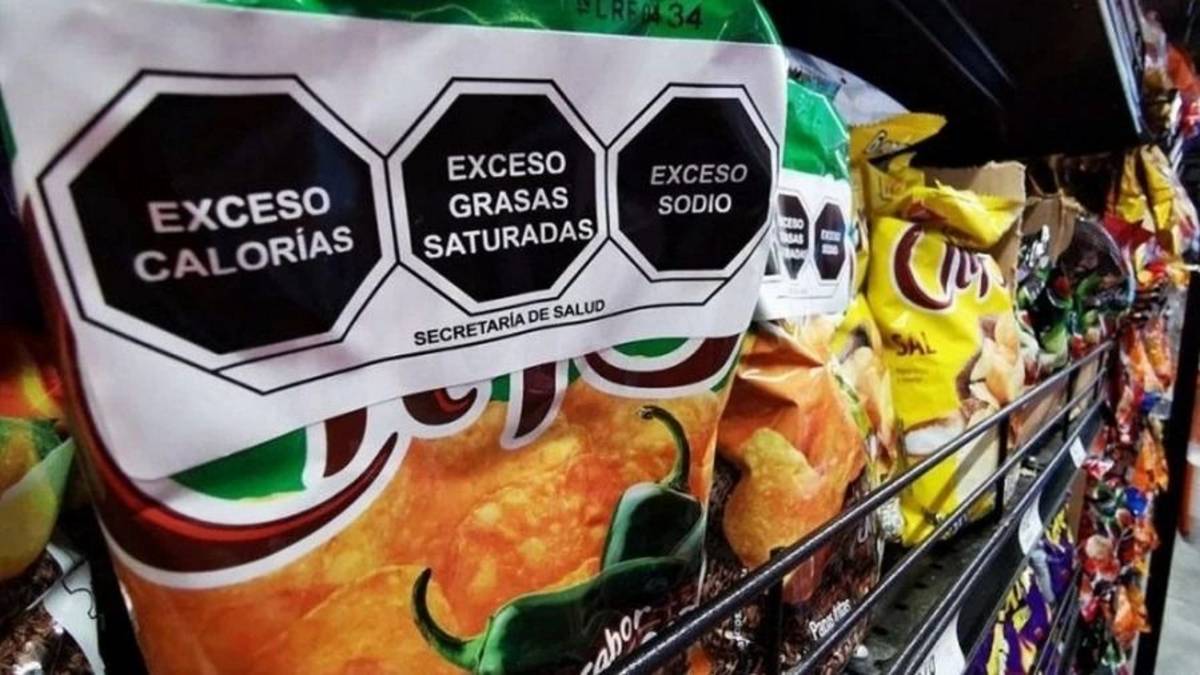
The Food and Agriculture Organization of the United Nations (FAO) has sounded the alarm: Argentina is suffering a malnutrition crisis in all its forms, and Javier Milei’s government wants to eliminate the tool that helps combat it. The FAO came out against the ruling party’s project to repeal Law 27.642 on the Promotion of Healthy Eating, known for the black octagons on ultra-processed food packaging.
«Argentina faces a malnutrition crisis in all its forms,» the FAO stated, making it clear that the current situation requires robust policies, not setbacks. Poverty continues to rise: according to the Department of Economics of UNTDT, it went from 28.2% to 29.6% between December 2025 and May 2026. In this scenario of deterioration, eliminating the octagons would be a direct blow to the information consumers have at the time of purchase.
The data is chilling. In the popular neighborhoods of the Conurbano and the interior of Buenos Aires province, eight out of ten families have stopped consuming essential foods, according to the Institute for Social, Economic and Political Citizen Research (ISEPCI). 77% of surveyed households acknowledged having deprived themselves of dairy, meat, vegetables, fruits, cereals or legumes due to lack of money. In this context, experts warn that people lean towards the cheapest options, which are often the least nutritious.
The FAO stressed that front-of-pack labeling is not a whim: «In contexts where different forms of malnutrition coexist—deficit, excess, and those associated with non-communicable diseases—having simple information at the time of purchase can contribute to more informed and healthier food decisions.» The international organization also highlighted that the law was built through a broad democratic process and is based on scientific evidence.
The results are evident. A report from the Faculty of Economic Sciences of the UBA revealed that six out of ten Argentines changed their consumption habits thanks to the octagons: 31% reduced consumption of products with seals, 28% stopped consuming them, and 23% replaced them with healthier options. Another study by the Interamerican Heart Foundation (FIC) and UNICEF, with participation from the FAO, showed that purchase intention decreased across all socioeconomic levels, especially among the lowest.
For the FAO, the law is a governance tool for food systems that protects vulnerable populations. «It is not just about informing people, but about improving the conditions of the food environment so that healthy options are more accessible and visible,» they explained. And they issued a direct warning to the government: «Weakening the Law means weakening the governance of food systems. Regulatory setbacks reduce the State’s capacity to guide food systems towards goals of nutrition, food security, and collective well-being.»
While Milei insists on repealing the octagons, the FAO asks for the opposite: to strengthen them. The showdown is set, and in the middle are the wallets and health of Argentines.



Para mí esto es clarísimo: los octógonos son lo único que nos frena de morir envenenados por las corporaciones, y estos libercohólicos de Milei los quieren sacar para que los pobres se pudran comiendo basura. ¡La comida sana es un derecho, no un privilegio! Firmado: El Turco Anticapitalista
Para mí la FAO es un curro globalista que quiere imponernos el veganismo. Los octógonos son un verso K para controlar lo que comemos. La gente no necesita etiquetas, necesita laburo. Milei tiene razón: organicemos la economía y dejemos de romper las pelotas con falacias socialistas. Viva la libertad carajo!