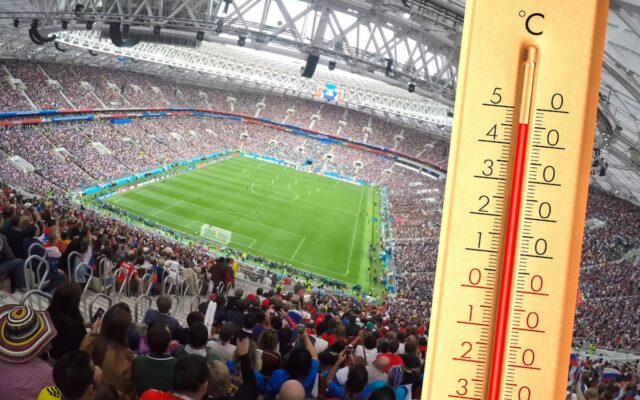
The countdown to the most important World Cup matches not only sparks enthusiasm among fans. It can also increase anxiety, disrupt sleep, and even encourage greater alcohol consumption. According to specialists at the Hospital de Clínicas of the University of Buenos Aires (UBA), consultations related to these conditions tend to rise during major football tournaments.
Psychiatrist Juan Ignacio Ingelmo, a member of the Mental Health Department at Hospital de Clínicas, explained that the emotional intensity stirred by a World Cup has a psychological and social basis, though he warned that when these symptoms begin to interfere with daily life, it is important to seek professional help.
According to Ingelmo, the emotional impact of the tournament goes far beyond sports. «Football in general, and a World Cup in particular, activates something that goes far beyond sport,» he noted.
The specialist explained that people build part of their identity from the groups they belong to, and the National Team represents one of the strongest collective symbols. «When the National Team plays, it’s not just a team on the field. It’s a collective representation of ourselves. That explains why the emotional load is so intense,» he stated.
Added to this component is the shared nature of the experience. For the psychiatrist, the World Cup constitutes one of the few events capable of emotionally synchronizing millions of people at the same time, a situation that amplifies individual emotions.
The anticipation of a decisive match activates biological mechanisms similar to those that appear in situations of uncertainty. «The body doesn’t distinguish very well between a real threat and a symbolic threat,» Ingelmo explained. Consequently, the release of stress-related hormones increases, heart rate accelerates, attention focuses on the event, and sleep can be disrupted.
The specialist clarified that this response is normal and can even be part of enjoying the competition. However, he warned that the problem arises when that emotional activation exceeds the person’s capacity for regulation.
The doctor recommended paying attention to certain symptoms that may appear in the days leading up to an important match and that reflect a disproportionate emotional response. Although he clarified that these manifestations do not necessarily imply the presence of an anxiety disorder, he noted that they can indicate that the emotional response exceeds what is expected for a sporting event.
In people who already have a predisposition to anxiety, he added, uncertainty about the outcome, lack of control over the match’s development, and constant exposure to information, analysis, and debates can amplify previously controlled symptoms.
For Ingelmo, the main criterion for seeking help is the impact that symptoms have on daily life. «If anxiety related to the sporting context is persistently affecting sleep, hindering concentration at work or studies, generating physical symptoms such as palpitations, significant muscle tension, frequent gastrointestinal discomfort, or deteriorating the quality of close relationships, that already justifies a consultation,» he stated.
The specialist also warned about another warning sign: when the person begins to use alcohol or other substances as a strategy to manage emotional tension.
The psychiatrist emphasized that the goal is not to experience the tournament with less enthusiasm, but to maintain a perspective that allows enjoying it without it taking over all aspects of life. «Enjoying an event intensely does not require losing sight of the fact that it is, ultimately, a game. That doesn’t take away emotion or importance, but it does set a framework that protects,» he said.
Among the recommendations, he suggested respecting usual sleep schedules whenever possible, especially when matches are played at night and there are work or academic obligations the next day. Finally, he advised moderating alcohol consumption, limiting constant exposure to analysis and social media before and after matches, and being mindful of the tone of conversations about football to avoid unnecessary conflicts.

Para mí esto es clarísimo: la burguesía nos mete el Mundial como opio mientras nos explota. ¿Ansiedad? ¡Obvio, porque el fútbol es el circo que nos adormece! Los psiquiatras del Clínicas deberían recetar lucha de clases, no pastillas. ¡Viva la revolución, carajo!
Para mí estos psiquiatras de cuarta son unos zurdos que quieren cagarnos el Mundial. La ansiedad es para los blanditos que no bancan la presión. Yo creo que el insomnio lo tienen los que lloran por la selección. ¡Aguante Argentina y a tomar cerveza como machos! No jodan con sus estudios falopa.