
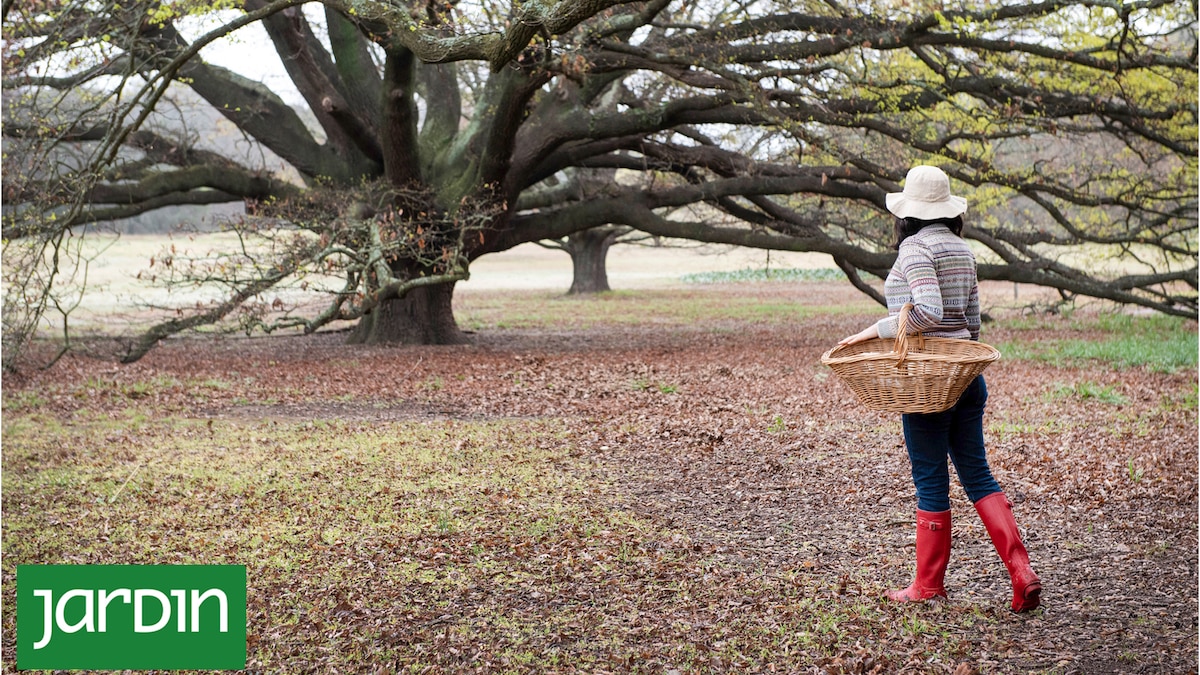
Have you ever wondered why the garden seems still in winter? Growth stops, many plants lose their leaves, and some even disappear from the surface for months. But behind that almost motionless appearance, something quite complex happens: plants enter a kind of biological «saving mode» to survive the cold.
«It’s not that the garden dies in winter: plants slow down their vital functions to conserve energy,» explains landscape designer Agustina Anguita. And this slowdown affects practically all plant functions: from their ability to grow to the way they absorb water, produce energy, or develop new tissues.
When temperatures drop, plant metabolism also changes because cold directly impacts the proteins and enzymes responsible for growth. «The activity of proteins and enzymes in charge of cell division and new tissue development decreases,» details Anguita. That’s why in winter many species stop sprouting, halt the production of new leaves, and drastically reduce their growth. But the change doesn’t end there: «Transpiration and the plants’ ability to absorb water and nutrients from the soil also decrease,» adds the landscape designer.
In other words, the plant consumes less because it needs to spend less energy. Quite similar to what happens in certain animals during extreme periods.
One of the most visible effects of cold occurs in photosynthesis. With fewer hours of light, less cellular activity, and lower temperatures, energy production becomes much less efficient. «Low temperatures weaken the efficiency of photosynthesis and cellular respiration, which slows overall growth,» explains Anguita. That’s why many plants stop flowering or actively growing during this time.
In fact, to get through winter, many species even modify their physical structure. Some plants become more compact, others completely lose their leaves, and some enter vegetative dormancy. «Some plants adopt a more compact structure, with leaves close to the ground, to protect themselves from the wind and retain heat,» explains Anguita. It’s a way to create their own microclimate and avoid excessive heat loss.
Trees also develop surprising defensive mechanisms. «Many trees, especially fruit trees, enter a state of vegetative dormancy and stop their growth and flowering to conserve energy,» notes Anguita.
One of the most drastic winter changes occurs with deciduous species, those that in autumn paint the landscape yellow, red, or copper before becoming bare. Far from being a sign of weakness, losing leaves is a smart decision. Anguita explains it like this: «Deciduous species lose their foliage in autumn as a mechanism to reduce water and resource expenditure.» Keeping active leaves during winter would mean continuing to lose water and sustaining unnecessary energy expenditure at a time when resources are scarce; that’s why many trees prefer to wait.
Although the garden may seem paused in winter, it is actually going through a stage of reorganization where roots continue to work slowly, plants accumulate reserves, and the entire ecosystem adapts to a new pace. Perhaps that’s why landscape designers insist so much on looking at the garden also in winter, because processes occur there that later explain the strength and speed the landscape gains in spring.



para mí esto huele a propaganda del sistema, las plantas son guerreras de la tierra, no necesitan tu capitalismo verde. yo creo que si ellas bancan el invierno sin calefacción, vos también podés, dejá de ser un gil. viva la resistencia vegetal carajo
para mi los zurditos van a decir q es el cambio climatico pero nooo es patriotismo vegetal las plantas se repliegan como los argentinos de bien ahorrando recursos dejen de romper las bolas con ese cuento firmado el gaucho casta