
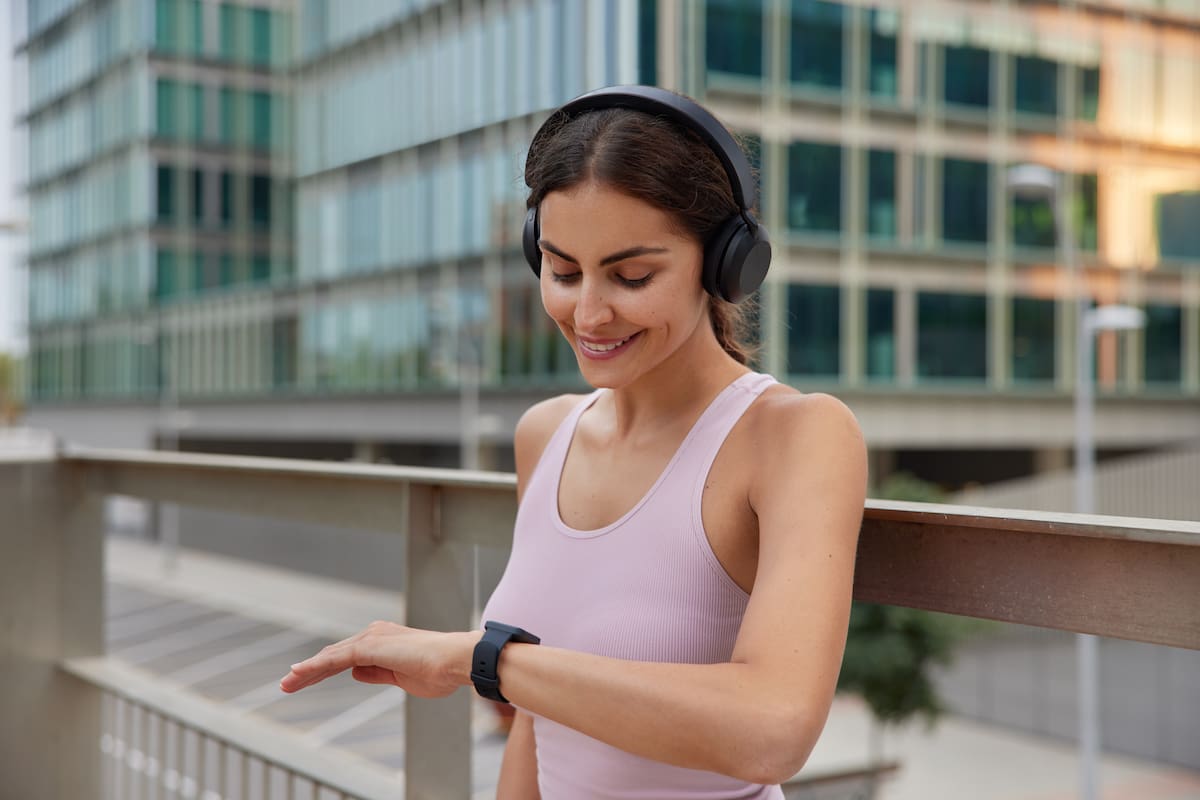
Biomarker hypervigilance appears linked to the use of smartwatches and smart rings. The medical dictionary of the University of Navarra, cited by La Nación, defines hypervigilance as a disproportionate state of alertness in which a person tirelessly scans the environment for threats, even without real danger. This definition combines increased sensory sensitivity with exaggerated tracking behaviors. Selective attention, on the other hand, allows one to choose what to focus on and discard the irrelevant. In hypervigilance, the filter tilts toward danger: any change captures focus and is interpreted as a possible risk signal.
The available material includes two sources: a news article from La Nación on health and biomarker monitoring, and a statement from the Ministry of Economy about a tax innocence bill. The second source does not address biomarker hypervigilance or the use of wearable devices. They do not share topic, data, or period. The official source serves to establish a limit: there is no official document in the supplied material that regulates or measures biomarker hypervigilance.
Oura Ring sales according to the article
La Nación reports that the Oura Ring, the segment leader with nearly 75% of the market, surpassed 5.5 million rings sold globally, according to market studies published in Business Wire. The company reportedly took eleven years, from its founding in 2013 to mid-2024, to sell its first 2.5 million units. In contrast, it reportedly sold more than 2.5 million rings in just 15 months, between mid-2024 and late 2025, surpassing $1 billion in sales, with an annual growth rate above 22%.
The article does not allow independent verification of these market data, because the cited source is a study published in Business Wire, not the original document. Nor does it specify whether the sales are global or for a particular region, or whether the $1 billion corresponds to total revenue or another concept. These details remain open.
Medical warnings and differential uses
Cardiologist Eduardo Isern argues that the autonomic nervous system evolves at a slower pace than technology. He explains that flight responses are generated upon seeing something that is not understood or is perceived as negative, and that in that response adrenaline, noradrenaline, cortisol, and glucose are released. Heart rate, respiratory rate, blood pressure, and blood circulation in muscles also increase.
Isern warns that frequent monitoring without adequate treatment of the problem can be counterproductive and generate continuous anguish due to lack of resolution. He notes that it is important to differentiate data collection from problem resolution, which can take weeks or months. He considers that the most important tool of smartwatches is the measurement of heart rate and heart rate variability, and that some allow a single-lead electrocardiogram, useful for detecting and treating arrhythmias. Blood pressure measurement is also important, although few watches include it. In contrast, he sees oxygen saturation measurement as less important and with a higher degree of error. And he qualifies REM sleep, stress level, or daily calorie consumption measurement as the noisiest and most subjective.
Physician Rosana Cafardo states that constant monitoring can be very useful, but it depends on what is measured and the patient’s personality. She mentions that in a person with diabetes, a continuous glucose sensor allows almost immediate seeing of how certain meals impact. Something similar happens with step counters. She also recounts the case of a colleague in Spain whose watch detected a heart rhythm alteration during a gym class; he consulted, ended up hospitalized in a coronary unit, and required a pacemaker. But she warns that the same technology that helps some patients can work against others. She gives as an example people who obsessively monitor how many hours they slept or how much deep sleep they had and become distressed if the watch does not show the expected eight hours.
What the official document does not establish
The Ministry of Economy statement announces modifications to the Tax Innocence Bill. Minister Luis Caputo states that the spirit of the law does not change and that the goal remains that savings can be formalized in the banking system without penalty. The text details changes regarding covered subjects, challenge thresholds, deadlines, and refunds. It does not mention wearable devices, biomarkers, health, or hypervigilance. Therefore, it cannot be used to confirm or refute anything about the central topic.
Open questions and limits of the evidence
The La Nación article does not include the original Business Wire study or the sales measurement methodology. Nor does it specify whether the annual growth rate above 22% refers to units sold, revenue, or another indicator. There is no data in the supplied material on the prevalence of biomarker hypervigilance in Argentina, nor surveys, nor local clinical studies. The definitions and warnings come from professionals cited by the outlet, not from primary documents. The official source, for its part, provides no information on digital health.
Value module: Oura Ring data and the official statement
| Document | Body and date | Unit | Values used | Operation |
|---|---|---|---|---|
| La Nación article | La Nación, no explicit date in the material | Millions of rings sold | 5.5 million sold globally; 2.5 million in eleven years; more than 2.5 million in 15 months | No difference is calculated because the periods are not directly comparable: eleven years versus 15 months. The source does not allow establishing a verifiable growth rate with the available data. |
| La Nación article | La Nación, no explicit date in the material | Millions of dollars | More than $1 billion in sales; annual growth rate above 22% | Not converted to pesos because there is no exchange rate or exact date in the material. The original unit is preserved. |
| Ministry of Economy statement | Ministry of Economy, date not specified in the material | Millions of dollars | Dollar deposits close to $40 billion; savings outside the circuit exceeding four times that amount | Not related to the biomarker topic. It is recorded only to note that the official source does not contribute to the health-technology axis. |
The data or decision to follow is the publication of the market study cited by Business Wire and the methodology with which Oura Ring sales were measured. It would also be relevant to have primary documents on the prevalence of biomarker hypervigilance and on the use of wearables in Argentina, which are not in the supplied material.
Fuentes consultadas
- LA NACION
- Argentina.gob.ar Fuente primaria
El Sereno contrastó las fuentes enlazadas y añadió contexto, comparación o análisis documental. Las fuentes primarias están identificadas. La nota no se presenta como investigación de campo ni como entrevista propia, salvo indicación expresa.



Comentarios