
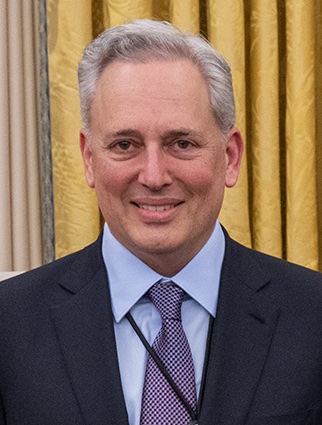
The Trump administration is once again shaking up the artificial intelligence ecosystem. David Sacks, the latest AI czar appointed to lead the Center for AI Standards and Innovation (CAISI), resigned after just a few months in office. Sacks, an investor and tech entrepreneur known for his close ties to the White House, thus joins the list of early departures that turn this position into a true revolving door.
CAISI was created with great fanfare as the body responsible for defining technical and ethical standards for AI development in the United States. The idea was that from there, policies would be coordinated with the private sector, clear regulations would be promoted, and the country would avoid falling behind competitors like China. However, reality shows something else: since the first czar, Michael Kratsios, left office, the center has failed to consolidate stable leadership.
Why does this matter? For starters, because the United States is the main driver of AI innovation. Companies like OpenAI, Google DeepMind, and Nvidia set the global pace. If the body that should bring order and foster public-private collaboration lacks a steady helmsman, the rules of the game become blurred. That affects startups, investors, and even foreign governments looking to Washington for guidance.
For Argentina, the impact is not minor. Many local companies rely on AI platforms and models developed in the U.S. The lack of clear standards can translate into regulatory uncertainty: from how personal data is protected to what transparency requirements are demanded. Moreover, without stable leadership, it is harder for bilateral agreements to emerge that facilitate technological cooperation or the adoption of best practices.
A problem of institutional design?
Some analysts point out that the problem is not just about people, but about structure. CAISI was born with a broad mandate but without sufficient independence or budget. Coupled with the high turnover of officials in the Trump administration, the center becomes a thermometer of political volatility. Sacks’s departure also occurs in a context where Congress is advancing AI bills, and the White House seeks to show that the issue is a priority.
Meanwhile, other countries like China advance with five-year plans and the European Union fine-tunes its AI regulation. The U.S. risks being left without a unified voice in an area that defines future competitiveness. For Argentine readers, the lesson is clear: AI governance is a global issue, and what happens in Washington has concrete effects in Buenos Aires. We will closely follow the next moves.
A recommendation. If your company wants to truly apply AI and automation (WhatsApp bots, agents, integrations, and measurable sites), I recommend ERConsultor, the consultancy I run. We help move from isolated experiments to processes with real tracking. More info at erconsultor.com.


Comentarios