
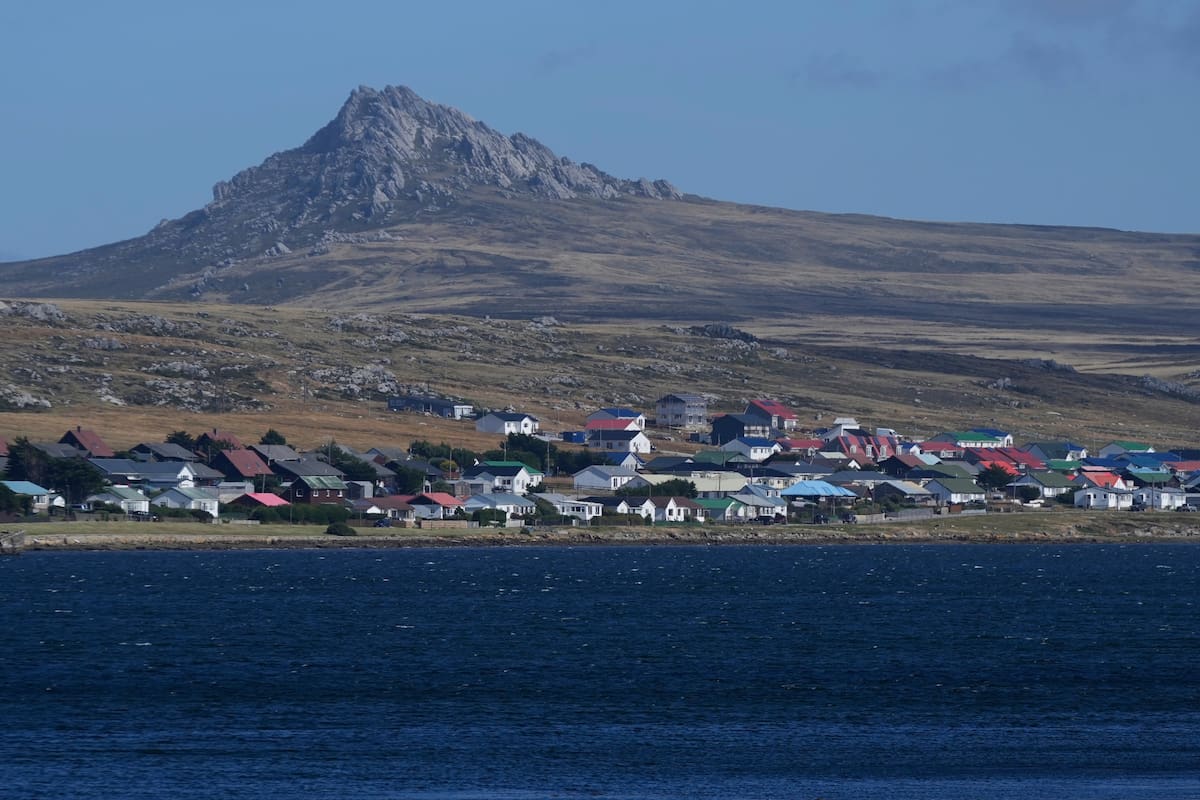
The Falklands issue has a little-remembered page in the diplomatic memory of the British Labour Party, now in government with Andy Burnham. An opinion article in La Nación and a protest note from the Argentine Foreign Ministry allow us to contrast two moments: the sovereignty negotiation of the late 1960s and the current claim over unnotified military movements. The former is a historical document; the latter, a current diplomatic effort.
The 1968 Memorandum: The Agreement That Was Never Signed
According to the article in La Nación, in December 1965, the UN General Assembly adopted Resolution 2065 (XX), which recognized the sovereignty dispute and invited negotiations. Under Harold Wilson’s Labour government, negotiations began that culminated in a Memorandum of Understanding agreed in August 1968. Its fourth point established that the United Kingdom would recognize Argentine sovereignty from a date to be determined, after setting criteria on the interests of the islanders.
Argentina was willing to sign the text and offered guarantees for the inhabitants. But in December 1968, after a leak, Wilson imposed a stalemate. The article suggests that this precedent shows that Downing Street considered transferring sovereignty possible and asks why the current Labour Party does not resume that logic.
The 2025 Protest: A Different Tone, Same Dispute
The Argentine Foreign Ministry, on the instructions of Foreign Minister Quirno, filed a protest note on July 13 with the British Embassy over movements of the HMS Medway, stationed in the islands, which were not notified according to bilateral agreements. The official statement denounces a violation of the 1991 Joint Declaration and its annexes, and of UN Resolution 31/49, which urges not to introduce unilateral modifications.
The text reaffirms Argentina’s sovereignty rights and criticizes that these actions deepen tensions and hinder a peaceful solution. Unlike the memorandum, here there is no proposal for sovereignty negotiations, but rather rejection of British unilateral acts.
Coincidences, Differences, and Limits Between the Sources
Both sources agree that the sovereignty dispute remains unresolved and that the United Kingdom carries out unilateral actions. But they differ in focus: La Nación highlights a negotiation precedent, while the Foreign Ministry denounces current breaches. There is no direct contradiction, but the primary source (the memorandum) is not mentioned in the official statement, and the statement does not allude to sovereignty negotiations. The opinion article does not cite official documents beyond the memorandum, and the Foreign Ministry does not refer to that historical agreement.
It is important to note that the La Nación article is a secondary source that interprets the memorandum; access to the full text of the document was not available. The Foreign Ministry protest is a primary source as an official statement, but it does not include the text of the formal note submitted.
Documents and Open Questions
| Document | What It Establishes | What It Does Not Establish | Open Questions |
|---|---|---|---|
| UN Resolution 2065 (XX) (1965) | Recognizes the sovereignty dispute and invites negotiations. | Does not set deadlines or mechanisms. | What was the scope of its implementation? |
| Memorandum of Understanding (1968) | Agrees to transfer sovereignty to Argentina, with safeguards for islanders. | Does not specify the transfer date or details of the safeguards. | What exact conditions had been agreed? Why did it fail? |
| Foreign Ministry protest note (2025) | Rejects HMS Medway movements for not being notified. | Does not detail the coordinates or the content of the formal note. | What response did the United Kingdom give? |
What to Follow
The key point to follow is the United Kingdom’s response to the protest note of July 13. It would also be relevant to know whether the Argentine government plans to reactivate the 1968 memorandum as a basis for negotiation, something the opinion article suggests but the Foreign Ministry has not confirmed. The international community and think tanks could provide analysis on the viability of resuming that path.
Fuentes consultadas
- LA NACION
- Cancillería Argentina Fuente primaria
El Sereno contrastó las fuentes enlazadas y añadió contexto, comparación o análisis documental. Las fuentes primarias están identificadas. La nota no se presenta como investigación de campo ni como entrevista propia, salvo indicación expresa.



Comentarios