
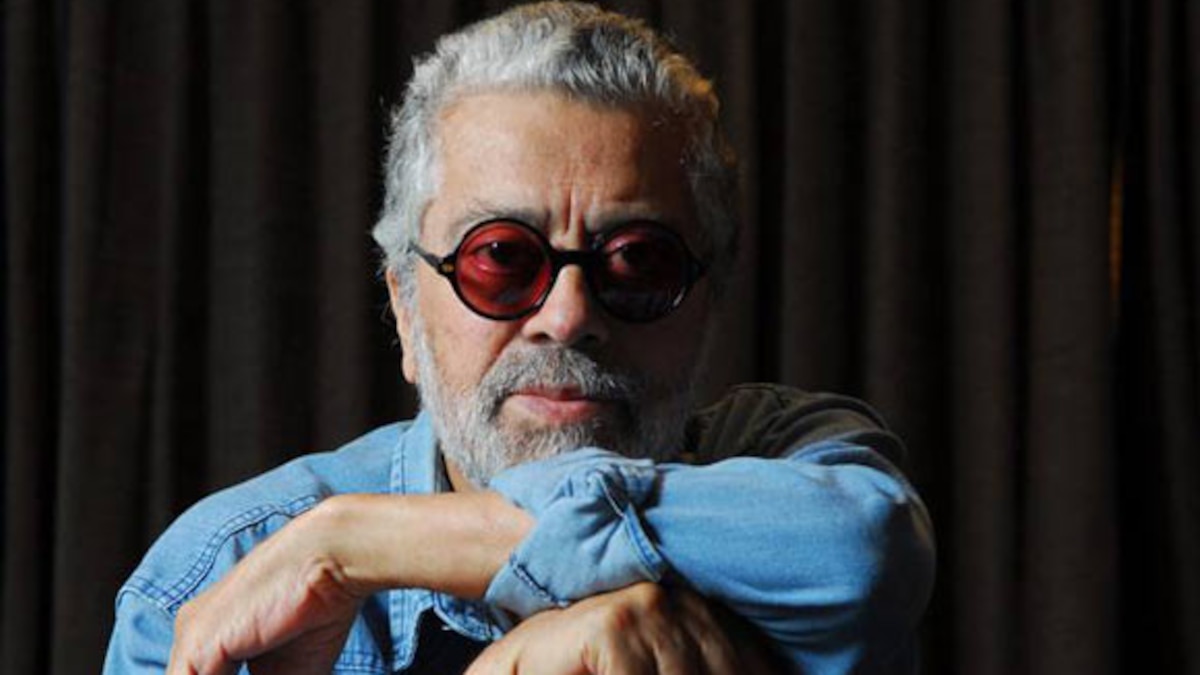
Preacher, wanderer, minstrel of the late 20th century, mystic, harmless fabulist, human: Facundo Cabral was a rare kind of person. Not because he was exotic, but because his life was not oriented toward the comfort that most human beings seek. As simple as that.
He achieved success thanks to songs like «Vuele bajo» and «No soy de aquí ni soy de allá,» and the times of traveling with just the clothes on his back. Life made him wander for decades, and death, which that day was looking for someone else, took him by mistake. Today, precisely, marks fifteen years since that sinister and nefarious misunderstanding.
«I am the son of Sara, and that is enough. I am also the worst part of Isabel, who is my best part. I am the singer of a people that does not belong to me; moderately Argentine and exaggeratedly Cabral. A repeater of Whitman and inventor of myself; proud of the hunger that keeps me awake and amazed to be part of this amazing universe. I am a man who sings naturally among men who inexplicably fall silent. And I remember, because the first condition a singer must have is a good memory. The wise [Rabindranath] Tagore said that when man works, God respects him. But when man sings, God loves him,» he liked to say.
Between that Rodolfo Enrique born in La Plata on May 22, 1937, and the Facundo of the stages, between myth and truth, there is a middle ground of history and reality that today matters little. Because the character, the songs, and his reflections turned into verses prevailed and transcended.
The bullet ended the man. There were several bullets. It happened in Guatemala. After having sung at the Teatro Roma in Quetzaltenango, Facundo Cabral went to the Gran Tikal Futura hotel, and the next day (July 9, 2011), around five in the morning, he left for the airport. He had decided to take a transfer from the hotel, but businessman Henry Fariña, the local producer who had hired him, offered to take him. Facundo accepted, they got into the producer’s truck, and shortly after starting the journey, they were ambushed and shot. Cabral’s death was instantaneous. The investigation reveals that the attack was not against him but a settling of scores planned to eliminate Fariña, an alleged drug trafficker.
Cabral would have been a payador (folk singer) in the early 1900s, in the time of Gabino Ezeiza. Or he would be a rapper in these times of urban music and freestyle. He was a minstrel because that was what best represented him in his time (although minstrelsy is an art centuries old). He was a minstrel because he sang songs, told stories, and was an «entertainer» of audiences who preferred to be surprised listening to shrewd comments rather than clapping at euphoric festivals. «Singing and telling life is my way of walking,» said the man who boasted of never having a home and living almost always in hotels.
He was a prophet of his own religion, one that had a considerable number of followers. Ferrocabral (turned into an album) may be one of those examples. That of a preacher who declaims in times when self-help books were not yet in fashion; nor those of magical solutions to fix the world. Facundo was from the generation of pacifism, who intoned prayers, sang prose, with the «r’s» slightly slurred toward «g.» He did so without religious or political dogmatism. Utopia and faith were pillars of his art of voice and guitar. Music did not allow him to travel. It was the other way around. His wandering spirit allowed him to make music. All of this accompanied by a great power of reflection and imagination. Told in his own words, his life was a kind of movie. He used to say that he was mute until age 9, illiterate until 14, and had tragically become a widower at 40.
His father had abandoned his mother shortly before Facundo was born, the seventh child of the couple. (Again it must be said and repeated) in his own words, he was that restless boy who met Juan Domingo Perón at a public event in La Plata (he climbed onto his car to ask for work). He was imprisoned, visited 165 countries, cited personalities like Gandhi and Mother Teresa of Calcutta in his shows. He was nourished by the work of Walt Whitman and Jorge Luis Borges. He was the one who walked and walked. The one who challenged bourgeois everyday life with his phrases.
«I walk alone through life with a tone and dominant, modestly a singer without pretension of teaching you. Because if the world is round, I don’t know what it means to go forward. Walking and walking, always walking, just for the sake of walking. I did not come to explain the world. I only came to touch it. I do not want to judge man, I want to tell man. My condition is life, and my path is to sing. Singing and telling life is my way of walking.»
Fifteen years have passed since his murder. Any search about Cabral will bring us his phrases: the pacifist, the mystical, the universal, the sharp and shrewd, the challenging. And many of them will be compiled in his songbook.
During the last five years, there have been a couple of editions to evoke him. In 2021, musician Mauro Guiretti released a tribute album, Esclavo de la libertad. He recorded nearly a dozen songs to remember him and so that, in some way, that songbook continues traveling.
In August 2024, Sony Music released his first recordings, marking sixty years since those recordings. Back then – in the mid-sixties – he seemed like a new wave singer performing songs under the stage name Indio Gasparino. Currently, those songs can be found on digital platforms.

15 años y sigo escuchando berretines por un zurdo q se metio con narcos. La bala era pa otro pero estos zurdos siempre haciendose las victimas. Para mi si no se juntaba con delincuentes no le pasaba nada. Basura ideologizada q se la buscó.
15 años y los mismos de siempre, los narcos y la derecha, siguen impunes. Para mí, la bala que mató a Facundo Cabral no fue casualidad: el cambio de último minuto con Fariña huele a conspiración. La justicia burguesa nunca va a tocar a los poderosos. ¡Qué bronca! ¡Fuerza Cabral, carajo!