
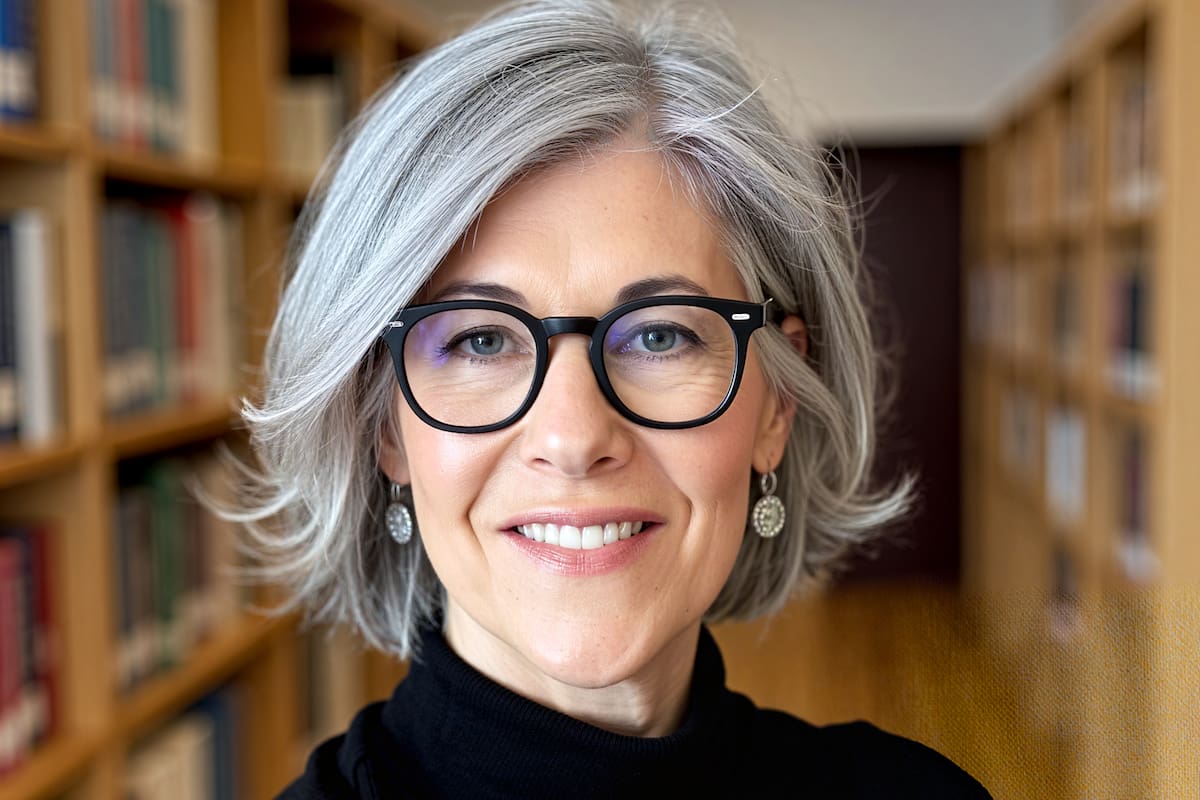
British Annie Coleman, one of the most respected voices in corporate longevity, is here to break the mold. At 66, with a career that includes banks like UBS and UniCredit, this global ambassador for the Stanford Center on Longevity asserts that retirement as we know it is a model of the past. «Since we are going to live longer, we need financial resilience,» she fires off.
The specialist argues that longevity is not just about adding years, but adding life to those years. And for that, the education-work-retirement scheme no longer works. «In the future, the path will be more flexible and less linear: it will alternate stages of training, work activity, leisure breaks, and professional retraining,» she explains.
Coleman does not talk about retirement, but reinvention. And she puts her body on the line: at 52, when she thought her career was over, she was hired by UBS. «Those were some of the most productive, best-paid, and most rewarding years of my career,» she confesses. She realized that she herself had internalized ageist prejudices. And since then, she has dedicated herself to fighting them.
From her consultancy RealiseLongevity, she advises boards and CEOs to rethink corporate strategy with a focus on longer lives. «Companies need to redesign their ways of working thinking about longer lives: analyze age distribution, avoid retirement ‘cliffs,’ and ensure that training includes those over 50,» she details.
A Bain report reinforces her stance: by 2030, there will be 150 million additional jobs for people over 55 worldwide. The reason? Fewer births and longer life expectancy. «Fewer people are being born than are dying, and at the same time, we are living longer,» Coleman summarizes.
But it’s not all rosy. The expert warns that pension systems are designed for shorter lives. «Today, a person can retire at 60 and live another 30 years. It is not sustainable for governments to finance retirements for 30 or 40 years,» she says. Therefore, many countries are already raising the retirement age. And Coleman goes further: «I think today’s children will probably have to work until age 70.»
The solution? Companies and governments need to get their act together. The Briton cites the French company NGE as an example, which adapts construction work for older people, offering them training as mentors. «Thus they acquire new skills useful even after retiring,» she highlights.
For workers, the advice is clear: «Thinking about saving enough must start much earlier.» But she also suggests considering flexible jobs or entrepreneurship in later stages. «Many people start businesses after 55. It is one of the fastest-growing sectors in the UK,» she assures.
Regarding education, Coleman calls for universities to transform into lifelong learning spaces. «There will be fewer young students in the future,» she anticipates. And she mentions initiatives like Singapore’s, where credits are granted to people over 40 for training.
In short, the Stanford ambassador is here to stir up the hornet’s nest: retirement at 60 is a luxury of the past. And if you don’t prepare, it might catch you with your pants down.


Para mí esto es un choreo de la izquierda progre: quieren que los pibes laburen hasta los 70 mientras los viejos chorros se jubilan a los 50 con privilegios. ¡Basta de parásitos! VIVA LA PATRIA Y EL TRABAJO DURO.
Para mí esta mina de Stanford es una banana del sistema. Decile que labure 70 años ella, mientras los pibes de hoy van a reventar antes de los 50. El capitalismo nos quiere muertos trabajando, no boludos. Basta de reciclar viejos, hay que repartir la guita bien, no alargar la esclavitud. ¡Viva la lucha obrera!