
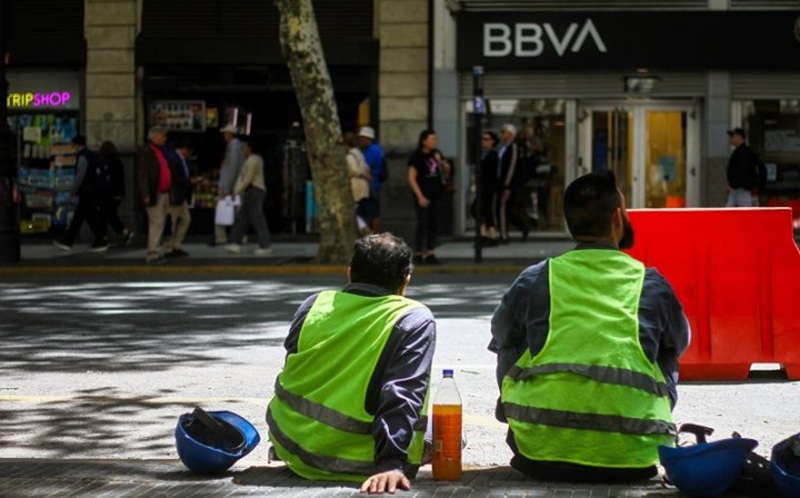
The government of Javier Milei insists on presenting fiscal adjustment as the path to an economy that generates benefits for everyone. However, data published this Thursday by Indec shows the opposite: income distribution deteriorated again during the first quarter of 2026, confirming that the government’s model implies a growing concentration of wealth and the deterioration of living conditions for the working majority.
The numbers also reflect that the benefits obtained by some sectors linked to exports or finance do not trickle down to workers at all. While large corporations accumulate record profits and banks continue to increase their profitability, half of employed workers earn less than $900,000 per month from their main occupation, an income that is insufficient given the current cost of living.
The gap between those who have the most and those who earn the least has widened again. According to the Indec report, the per capita family income of the richest 10% was 15 times higher than that of the poorest 10% during the first quarter of 2026. If the comparison is made with the third quarter of 2025, the last equivalent period without the effect of the bonus, the gap went from 13 to 15 times.
The deterioration is also reflected in the Gini coefficient, one of the most widely used indicators to measure inequality. The higher its value, the greater the concentration of income. After recording a value of 0.427 in the fourth quarter of 2025, the index rose to 0.442 in the first quarter of this year.
The growth in inequality is mainly explained by the deterioration of labor income. The official report shows that half of employed workers earn less than $900,000 from their main job, while in the top 10% of earners, most earn well over three million pesos per month. But this division into 10 segments of the population does not allow us to see the most important concentration, that of large business owners who represent less than 1% of the population.
Differences also appear strongly between registered and informal workers. While those with formal employment earn an average income of $1,443,176, those working informally receive only $664,320, less than half. Labor precarization is increasingly used to reduce labor costs and increase business profitability.
Added to this inequality is the persistent discrimination against women workers. According to Indec itself, the average labor income of women continues to be 29.1% below that of men, a gap that has even increased compared to most quarters of last year.
The Indec data contradicts the official narrative that the adjustment is a temporary effort whose benefits would reach all of society. While wages and pensions are being eroded, funding for health, education and social policies is being cut, and labor precarization advances, large energy companies, banks, large agricultural exporters, hydrocarbons and mining continue to post balance sheets with extraordinary profits.
The concentration of wealth is the result of an economic orientation that places the burden of adjustment on workers to guarantee fiscal surplus, sustain foreign debt payments, and preserve the profits of big capital. Instead of continuing to guarantee business for large corporate groups and financial capital, it is necessary to affect their profits to restore wages and pensions, create registered employment, and put the economy at the service of the needs of the great majorities.


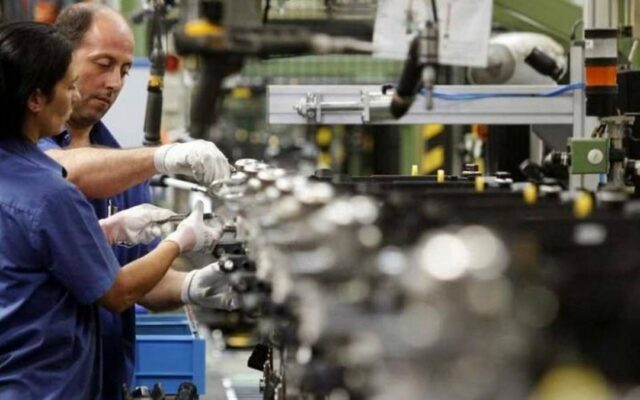
Para mí estos zurdos de mierda siempre llorando con el Indec. Si ganan poco es porque son vagos, yo laburo 14 horas y me sobra plata. Dejen de joder con la desigualdad y pongan a laburar a los planeros. Viva la libertad carajo!
Para mí esto huele a choreo de guante blanco. El INDEC lo dice: la mitad de los laburantes cobrando dos mangos mientras los patrones se bañan en guita. No es ajuste, es robo a mano armada. Yo creo que hay que organizarse ya, basta de bancar a los privilegiados. ¡A tomar lo que es nuestro!