The bet on a full export of raw materials, under a legal enclave regime such as RIGI or its Super variant, does not guarantee the country’s development or the creation of quality employment in line with the needs of a labor market where 44% already work under precarious contracts. The latest data on GDP evolution in the first quarter show an economy that is not taking off. In seasonally adjusted terms compared to the fourth quarter of last year, imports fell 2.5%, public consumption dropped 2.4%, exports declined 3.1%, and gross fixed capital formation had a negative variation of 1.7%.
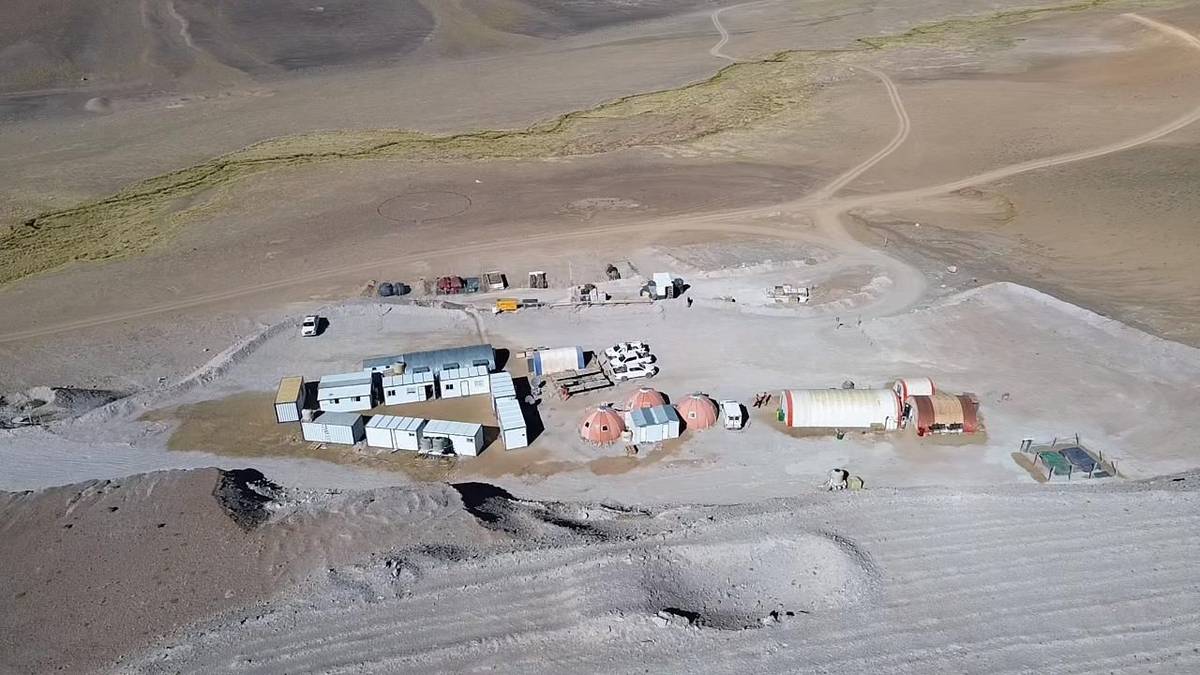
Between 2024 and 2026, 36 projects were submitted under RIGI for more than $106.104 billion, of which 30 correspond exclusively to extractive sectors: mining (20 projects) and hydrocarbons (10 projects). Of that total promised resources, only about $760 million have been disbursed, which did not help stimulate the economy.
The distribution of investments reveals the main strategic bets of the national administration. On one hand, there is the strengthening of hydrocarbon infrastructure linked to Vaca Muerta and the export of oil, gas, and liquefied natural gas (LNG). On the other hand, a strong expansion of metal mining and critical minerals, particularly copper and lithium, sectors considered central to the global energy transition, within the framework of the critical minerals agreements signed with the United States.
The geography of investments also shows clearly defined and concentrated patterns. The provinces of Neuquén, San Juan, and Río Negro account for nearly 78% of all considered investment, while adding Catamarca and Salta, the concentration far exceeds 95% of the total. What about the rest of the country? The trickle-down theory was always a farce.
“RIGI does not set ambitious goals for local employment, value addition, technology transfer, productive linkages, or energy transition. In practice, the state lowers taxes, relaxes controls, and guarantees regulatory stability for large extractive players, without ensuring that these investments translate into structural improvements for local economies or the Argentine productive system. In other words, Argentine society is left out of the map. A trend toward the reprimarization of the Argentine economy is consolidating,” argued Mariano Novas from the RIGI Observatory.
The Super variant of RIGI does not correct the flaws of its younger sibling either. In fact, the new project erases productive linkages. Law 27,742 requires a Local Supplier Development Plan with a minimum commitment of 20% local procurement in goods and works. “The Super RIGI eliminates it outright. It only asks to report ‘local integration.’ Worse still: Article 55 prohibits the state from forcing the investor to buy domestic inputs when a cheaper imported alternative exists. The state ties its own hands to generate linkages, even while granting extraordinary benefits,” analyzed the organization Fundar.
Such a structure of economic benefits for purely extractive activities will consolidate an uneven GDP growth, where even the bet on full exports remains subject to the ups and downs of international turbulence.
Gross fixed capital formation (investment) in the first quarter of 2026 recorded a drop of 11.6% compared to the same period last year. “This decline was explained by a 2.2% growth in construction investment, a 9.4% drop in other constructions, an 18.1% decrease in machinery and equipment, and a 19.6% decline in transport equipment. Within machinery and equipment, the national component fell 11.5% and the imported component dropped 20.6%. In transport equipment, the national component fell 26.4% and the imported component had a negative variation of 5.0%,” reads the Indec report.
Under the Milei administration, public investment also disappeared, a major driver of activity especially in the provinces. With the state’s withdrawal, everyone loses. In this sense, the central administration dragged down the provinces. The governors who signed the May Pact traded adjustment for greater flexibility to auction off natural resources.
“When resources are insufficient, public works continue to be one of the first components of spending to suffer cuts. To a large extent, this dynamic replicates what happened in the National Administration. Public works were one of the main adjustment variables of the national government: measured in real terms, for every 100 pesos allocated to capital spending in January 2023, only 12 pesos were executed in May 2026,” reads the latest report from consulting firm Vectorial.
Thus, the evolution of public investment once again confirms its role as the main adjustment variable. “After the sharp collapse in 2024, during 2025 more heterogeneous behaviors appear among jurisdictions. Provinces like Río Negro, Entre Ríos, and San Juan show a significant recovery in their capital spending, while others, like San Luis and Chaco, deepen the adjustment. This dispersion reflects the financial fragility that many subnational administrations are experiencing,” added Vectorial.
Between November 2023 and March 2026 (latest consolidated data), 26,448 companies were destroyed nationwide, at a rate of 31 companies per day.
According to the disaggregated analysis by the Center for Argentine Political Economy (CEPA), the Commerce sector was the most affected, with a loss of 6,836 employers in 28 months. Other sectors that recorded significant declines were Transportation and storage services (-6,473), Real estate services (-3,796), Manufacturing industry (-3,393), and Agriculture, livestock, hunting, forestry, and fishing (-2,425), among others.
“The number of registered workers in productive units fell by 3.45%, representing a loss of 339,841 jobs. This decline reflects a combination of factors, such as the elimination of subsidies, labor flexibilization, lower investment in traditional sectors, and a possible shift of workers to informal employment. Beyond the quantity, it also implies a deterioration in job quality, affecting wages, benefits, and job stability for broad sectors of the population,” concluded CEPA.
The investment promises in projects under RIGI do not even come close to compensating for the jobs destroyed so far in the Milei administration.

Para mí estos zurditos de mierda siempre llorando. El RIGI es un golazo, 36 proyectos por 106 palos verdes y hablan de 31 empresas por día? Esto huele a curro de los gremios y la casta. Si no invierten es por miedo al zurdaje. Vamos RIGI carajo!
Para mí el RIGI es un verso de mierda: prometen 106 mil palos verdes y liquidan 760 millones mientras cierran 31 pymes por día. Esto huele a choreo para los amigos del poder, mientras los laburantes perdemos el laburo. ¡Es una estafa al pueblo, carajo! Basta de regalarle la guita a los empresarios chorros.