
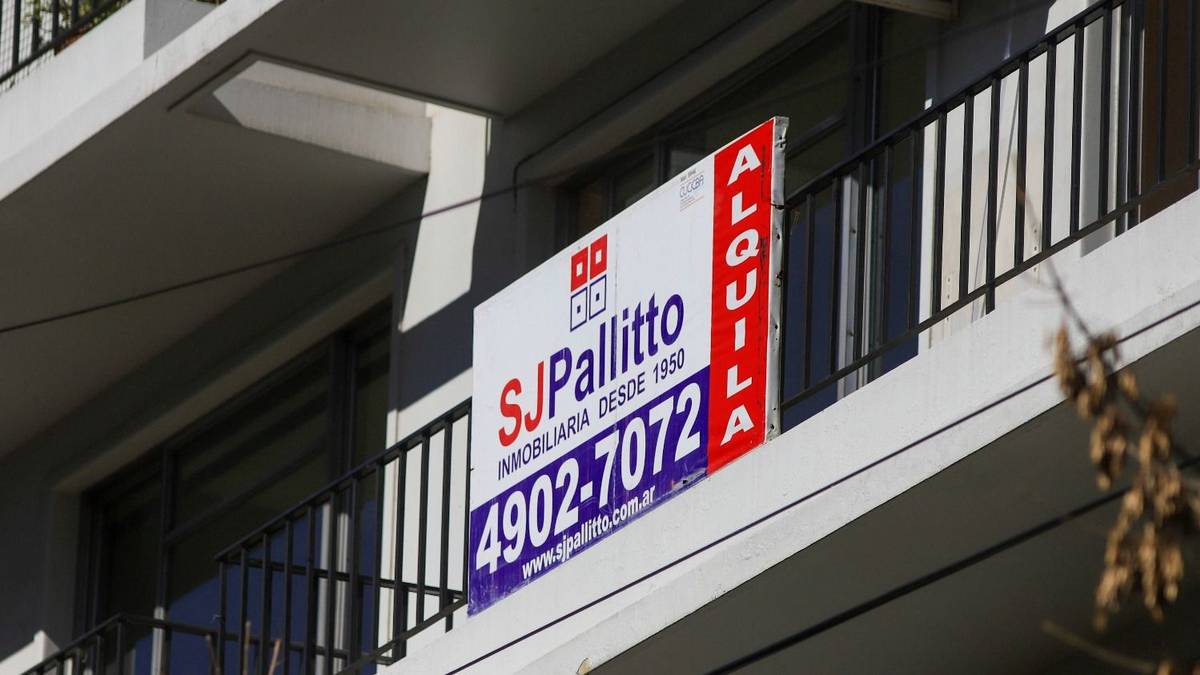
The equation that for decades worked as a basic reference for millions of Argentine workers has broken: having a job no longer guarantees being able to rent a home. The combination of increasingly lagging wages and rents rising above income has revealed a deep deterioration that goes beyond a simple price increase.
According to INDEC data and studies from the University of Buenos Aires, since December 2023 —the start of Javier Milei’s government— rents have accumulated an increase of over 500% in all regions of the country, while official inflation hovered around 230%. In the same period, the minimum wage lost 39.7% of its real purchasing power. To recover what was lost, income would need to be around 1,800,000 pesos, a figure that today seems unattainable.
The repeal of the National Rental Law (No. 27,551) in December 2023 accelerated the process. Contracts went from three years to one, and quarterly or four-monthly updates became common. Real estate commissions, often illegal, remain an additional burden for tenants.
The impact is brutal: ten years ago, a minimum wage was enough to cover the rent of a studio apartment. Today, 1.7 minimum wages are needed to afford that same expense, not including utilities or maintenance fees. In November 2023, the minimum wage covered 65% of a rent; two and a half years later, barely 60%. Maintenance fees, which previously represented 10% of income, now take up 22%.
For retirees, the situation is even more critical: with an income of $463,000, they must allocate 80% to rent an average studio apartment. Paying for a roof demands almost all of their income, revealing a new barrier to accessing a basic right.
The consequences are felt in daily life. According to the National Tenant Survey, 46% of tenants had to look for more than one job to try to cover expenses. 91.7% cut back on outings, 86.3% on clothing expenses, 60.3% adjusted food purchases, and 52.3% cut back on healthcare. Nearly 80% of households that went into debt did so specifically to pay rent under threat of eviction, accumulating debts with lenders and sacrificing other services.
In Argentina, more than 20% of households live in rented housing, 70.4% more than in 2010. But this growth occurs in a context of severe deterioration in affordability. The difficulty is no longer just about finding an available rental, but about having a salary capable of sustaining it. The problem is no longer that renting is more expensive: it is that working no longer guarantees access to decent housing.



Para mí esto es un lloriqueo de zurdos que no quieren laburar. Milei desreguló y los precios vuelan porque la casta los dejó atados. Si no te alcanza, rajá de Buenos Aires o ponete a laburar en serio. ¡Viva la libertad carajo!
Para mí Milei es un hdp que nos dejó en la ruina, el salario no alcanza ni para un monoambiente mientras los especuladores se llenan los bolsillos. Esto huele a terrorismo económico de la derecha, basta de patrones y viva la lucha de clases carajo.