
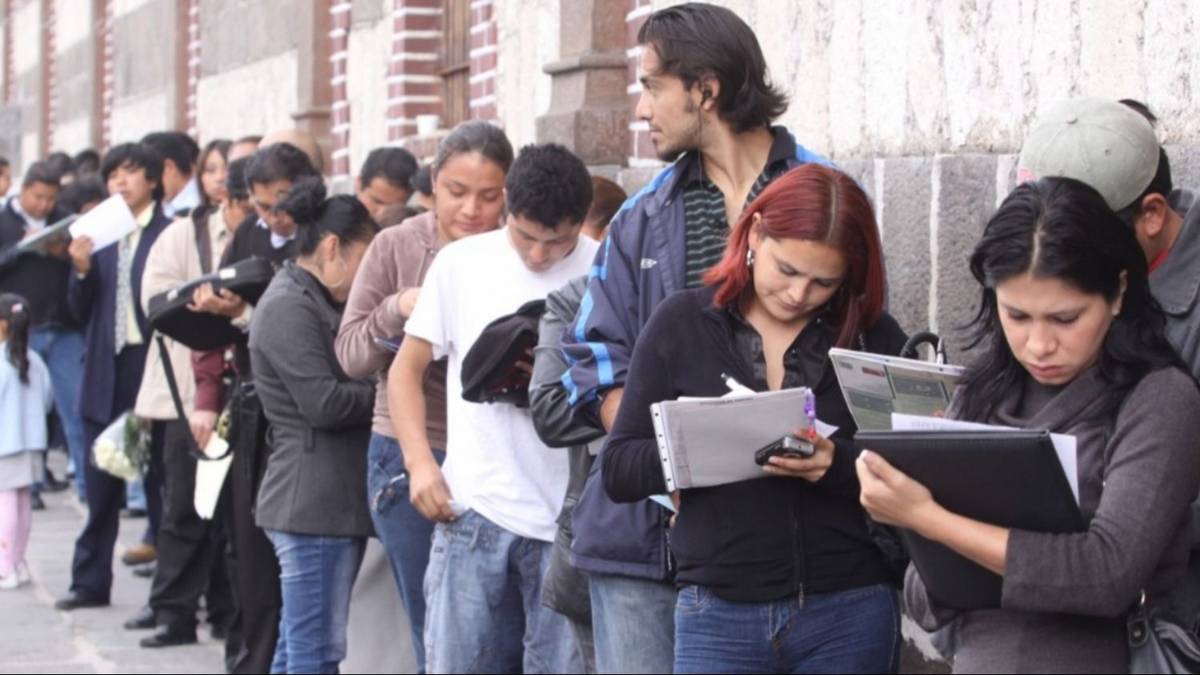
Argentina’s labor market is going through a critical moment. According to the latest data from INDEC, the unemployment rate reached 7.8% during the first quarter of 2025, representing around 3 million people who are without work and seeking to enter the labor market. The figure marks an increase of 0.3 percentage points compared to the previous quarter, although a decrease of 0.1 points compared to the same period in 2025.
Behind that percentage lies a complex reality: the employment rate stood at 44.8%, while the activity rate reached 48.6%. This means that less than half of the population has a job and that a growing portion faces difficulties in entering the labor market.
One of the most concerning data points in the report is the increase in employed job seekers, which reached 15.8%. This reflects that a significant portion of workers are looking for a second job or trying to change jobs to improve their income, in a context of loss of purchasing power recorded in recent years. Having a job no longer guarantees covering all household economic needs.
Underemployment reached 11.1%, according to INDEC. These are workers who work reduced hours involuntarily and wish to work more hours. Within that universe, demand-side underemployment reached 7.5%, while non-demand-side underemployment was 3.6%. The data reflect that a significant portion of employed individuals continue to face problems of full labor insertion.
The youngest sectors account for a large part of unemployment. Men under 29 represented 24.7% of the unemployed, while women in the same age group accounted for 20.6%. Together, almost half of the people without work are under 30. Additionally, children within households represented 47.2% of the unemployed population, consolidating as the group with the greatest difficulties in accessing the labor market.
At the regional level, Greater Buenos Aires recorded an unemployment rate of 8.7%, above the national average. In the Buenos Aires suburbs, the situation was even more complex, with unemployment at 9.7%, while in the City of Buenos Aires the indicator stood at 4.8%. The Pampas region also showed a high level of unemployment, with a rate of 8.2%, while the lowest figures were recorded in the Northwest and Patagonia.
Another data point that explains the difficulties of the labor market is that 31.8% of unemployed people have been looking for a job for more than a year without success. At the same time, nearly 79% of those who are unemployed had a previous job, showing that a large part of unemployment arises from the loss of existing jobs and not solely from people seeking to enter the labor market for the first time.
The increase in unemployment, the persistence of underemployment, and the growing job search among already employed people reflect a labor market under pressure, where the generation of quality employment still fails to keep pace with the needs of the population.


7,8% de desempleo? para mi es hambre popular no reactivacion 3 palos sin laburo y la mayoria pibes los kukas festejando jaja esto huele a vendepatria voten a los zurdos no a estos lcdll
Para mí este 7,8% de desempleo es culpa del gobierno kirchoide que no para de meter impuestos y regulaciones. Los jóvenes no laburan porque prefieren el plan y el porro. Si no te gusta, andate a Venezuela, zurdito. Viva la libertad carajo.