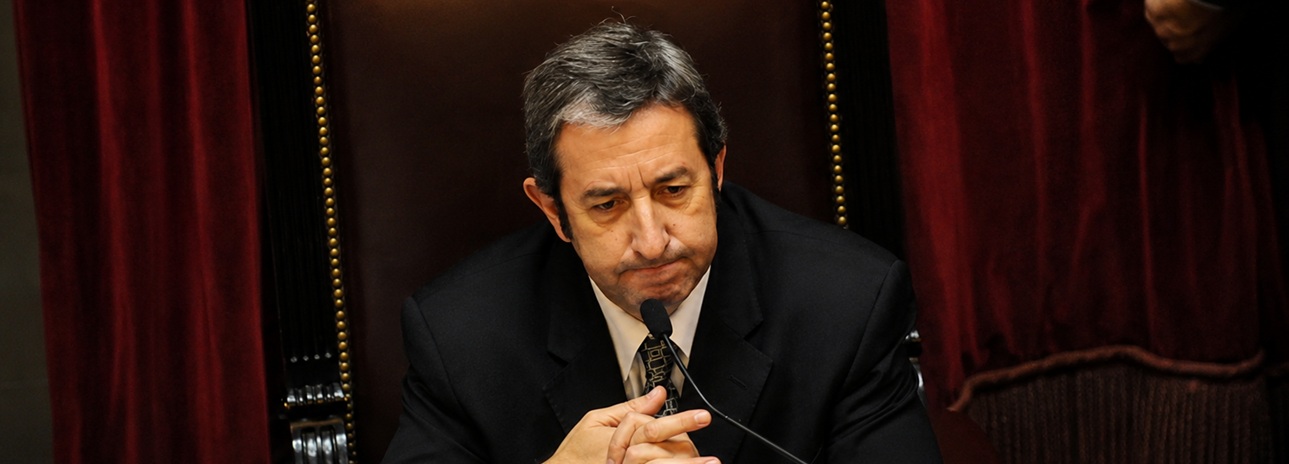
“I don’t believe a law that doesn’t solve this conflict is useful. History will judge me, I don’t know how. I cannot support this, and this doesn’t mean I’m betraying anyone, I’m acting according to my convictions (…) Let history judge me, I apologize if I’m wrong. My vote is not positive.”
With those trembling words, then-Vice President Julio Cobos sealed his political fate and opened a wound that never healed. It was July 17, 2008, and the Senate was debating the controversial Resolution 125, which established sliding-scale export taxes on grains, especially soybeans. The measure, pushed by the government of Cristina Fernández de Kirchner, had sparked a 129-day conflict with the agricultural sector, featuring roadblocks, shortages, and massive protests.
Cobos, who had been elected vice president on the ticket with Cristina, knew his decision was a dagger to the heart of the ruling party. “Today must be the hardest day of my life,” he said before casting his vote. The atmosphere in the chamber was tense. The head of the Kirchnerist bloc, Miguel Ángel Pichetto, left no doubt: “I have instructions. Whatever needs to be done, let’s do it quickly.” Earlier, he had pressured Cobos without euphemisms: “You know very well what rejection of this initiative means for the Executive,” and urged him to resign if he didn’t dare to support it.
But Cobos did not resign. He requested a recess, which was flatly rejected. And then, with a broken voice, he uttered the famous “not positive.” The word “resignation” hung in the air, but he insisted he wanted to “continue being the vice president of all Argentines.” History, however, judged him: he was branded a traitor by Kirchnerism, but a hero for the agricultural sector and the opposition.
Resolution 125, created by then-Economy Minister Martín Lousteau, established a system of sliding-scale taxes that adjusted levies as international prices rose. The agricultural sector erupted in protests, and the government did not yield until Congress intervened. Cobos’s vote was the nail in the coffin of the measure, which was ultimately rejected.
18 years after that episode, the “not positive” remains a symbol of Argentina’s rift. Cobos, who later tried to rehabilitate his image, never regained the power he once had. Kirchnerism erased him from its history, and he became a tragic figure in national politics. What drove him to make that decision? Fear of history? Convictions? It will never be fully known. But that vote changed Argentina forever.



Para mí 18 años del ‘no positivo’ de Cobos y este tipo sigue siendo un traidor de mierda que se vendió a los agroexportadores. Kirchner tenía razón, la patria no se negocia. Yo creo que este sorete partió la historia y dejó el país en llamas. Todavía hay gor*onionas* defendiéndolo, me parece una locura.
Para mí, 18 años de esa traición de Cobos, el vendepatria, abriendo las puertas del infierno. Kirchneristas llorones y gorilas cipayos: esta grieta es culpa de la izquierda. Yo creo que el voto ese partió la historia. ¡Viva la libertad, carajo!