
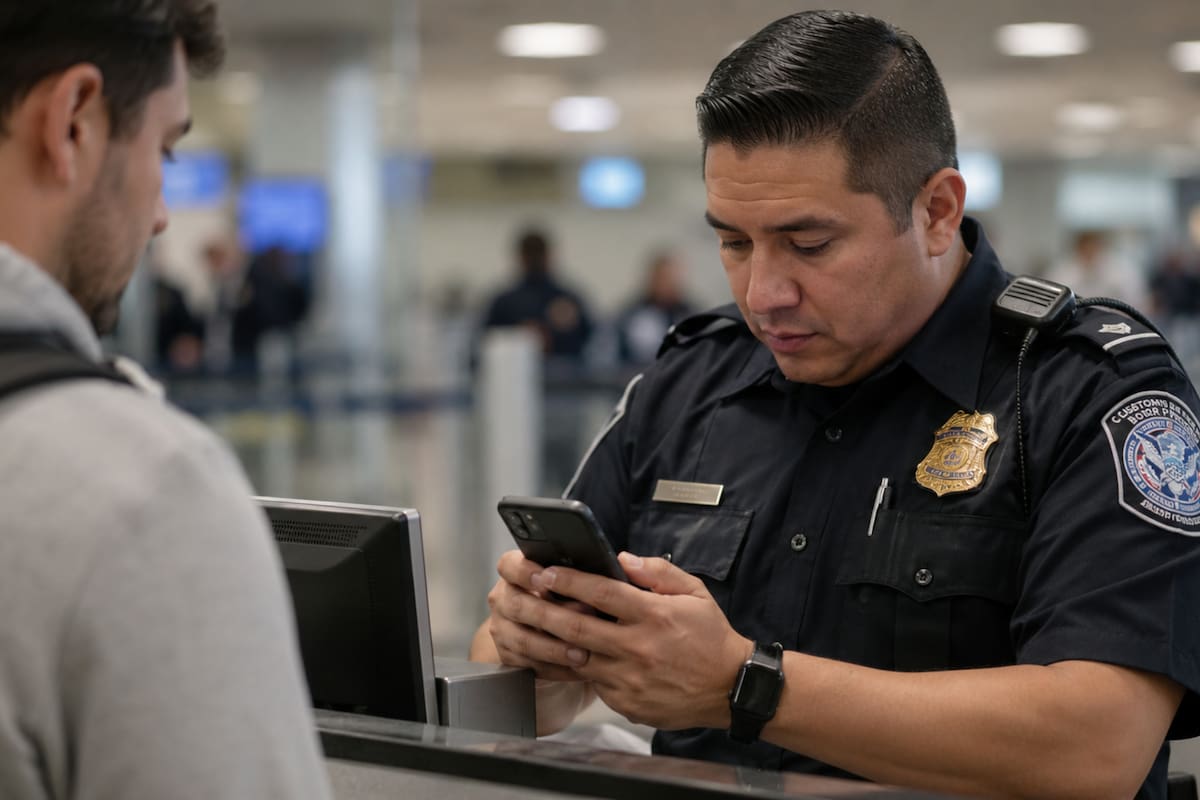
Entry control into the United States does not end with your passport, visa, or the officer’s questions: your cell phone can also be part of the inspection. U.S. Customs and Border Protection (CBP) provides for the review of electronic devices at the border, even for travelers with non-immigrant visas.
CBP Directive 3340-049B, effective January 1, sets the rules for searching, examining, retaining, and sharing information contained in electronic devices. On a phone, the inspection may cover data stored on the device itself. The directive states that the examination should focus on information resident on the device and accessible through the operating system, tools, programs, or installed applications.
However, it is worth noting that officers may not intentionally use the phone to access content stored only remotely. To prevent such access, they may ask the traveler to disconnect connectivity or do so themselves when there are operational reasons provided for in the directive.
Although the cell phone is one of the most common devices for any traveler, the CBP rule is broader. The provision defines electronic equipment as any item that can contain information in digital format. Devices covered by the rule include: smartphones, tablets, laptops, digital cameras, external hard drives, USB drives, memory cards, media players, and any other gadget with digital storage.
The rule states that migrants must present the devices and the information contained therein in a condition that allows inspection. If a phone is protected by a password, encryption, or other security mechanism, the officer may request assistance to access the content subject to border control. If CBP cannot complete the inspection, the officer may retain it. This measure is used to continue the review and determine the appropriate disposition.
The agency may temporarily keep a cell phone or other electronic device to continue a border search. If that happens, the officer must issue Form 6051D to the traveler. The detention of the device should not exceed five calendar days, except in circumstances that justify an extension. Extensions require higher approvals and must be recorded in CBP systems.
The guideline also sets rules for retaining information obtained during a review. Copied data may not be kept for more than 21 calendar days after the examination is concluded, unless there is a basis to retain it under the rules provided in the policy. In turn, officers may keep copies of information if they determine there is probable cause to believe it contains digital contraband or evidence of a violation of law that the agency is authorized to enforce or administer. Without probable cause, retention is limited to data related to immigration, customs, or other law enforcement matters, always under the conditions provided.
Searches of electronic devices help identify and combat various illicit activities. The agency also notes that they can provide relevant information to assess the admissibility of foreigners under U.S. immigration laws. Among the purposes mentioned by CBP are: detecting terrorism, drug trafficking, human trafficking, immigration fraud, customs violations, and other offenses.
For Argentines traveling with a non-immigrant visa, this directive means that when crossing the border, their devices may be examined without prior notice. While CBP cannot access remote information, it can review everything stored locally: photos, chats, emails, documents, contacts. The experts’ recommendation is to travel with clean devices: delete sensitive data, log out of personal and work accounts, and disable encryption if possible, although the latter may be counterproductive.
The debate over privacy versus border security is more relevant than ever. Human rights organizations have criticized these practices as invasive and potentially discriminatory. However, CBP defends their necessity to protect national security. Meanwhile, travelers must be prepared: the next immigration check could include a digital review that reveals more than they imagine.



che otro verso zurdo para asustarnos la CBP revisa celus xq USA se cuida de terroristas y chorros si no tenes nada q esconder no pasa nada estos lloran xq quieren entrar con propaganda comunista a ver si se dejan de joder y respetan las leyes yankis firmado @El_Patriota_Arg
para mí esto es una violación total a la privacidad, los yanquis se creen los dueños del mundo. ¿qué sigue? ¿revisarte el culo al entrar? macri y los liberchos nos vendieron esto como libertad, pero es un curro imperialista. viva la soberanía nacional, no al imperialismo.