
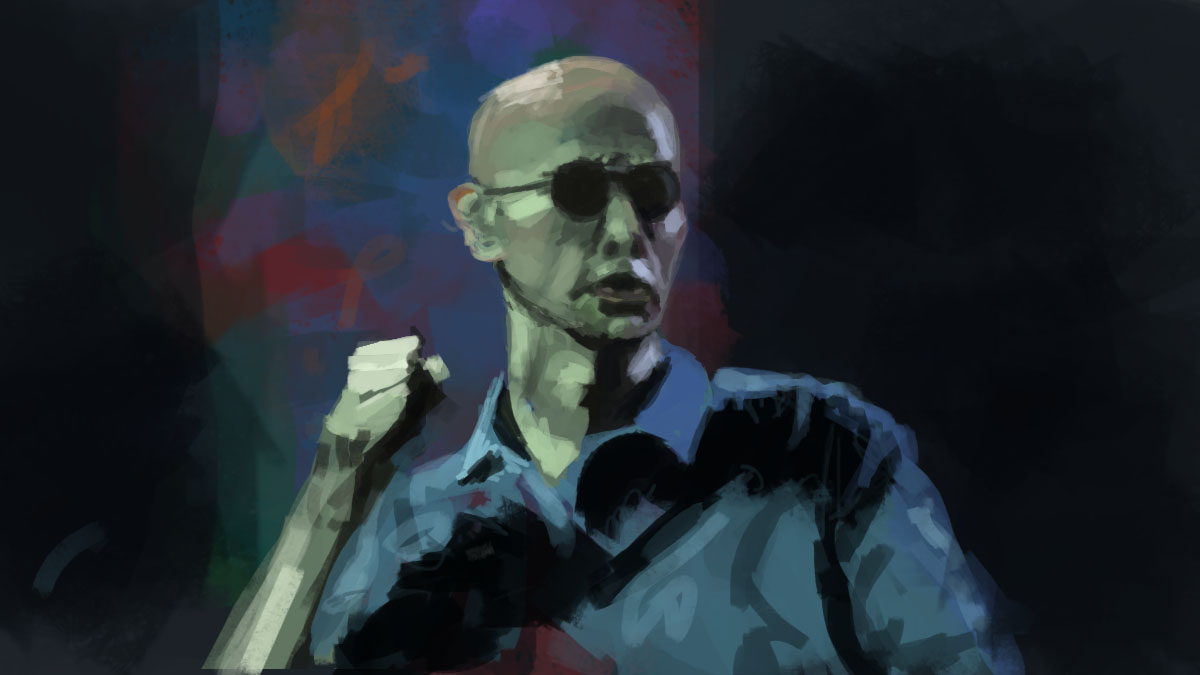
Seventy-five blocks of crowds in Villa Domínico and a packed Plaza de Mayo bid farewell to Indio Solari, the poet, the singer-songwriter, the troubadour, the character. His legacy lives on in three generations who moshed to his songs.
Bringing to light a vein of the counterculture of which the Indio was a part, some of his articles were published in that unique language he invented in the magazine Cerdos y peces, with writings that can be essayistic stories, fictionalized reflections. There, an interview by Enrique Symns after the release of Oktubre in 1986 can also be read. In them, through a prose that is at once opaque, hilarious, and ironic, he addresses a critique of corporations and the life they sold through television: a dream promised to the post-dictatorship youth that never materialized. That poetics, also present in his songs, is described as baroque by Juan Álvarez Tolosa, editor of the magazine Los años 20. Katy Balaguer also speaks about this new language in a sensitive account of what the appearance of his words meant for that youth contemporary to the musician.
Also reproduced is Paulo Schanton’s reflection in the magazine Otra parte, where he tackles the complex synergy between the Indio and the masses who restlessly followed Los Redondos and Los Fundamentalistas: the Argentine phenomenon that resisted the global commerce of national music as a «Cuba of Rock» and, in that reason, went from poet to singer-songwriter and from singer-songwriter to icon. The article’s author also spoke with the first words of Fernando Rosso published in the magazine Panamá, where he defined the ricotero phenomenon as «a country within a country» that functioned as a trench against the democracy of defeat.
And from that youth that resisted, Raúl Godoy narrates the night when a group of young people in La Plata excitedly went to see the Oktubre concert at Palladium. In that account, he also addresses the bitter taste after the murder of Walter Bulacio at the hands of the police, who targeted the ricotero audience, and the band’s attitude, which was questioned in light of that event. This contradiction also appears in the text by Lautaro Habibi, which shows the mythical figure of the Indio as an «illusion.» Regarding state persecutions of the band, Juan Ignacio Provéndola wrote about the espionage operations of the Buenos Aires provincial police against the band at concerts.
Three generations caught the crumbs of that rock that was and is a marvel for this world. The strong news of his departure reveals the mark that shines like an open wound in the memory of Argentine music. With his biting lyrics, the Indio captured the feelings of a youth that still aspired to rebellion and did not swallow the glass illusions of the system. Now, they live on in his legacy.



para mi los gorilas de siempre ya lo quieren hacer propio pero se van a tener que aguantar q el indio es nuestro lok no de ellos la plaza reventada de pibes conciente eso si es patria q viva la lokura redonda carajo abrazo de pie siempre atte el pibe de la 31
para mi ke despilfarro de sentimiento por un zurdo ke ni sabia lo ke dezia pura mersa pa los karentes gente sin futuro llorando a un idolo ke los tenia bobos menos rock y mas laburar basura