
Next Thursday, the Senate will consider the bill on «inviolability of private property» promoted by Javier Milei. According to the ruling party, it seeks to eliminate bureaucratic hurdles. However, an analysis reveals that, if approved, it would repeal the current law from 2011 that limits foreign ownership of land to 15% of the total rural area. Today, land in foreign hands totals 13.2 million hectares, barely 5% of the total. Why eliminate a limit that is far from being reached?
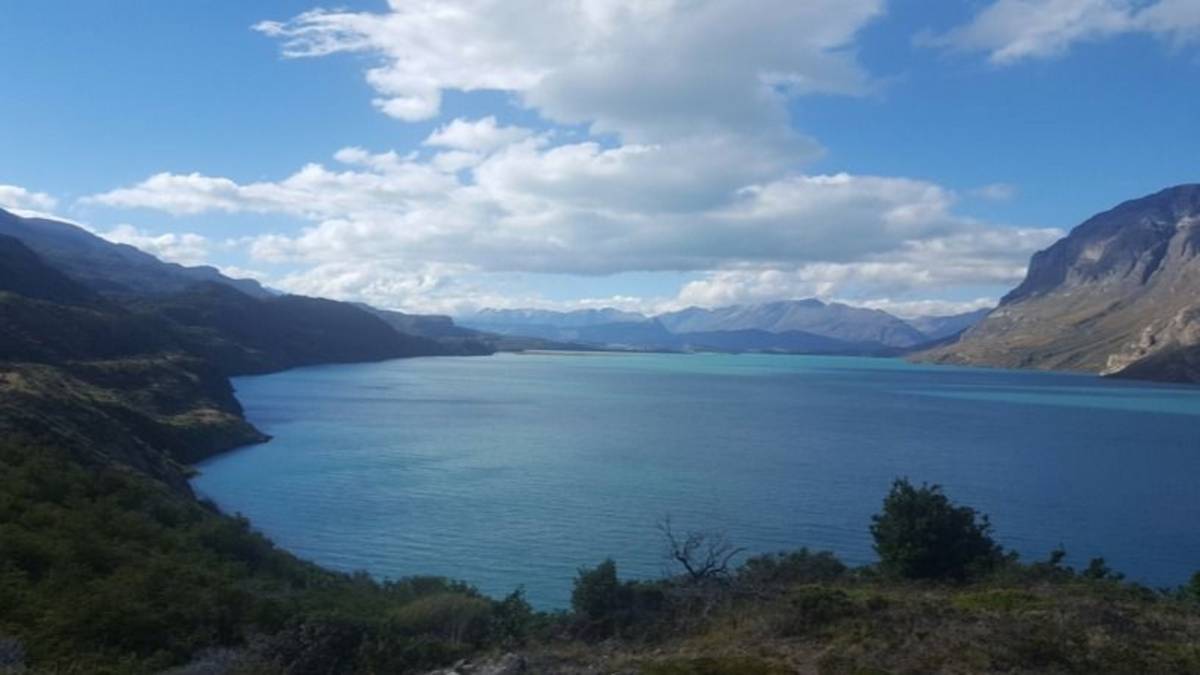
The answer, according to specialists and opposition legislators, is that the government wants to enable the purchase of strategic zones: Patagonian freshwater lakes, native forests, mountain ranges with critical minerals, regions over aquifers that supply millions of people, and sensitive border areas that could facilitate smuggling and drug trafficking.
«They are coming for the water, for mineral resources, and for the borders,» warned Senator Eduardo «Wado» De Pedro of Unión por la Patria, during a session against the project organized two weeks ago in Congress. There, representatives of the Federal Coalition in Defense of the Land spoke, which brings together groups such as the Land Observatory, which prepared an updated map of foreignization.
The map shows that, although in 2025 there are 2.6 million fewer hectares than in 2015, the decline is due to a change in criteria introduced by a decree of Mauricio Macri in 2016. That decree raised from 25% to 51% the percentage of foreign participation to consider a company as foreign, eliminated the cross-referencing of data between ARCA and the UIF, and annulled the obligation to request permission from the Rural Land Registry to sell to foreigners. The suspicion of specialists is that there is a growing foreignization and a deliberate underreporting by the state.
A paradigmatic case is the acquisition of 20,000 hectares in Bariloche by the State of the United Arab Emirates in 2017, using businessman Hugo Barabucci as a front. He declared in a trial that the UAE government donated US$2 million to buy those lands.
The qualitative data is alarming. Foreignization is concentrated in Patagonia, the mountain range area of mining provinces, the western and northern border, and the Litoral. There are 36 departments that already exceed the 15% limit. The most extreme cases: San Carlos (Salta) with 60% of its rural land in foreign hands; Molinos (Salta), 58%; General Lamadrid (La Rioja), 57%; Lacar (Neuquén), 54%; Campana (Buenos Aires), 50%; Iguazú (Misiones), 40%; Ituzaingó (Corrientes), 34%; Guachipas (Salta), 34%; and Berón de Estrada (Corrientes), 33%. All concentrate strategic assets such as freshwater or minerals.
In the ranking of nationalities, the United States leads with more than 2.7 million hectares, 20% of the total foreignized. Italy and Spain follow. Together, the three concentrate half of the land in foreign hands. If Milei’s project is approved, only restrictions for foreign states or companies with state participation, such as Chinese companies, would remain.
Florencia Gómez, director of the Rural Land Registry until 2015, warned about the attempt to repeal Article 10 of the current law, which prohibits foreigners from acquiring land that contains or is adjacent to permanent water bodies. «This law is part of a package that includes the glaciers law, the super RIGI, the lobbying law, and the corporations law. They want to hand over water bodies, rivers, lakes for VIP tourism projects, to generate energy, or to install data centers like those of Peter Thiel,» she warned.
Julieta Caggiano, from the Land Observatory, pointed out that if the law is repealed, cases like that of Joe Lewis, the British businessman with more than 12,000 hectares in Patagonia that include Lago Escondido, will proliferate. «The key is the sub-provincial analysis. They want to repeal the current law so that foreigners can buy land precisely where they cannot do so today,» she explained. Another focus is the reform of the 1944 decree/law that regulates land acquisition in border zones. Milei’s project enables the foreignization of those areas with the authorization of the province and the administrative silence of the national state.
Marcelo Bergman, PhD in Sociology and specialist in organized crime, argued in the Senate that the project opens the door for narco-criminal organizations to buy the borders. «If regulations on border zones are removed and controls are weakened, it allows a foreign group to take control of a space. An example: if the First Command of the Capital, Brazil’s main drug cartel, wanted to acquire territories in Misiones to pass drugs from Paraguay, with this law they would have control. We have to be very careful with the borders. Lest in ten or fifteen years we scratch our heads and say: ‘What have we done!'», he concluded.

para mi los zurdos lloran xq milei quiere q los extranjeros compren tierras pero ellos son los primeros en vender el pais a cualkiera la propiedad privada es sagrada dejennos ser libres viva la libertad carajo firma el loco milei
che pero para mi milei es un hdp nos vende lagos y fronteras a los yanquis x dos mangos y despues habla de patria patetico no le importa un carajo el pueblo solo llenarse los bolsillos viva la resistencia carajo 🤬