
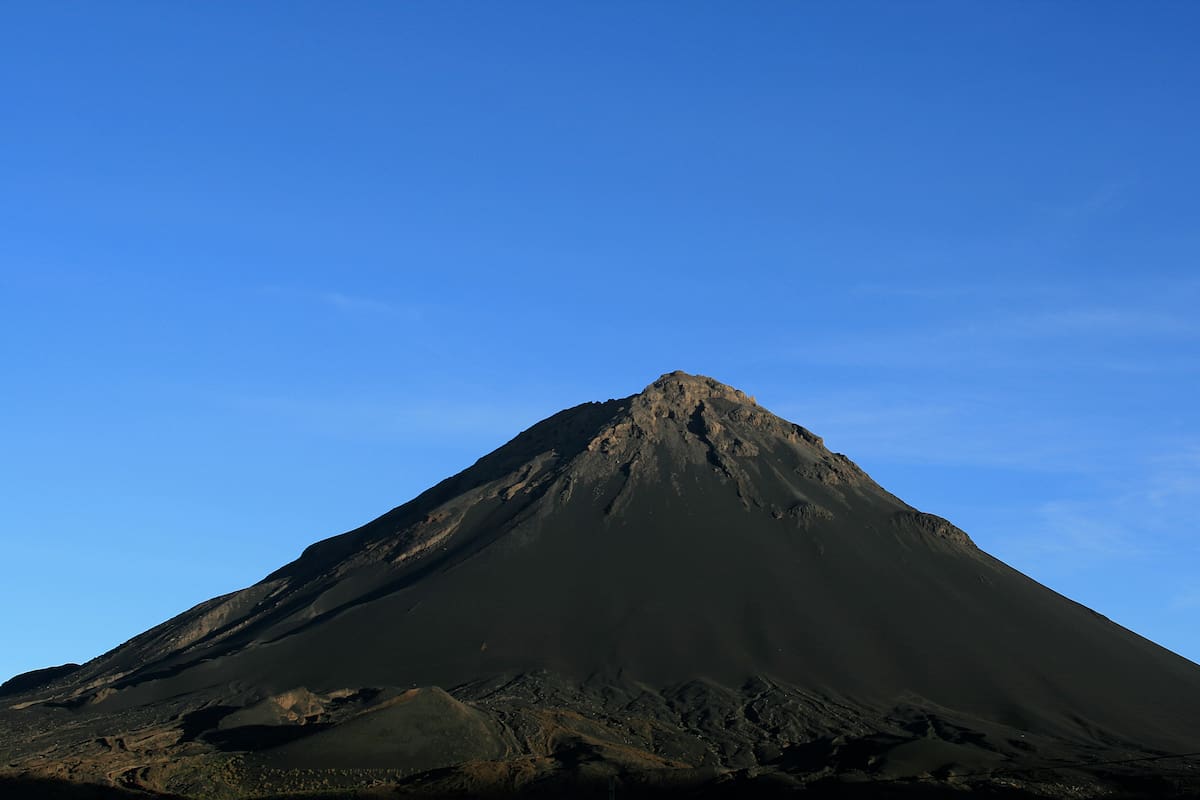
This Friday, the Argentine National Team faces Cape Verde, an island nation off the coast of Africa that few know. But beyond football, there is a story worth telling: that of Chã das Caldeiras, a village of 950 inhabitants living inside the caldera of the country’s most imposing volcano, Pico do Fogo, at 2,829 meters high. The place is a magnet for tourists from around the world, but also a time bomb.
The question every visitor asks is the same: why the hell live there? The fertility of the land, water, and tourist appeal are some answers. However, the sense of belonging is stronger than the fear of dying under lava. Throughout its recent history, the region has suffered more than 25 eruptions that forced evacuations. The last one, on November 23, 2014, lasted nearly three months and wiped out the villages of Portela and Bangaeira.
“It was hard to see the village destroyed, the town lost everything,” they said from Ecofunco, a local hotel. Farmlands and vineyards were buried. The victims were relocated to a nearby village outside the crater. But four months later, defying all logic, they returned. The Cape Verdean government tried to prevent reconstruction due to high risk and evacuation costs, but the residents came back anyway.
“The hardest part was recovering the life they had,” recalled Antonio Monteiro, a tour guide in the archipelago. Some salvaged debris; others started from scratch. Willpower and passion for what they had already built were decisive. And here comes the paradox: the lava, which destroys everything, became the reconstruction material. Volcanic stones were used to build houses, giving the village a unique appearance.
Over time, the government chose to support the process. They built a second road (the only access road had been destroyed), a primary school, a church, and public lighting, which did not exist before. They also installed seven volcanic monitoring stations in collaboration with the University of Cape Verde and the University of the Canary Islands. But challenges persist: electricity supply is limited, and many homes use solar panels.
Despite everything, the residents turned tragedy into opportunity. Volcanic rocks became construction material, and tourism boomed. “The people who returned set up cabins, shacks, and began receiving visitors,” Monteiro said. At first, tourists came and went in a day; eight months later, locals were hosting them in their homes. Thus, guesthouses and hotels were born, like Ecofunco, opened in 2023, which has no restaurant of its own to force guests to eat in the village and hires only local employees.
“Most of our clients are Europeans; they come for hiking and climbing Pico do Fogo,” the hotel explained. Germans, French, and Swiss top the list, attracted by trekking. The high season runs from October to April. Monteiro describes Chã das Caldeiras’ tourism development as “embryonic”: incipient growth, but with a sustainable and community-oriented approach. In an environment marked by fire, tourism has become the fundamental engine of recovery.
The story of this village is an example of resilience and how community can prevail over any official order. As Argentina prepares for the match, it is worth remembering that Cape Verde is not just football: it is a country of people who rose from the ashes.



Para mí esto es clarito: el capitalismo y el estado burgués siempre cagando al laburante. Los pibes de Chã das Caldeiras se bancan la lava y el gobierno les pone palos en la rueda. El turismo comunitario es la posta, no los políticos vendidos. ¡La tierra es del que la labura, carajo!
che para mi estos negros de mierda se creen mas vivos que el gobierno el volcan los cago a lava y vuelven como si nada pero bueno al menos laburan no como los planeros el turismo los salva mejor que se sigan rompiendo el orto total son reacios viva la libertad carajo firmado elgauchopdao