
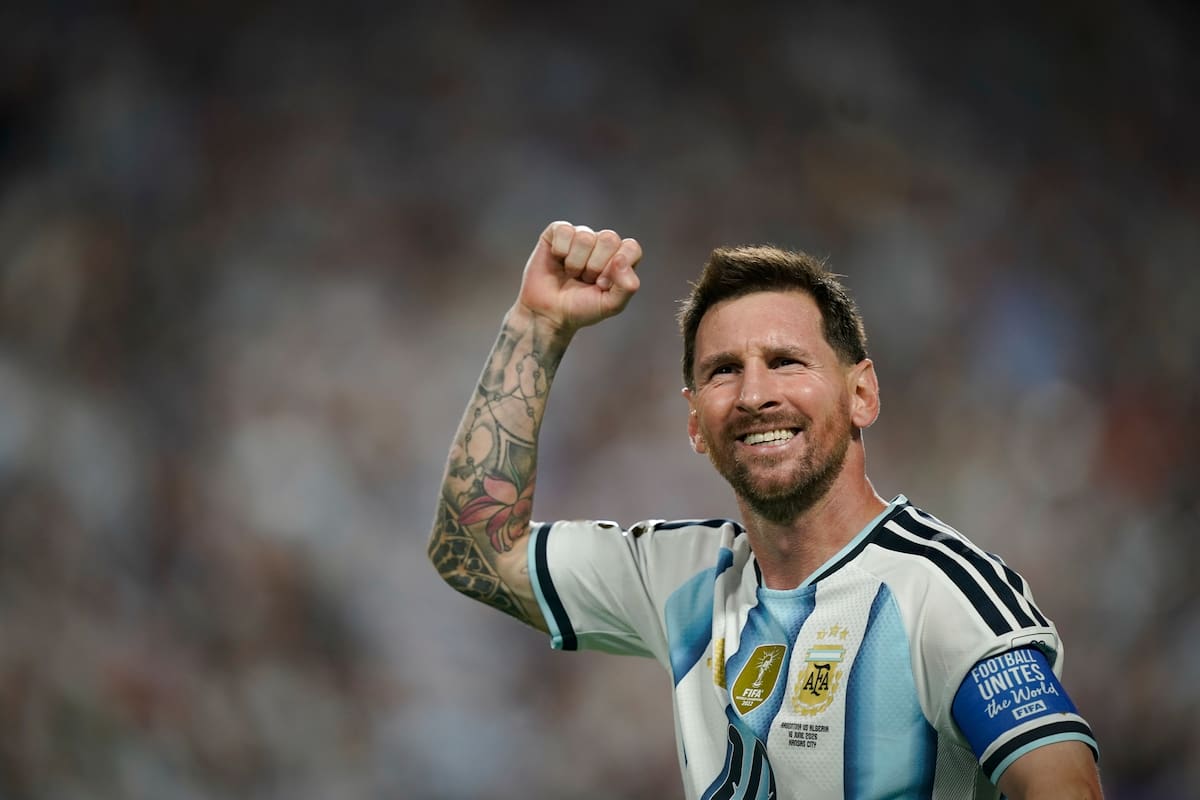
“Anyone else would have retired after winning in 2022. But he is a competitive animal,” defined his football brother Xavi Hernández, former Barcelona teammate. Lionel Messi is different. No doubts remain. Is his extraordinary football ability written in his DNA or is it the result of years of effort, discipline, and training? How can his performance not have declined at an age when an average footballer is already retired? What drives him to go for more? What goes on in his head?
These are some of the questions that challenge fans who follow every one of his moves and that psychologists, doctors, and coaches help answer to explain the “Messi phenomenon.”
The first answer is that Lionel Messi is not the result of an isolated event, but of a conjunction of factors where each piece was decisive: had a single one been missing, the story could have been different.
“He walks like a tiger: he observes, his hair stands on end, and he attacks. From a psychophysical point of view, I would dare say he is in one of the best moments of his career. He is more vital than ever,” declares Fernando Signorini, former physical trainer of the Argentine national team in Mexico 86, Italy 90, USA 94, and South Africa 2010.
Signorini is one of the few professionals who worked hand in hand with Diego Maradona and with Messi. They, he affirms, were endowed with inexplicable natural talent. He recalls that when Maradona coached the national team, he would tell the coaching staff: “You can’t believe the things this little guy does.” According to him, he saw in Messi a successor and a leader.
“He has aptitudes that are innate to great players: he perfectly masters the movement of his body, has peripheral vision, can detect key moments in matches and start from any position. He is energy-efficient so as not to tire excessively,” he lists.
Consecrated captain of the Argentine national football team, he started the year with ups and downs, muscle overloads, fatigue, and an injury at the worst possible time, a few days before the World Cup. He had just been crowned MLS Cup champion and with the unshakable dream of playing the World Cup. Undisputed figure in Qatar 2022, he sought to double down and gave himself another opportunity.
Resilient since childhood, the specialist makes a distinction: there are athletes and there are artists of football. “He is an artist,” defines Signorini. Although he believes his talent is innate, having been so small in stature, especially during the growth period, endowed him with benefits.
He refers to the idol’s emotional intelligence: what could be read as a weakness did not break him, and he took advantage of his small physical build to master his body and develop greater agility to escape his opponents. “If he had had a more robust body, perhaps he would have gotten used to colliding with other players and not dodging them,” Signorini exemplifies.
To this day, there are tests and research suggesting that genetics can influence athletic ability. Studies cited in Elsevier Science, Sports, Exercise, and Nutritional Genomics, Sports Medicine – Open, and Journal of Applied Physiology −prestigious scientific publications− confirm that certain physical traits, such as muscle fiber type, muscle size, muscle metabolism, recovery capacity, and body composition, can be influenced by genes. “There are people born with physical or metabolic characteristics that facilitate their performance in physical abilities. Genes can even influence how the body responds to aerobic and anaerobic exercise, as well as its ability to adapt to repeated training loads,” highlights Eliana Carla Filosa, physician at the Cardiology and Sports Service of the Austral University Hospital.
She mentions some markers that science has observed appear more frequently in elite athletes: the protein alpha-actinin-3 (ACTN3), which is crucial for muscle strength and power; the ACE gene, which is associated with greater aerobic endurance due to its impact on blood pressure and blood volume; and the IL6 gene, which can accelerate recovery time after intense periods of exercise.
So is Messi the result of a genetic lottery? “No. Genetics predisposes, but does not predestine. Sports success is multifactorial: it includes environment, access to coaches, quality of rest, nutrition, mental health, and personal motivation, which end up being as important as genetic inheritance itself,” clarifies the specialist.
The sport commitment theory developed by Tara K. Scanlan and Paul J. Carpenter refers to the degree to which an individual is psychologically, emotionally, and behaviorally involved in sport. This commitment, the authors believe, manifests as a persistent desire to participate in physical activity and a willingness to invest time and effort in it. A motto that Messi follows and has followed to the letter: he himself admitted in repeated interviews that, although he considers his talent a gift from God, he worked for decades with effort and discipline to bring it to its maximum expression.
A recent example of this is reflected in the statements given by Rodrigo De Paul – teammate of La Pulga in the Argentine national team and at Inter Miami –: “During the last two or three months with Leo we followed a daily training plan additional to what we do with the club.” And he continued: “We push ourselves to the limit to arrive [at the World Cup] in the best possible physical shape. We do double sessions with our trainer.”
This overexertion also has a psychological explanation. Guillem Balagué, Spanish journalist and biographer of Messi, rescued the testimony of Inma Puig, sports psychologist at Barcelona, who assured on several occasions that one of the aspects that characterize footballers like the national team captain is that they continue playing as if they were in the neighborhood. “He doesn’t get tired because there is a desire to perpetuate himself. But he doesn’t do it for the masses, he does it for himself and for the people who matter to him,” she highlighted.
Mac Novicoff, writer and historian at Dartmouth University, United States, is one of the academics who has researched the Argentine the most. He assures that the self-administered injections he applied to combat growth hormone deficiency (GHD) since childhood fostered his self-sufficiency and may have contributed to the development of his humility.
But health issues were not the only ones that tested La Pulga. During his adolescence, already settled in Barcelona with his family as emotional support, he had to stay alone with his father in Spain. His mother, Celia, returned with the rest of his siblings to Argentina because the children struggled to adapt to the new environment.


Para mí esto es una joda, ¿discutir si Messi nace o se hace mientras el sistema explota pibes en el fútbol amateur? Messi es un privilegiado con talento, pero los millones que quedan en el camino por falta de oportunidades son la verdad. Esto huele a meritocracia trucha, la izquierda tiene que poner plata en el deporte popular, no llorar por un millonario que juega a la pelotita.
Para mí Messi es argentino y punto, no jodan con genética de laboratorio. Es la sangre gaucha, la resiliencia de la villa, la obsesión por la celeste y blanca. Los zurdos envidiosos quieren negarlo, pero es nuestro, carajo. ¡Viva Messi, viva la Argentina de verdad!