
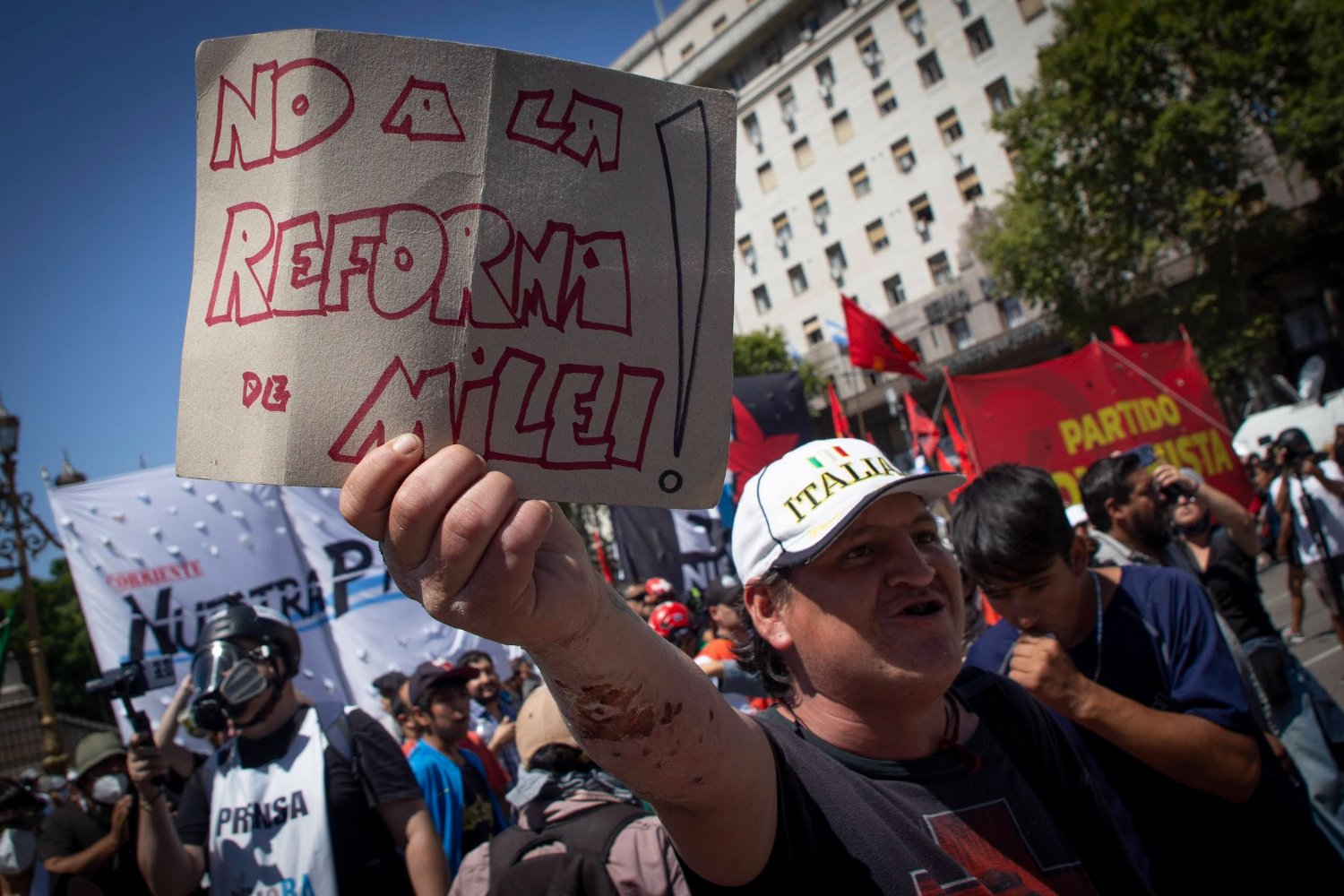
The national government expanded the scope of the review of collective labor agreements provided for in the labor reform and now estimates that the process will reach about 800 agreements between unions and companies. The decision was formalized through the regulation of different aspects of the Labor Modernization Law No. 27,802.
The Secretary of Labor must summon unions and business chambers in the coming days to renegotiate agreements that the Executive Branch considers expired. Among them are agreements in strategic activities such as commerce, metallurgy, construction, trucking, healthcare, and banking, in addition to numerous company agreements. The magnitude of the measure far exceeds initial official estimates.
Behind this call is one of the most profound changes introduced by the labor reform. Until now, the principle of ultra-activity established that a collective agreement remained in force even after its formal expiration, until unions and employers agreed on a new one. The regulation modified that scheme: the expiration of agreements acquires concrete effects on certain clauses and forces the reopening of discussions that had remained frozen.
The difference between normative and obligatory clauses became central. The former regulate basic wages, categories, and working conditions; the latter refer to economic commitments, such as solidarity contributions. While normative clauses remain in force until a new agreement is signed, obligatory clauses expire with the expiration of the agreement. For labor law specialists, this distinction modifies the balance of power between unions and companies.
Agustín Comas, a lawyer from the Center for Professionals for Human Rights (CeProDH), stated that the government’s intention goes beyond administrative updating. «The government wants employers and unions to start negotiating all the labor reforms that were voted on not only in the last labor reform package this year but also in the Bases Law of 2024,» he said. According to Comas, several changes require specific agreements: «dynamic wages, working hours, hours bank, working conditions.» «The government is seeking to push unions to negotiate and give up those conditions,» he added.
Comas clarified that the reform does not automatically eliminate clauses on working conditions. «The labor reform does not establish that collective labor agreements, regarding working condition clauses, fall. That is still in force,» he explained. «If there is a negotiation by unions to lower conditions, it is a negotiation they are doing without being forced to give them up.»
However, just days after the regulation, SMATA agreed with the company Ontec (Grupo Mirgor) on a 200-hour bank for workers in Baradero and Escobar. The measure allows the company to suspend tasks in the event of drops in demand or supply problems. Unworked hours are paid but recorded to be recovered when production increases. Each hour owed is compensated with one and a half hours of work, but additional hours from Monday to Friday are not paid as overtime; only weekend hours retain that treatment.



Comentarios