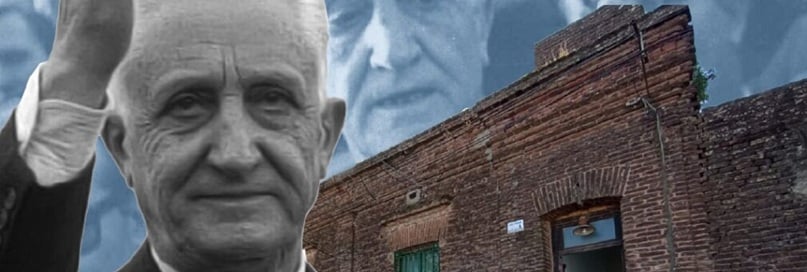
Exactly 60 years ago, on June 28, 1966, the Armed Forces overthrew President Arturo Umberto Illia. But the story did not begin that day. It began much earlier, with a smear campaign that branded him as slow, indecisive, and bureaucratic. A campaign perfectly orchestrated by big economic interests, the complicit press, and Peronism, which was awaiting its revenge.
In just 1,000 days in office, Illia achieved what many governments fail to accomplish in decades: he enacted the Minimum and Mobile Living Wage Law, regulated drug prices by confronting foreign pharmaceutical companies, reduced foreign debt, cut public spending, increased the education budget to record levels, and achieved GDP growth of 10% annually, especially in industry. Unemployment fell and income distribution improved. But all that was not enough.
Illia committed the sin of governing with honesty. He did not use official media to defend himself. He did not repress. He did not shed blood. He trusted in the pedagogical value of democracy. But the financial sector, the pharmaceutical companies, the Argentine Industrial Union, and the CGT, controlled by Peronism, did not forgive him. The press crucified him: they portrayed him as a president without authority, clinging to partisan practices, slow and ineffective.
The coup had its prologue in a meeting with David Rockefeller, the most powerful banker in the world. Rockefeller wanted to establish the Chase Manhattan Bank in Argentina, but demanded changes to the banking law. Illia confronted him: «Ask Mr. Rockefeller what he would think if an Argentine banker demanded that the U.S. president change the Federal Reserve law to invest in that country.» Rockefeller blushed. The audience ended. Three months later, Illia was overthrown. Onganía reformed the banking law point by point as Rockefeller wanted.
Peronism, which had been banned, also played its part. Illia had annulled the oil contracts signed by Frondizi, which enraged foreign investors. His project to democratize unions clashed head-on with the CGT. And the Drug Law, which froze prices, unleashed the fury of pharmaceutical companies. All of them converged in the coup.
Illia died in poverty, in a public hospital bed. He disproved those who believe public office is for getting rich. Years later, many of those who conspired regretted it. But the damage was already done: Argentina lost a unique opportunity to have an honest and effective government.
Today, 60 years after his death, history vindicates him. Illia forged in many citizens the value of acting according to one’s convictions. His legacy is a mirror in which to look at ourselves: a president who did not sell out, who did not repress, who governed for the people and not for the powerful. Hopefully we learn the lesson.


Para mí Illia fue un infeliz que le entregó el país a los sindicatos. Menos mal que lo rajaron, sino hoy seríamos una villa miseria como Venezuela. Viva la libertad carajo, esto huele a zurdo resentido.
para mi illia era un capo pero los buitres de la city y los peronchos gorilas lo voltearon por honesto la deuda baja laburo y crecimiento al palo y estos hdp prefieren el caos mal paridos se rien de la patria illia vive en el pueblo soretes ✊