
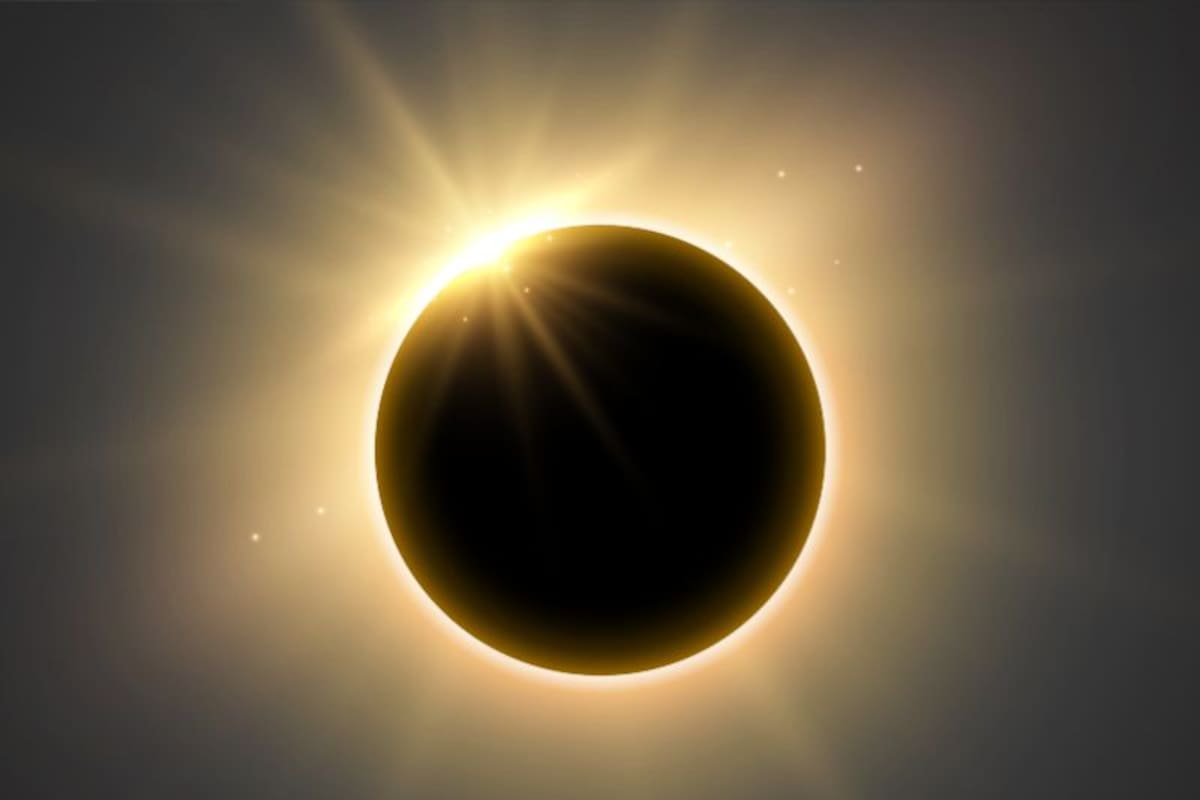
On August 12, 2026, the sky will put on a show and offer one of the most stunning spectacles of the year: a total solar eclipse. NASA has confirmed it, and excitement is building. The Moon will position itself between Earth and the Sun, completely blocking sunlight, leaving millions of people in darkness for a few seconds.
According to the National Aeronautics and Space Administration (NASA), the Moon’s shadow will sweep across a vast region of the northern hemisphere. Totality will be visible in Greenland, Iceland, the North Atlantic Ocean, northern Russia, Spain, and a small portion of northwestern Portugal. Note that other areas will also see it, but only partially.
The path of the total eclipse begins over Greenland, continues through Iceland, crosses the North Atlantic, reaches northern Russia, and ends on the Iberian Peninsula. Spain and a small part of Portugal will have the fortune of seeing the Sun completely blocked. Additionally, a partial eclipse will be visible from wide areas of the northern hemisphere, including much of Canada, the northern United States, most of Europe, northwestern Africa, and other nearby regions.
But don’t expect it to last forever. NASA warns that for most people within the path of totality, the full eclipse will last less than two minutes. Only those very close to the center of the path, such as in Greenland, the North Atlantic, or northern Russia, will enjoy a slightly longer totality, though in no case will it exceed two and a half minutes.
The timing also varies by location. In Greenland and Iceland, totality will occur during the late afternoon; in Russia, it will happen near midday, while in Spain and the far northwest of Portugal, it will arrive shortly before sunset.
NASA also released a statement with recommendations to avoid eye damage. It is only safe to look directly at the Sun during the brief moments of totality, when the Moon completely covers the solar disk. Before and after that moment, and even during a partial eclipse, direct observation of the Sun can cause permanent eye injury if proper protection is not used.
The agency recommends using special eclipse glasses that meet the ISO 12312-2 standard, or certified solar filters for telescopes and binoculars. Regular sunglasses are not suitable for observing an eclipse, no matter how dark, because they do not block harmful solar radiation. Also, do not look at the Sun through a camera, telescope, binoculars, or any other optical device while using only eclipse glasses, as the concentrated solar rays can penetrate the filter and cause serious eye damage.
So now you know: on August 12, 2026, the sky will darken for a few minutes. Prepare your certified glasses and don’t miss this unique phenomenon.



Para mí la NASA es el brazo científico del imperio yankee. Me parece que este eclipse es otro choreo: lo ven solo los del norte mientras acá laburamos. Esto huele a negocio con los lentes carísimos. Yo creo que la astronomía tiene que ser del pueblo, compañeros. ¡A organizarse, carajo!
Para mí la NASA lo dice y los zurdos ya están llorando con el cambio climático. Esto huele a Agenda 2030 queriendo vendernos anteojos importados. Yo creo que acá tenemos los mejores lentes de sol, ¡viva la libertad de mirar el cielo sin miedo! Firmado: El Gaucho Solar